Nos experts à votre écoute :


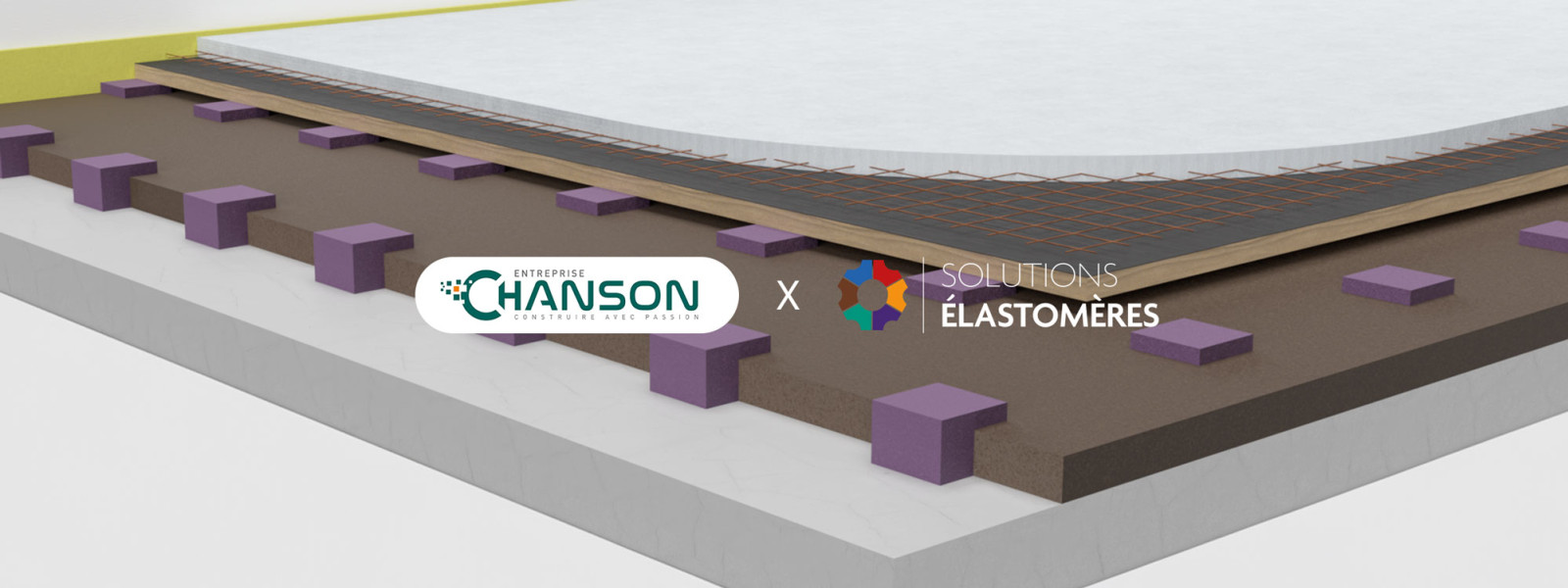
Acoustic and anti-vibration slab Building an acoustic and anti-vibration slab for a music studio
In a music studio, rehearsal room or cultural building, floor treatment plays an essential role in limiting the transmission of vibrations, impact noise and structure-borne noise.
This article presents a practical case study involving the construction of an acoustic and anti-vibration slab for three recording studios, using a solution based on Regufoam Vibration, dimensioned according to the loads, the target natural frequency and installation constraints.
To complete a studio treatment, walls and ceilings can also be treated with acoustic foam in order to improve the internal acoustic correction.
View the full Regufoam Vibration rangeTable of contents
Site video Step-by-step video explanations
This video presents the main installation steps for an acoustic and anti-vibration floating slab, from the analysis of the requirement through to site installation advice.
Video and article produced by Solutions Élastomères — Project carried out by Entreprise CHANSON.
Acoustic project Customer request
During a new building construction project, an acoustic report is prepared by an acoustician in order to guarantee the future acoustic comfort of users.
In this specific case, the project concerns a music-dedicated building within a cultural centre, with the creation of three recording studios.
According to the acoustician’s recommendations, the floors of these studios must be decoupled using anti-vibration pads in order to limit the transmission of vibrations to the building structure.
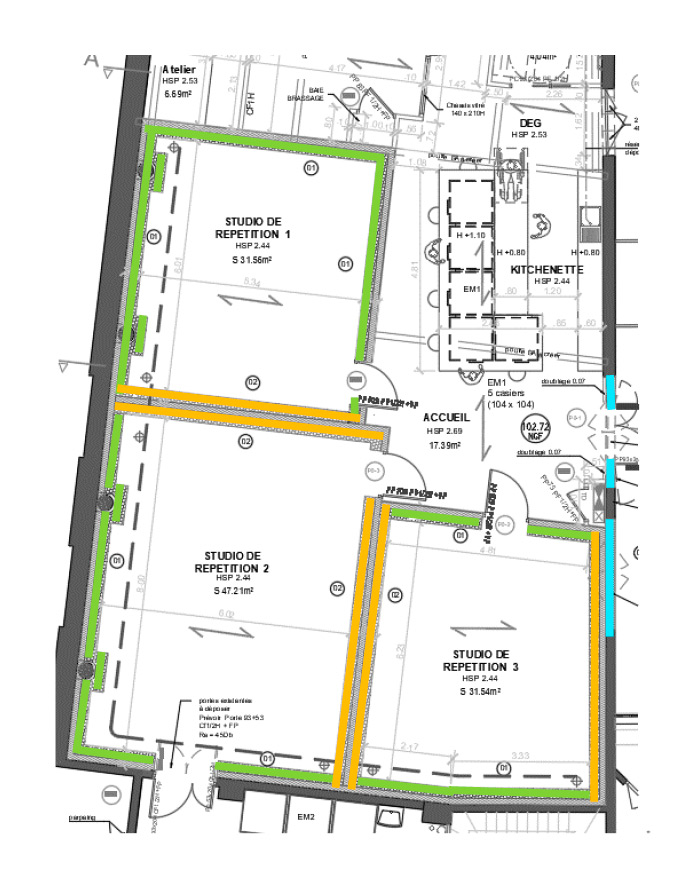
Excerpt from the acoustic report
Floor insulation
The floating slab consists of the following build-up, from bottom to top:
• Anti-vibration pads approximately 150 to 200 mm wide.
• Centre-to-centre spacing of around 400 mm, to be defined precisely according to the load.
• 40 mm mineral wool infill between the pads.
• 20 mm permanent formwork boards.
• Concrete slab at least 60 mm thick with lateral anti-vibration strip.
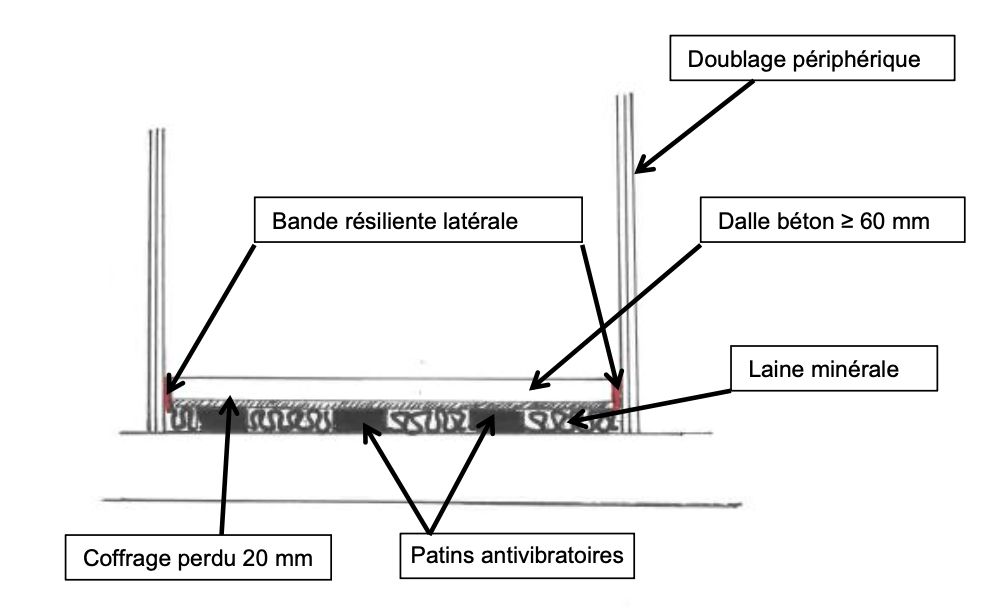
3D view of the proposed solution
These views provide a clearer understanding of the acoustic and anti-vibration floating slab principle. The slab is decoupled from the substrate using anti-vibration pads in order to limit the transmission of vibrations to the building structure.
Principle section
This section shows the position of the anti-vibration pads beneath the slab, as well as the peripheral decoupling planned at wall level. The aim is to avoid rigid contact between the floating slab and the existing structure.
Pad layout
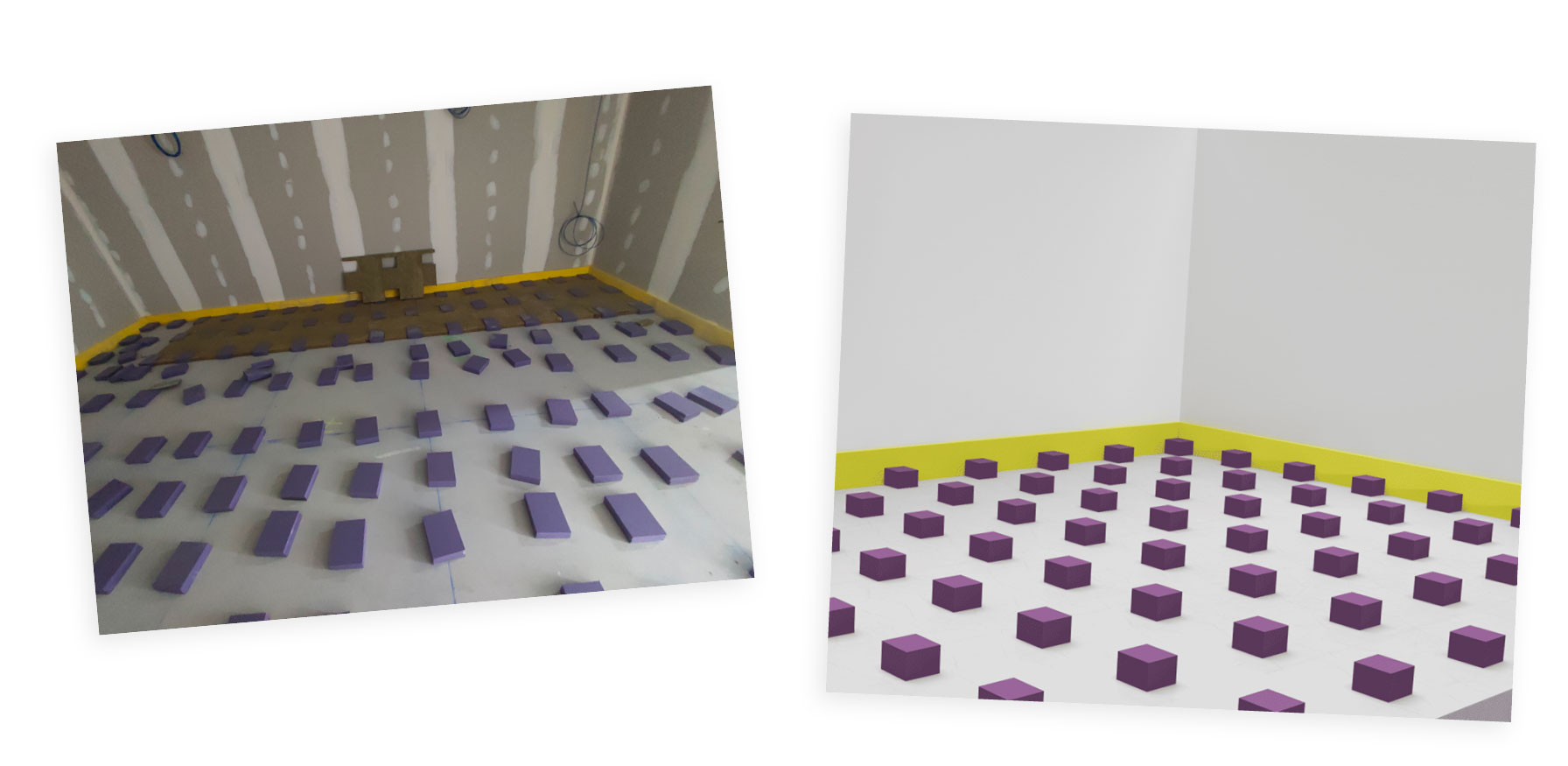
This view illustrates the distribution of support points under the floating slab. The positioning of the pads must be adapted to the load to be supported, the defined centre-to-centre spacing and the target natural frequency for the project.
Selected solution Product selection for the acoustic and anti-vibration slab
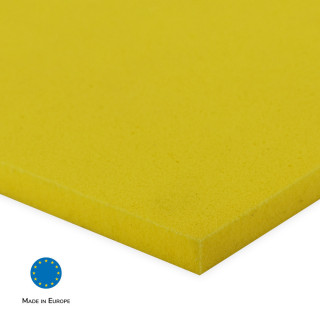
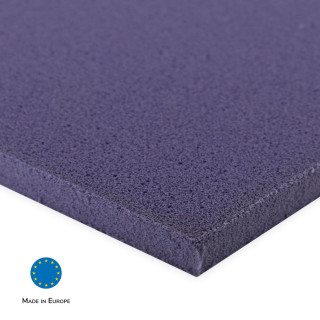
Different materials can meet this type of requirement. Among the high-performance solutions available, Regufoam Vibration Plus is particularly suitable for vibration decoupling applications under floating slabs.
This material can achieve a natural frequency below 9 Hz, depending on the variants, thicknesses and applied loads. It also offers excellent long-term durability for demanding projects.
Depending on the site constraints, other solutions can also be studied, such as the Super-Resilient acoustic mat for sound insulation, high-performance acoustic resilient mats under concrete bases or certain high-performance sound insulation panels.
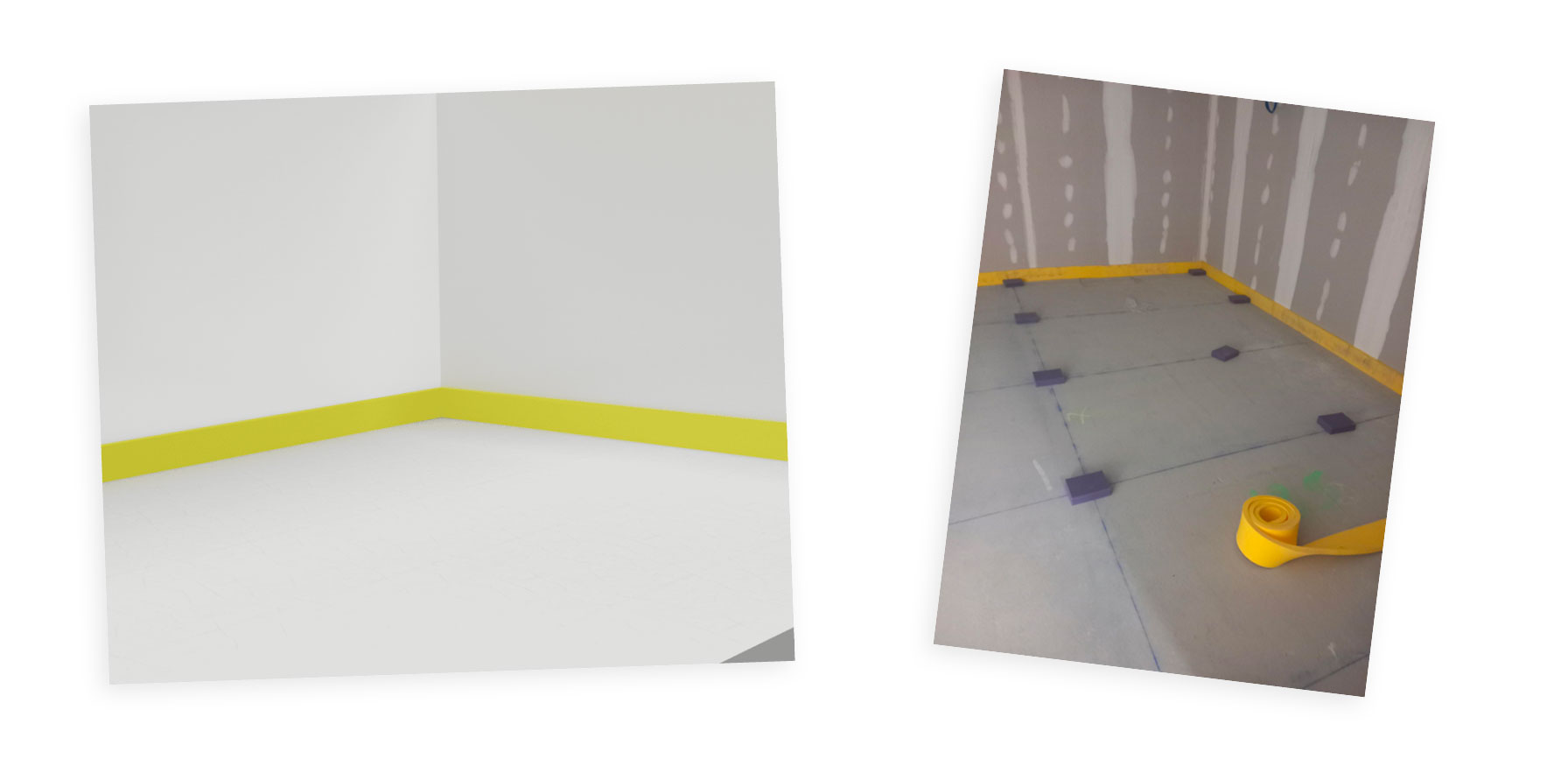
Perimeter strips
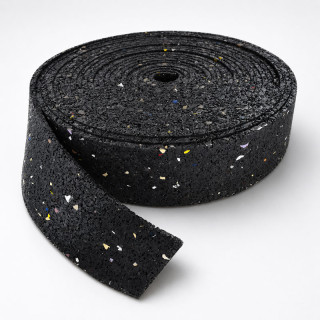
To ensure lateral decoupling of the slab, the selected solution is Regufoam Vibration 190.
Pads under the slab
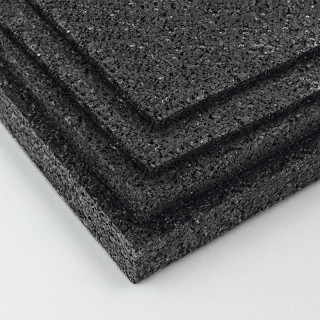
For the support points under the floating slab, the selected solution is Regufoam Vibration 220.
Key point
The choice of product depends on the target performance, budget, load to be supported, available thickness and target natural frequency. The format and thickness of the pads can be adjusted to obtain a high-performance, stable and durable solution.
Dimensioning Study and calculations for an acoustic and anti-vibration slab
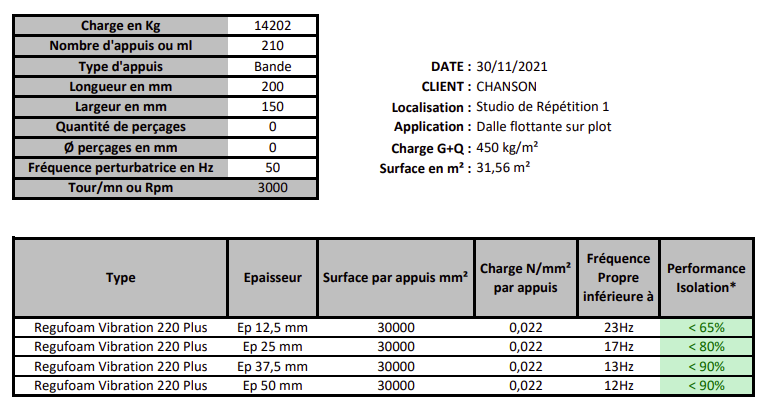
For rehearsal studio no. 1, the data provided by the construction company makes it possible to dimension the anti-vibration solution according to the surface area, permanent loads and operating loads.
Room surface area
31.56 m²
Permanent loads
200 kg/m²
Operating load
250 kg/m²
The total G + Q load is therefore approximately 14,202 kg. Based on the shape of the room and the maximum spacing of 50 cm per pad, the requirement for this room is estimated at around 210 pads.
These pads have a format that provides good stability for the permanent formwork when the concrete slab is poured.
Target natural frequency
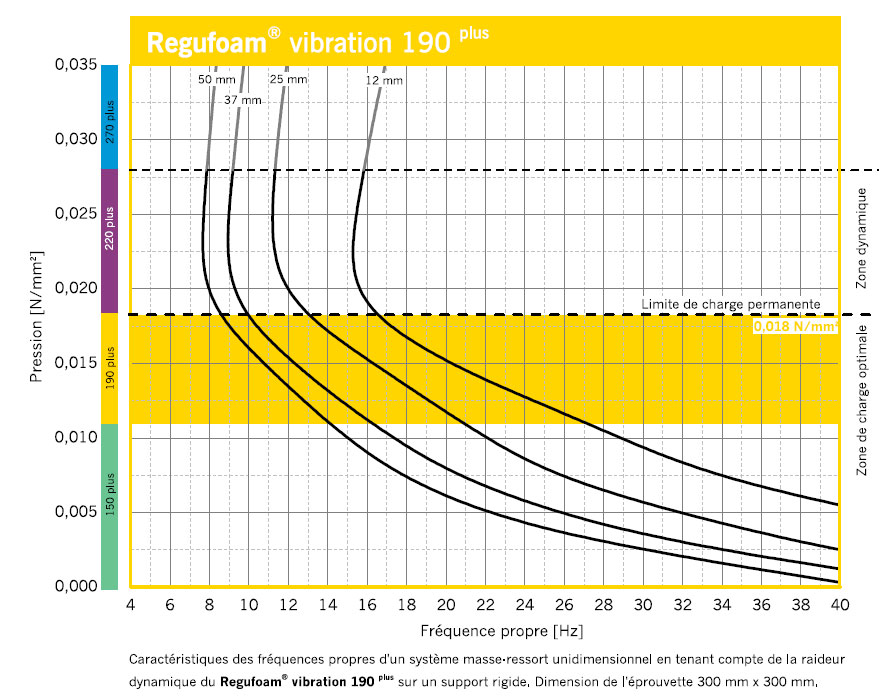
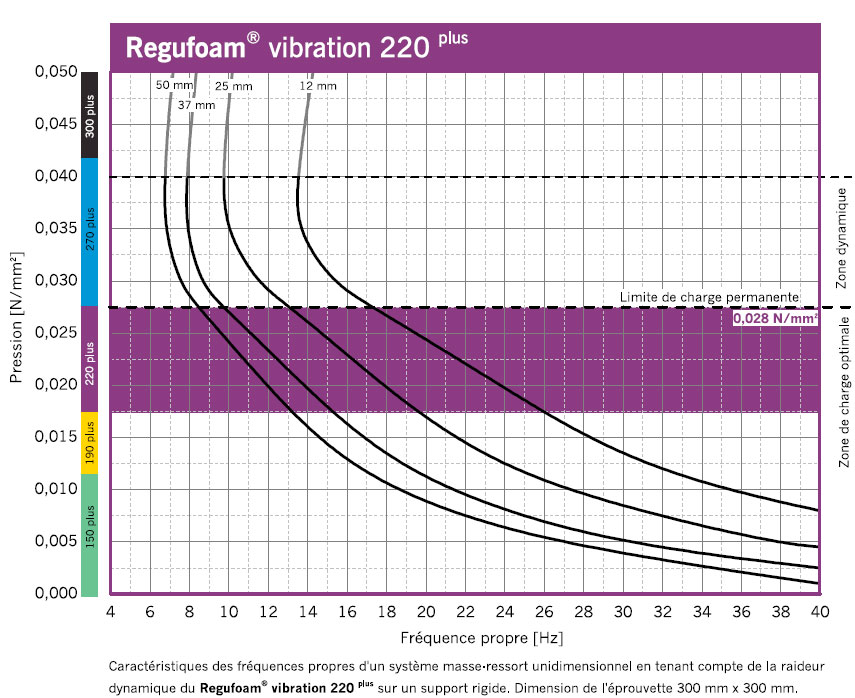
As indicated above, the objective is to achieve a natural frequency below 14 Hz, corresponding to a cut-off frequency of around 20 Hz, in order to filter a broad range of vibration frequencies in a musical environment.
In consultation with the acoustician and the construction company, it was decided to use a 50 mm thickness in order to obtain the best performance yield, with a natural frequency of approximately 11 Hz, corresponding to a cut-off frequency of around 15 Hz.
Natural frequency — Regufoam Vibration 190
Natural frequency — Regufoam Vibration 220
Installation Installation advice for an acoustic and anti-vibration slab
The final performance depends as much on the choice of material as on the quality of installation. The pads must be positioned precisely to ensure proper load distribution and avoid rigid bridges.
Pad distance and centre-to-centre spacing
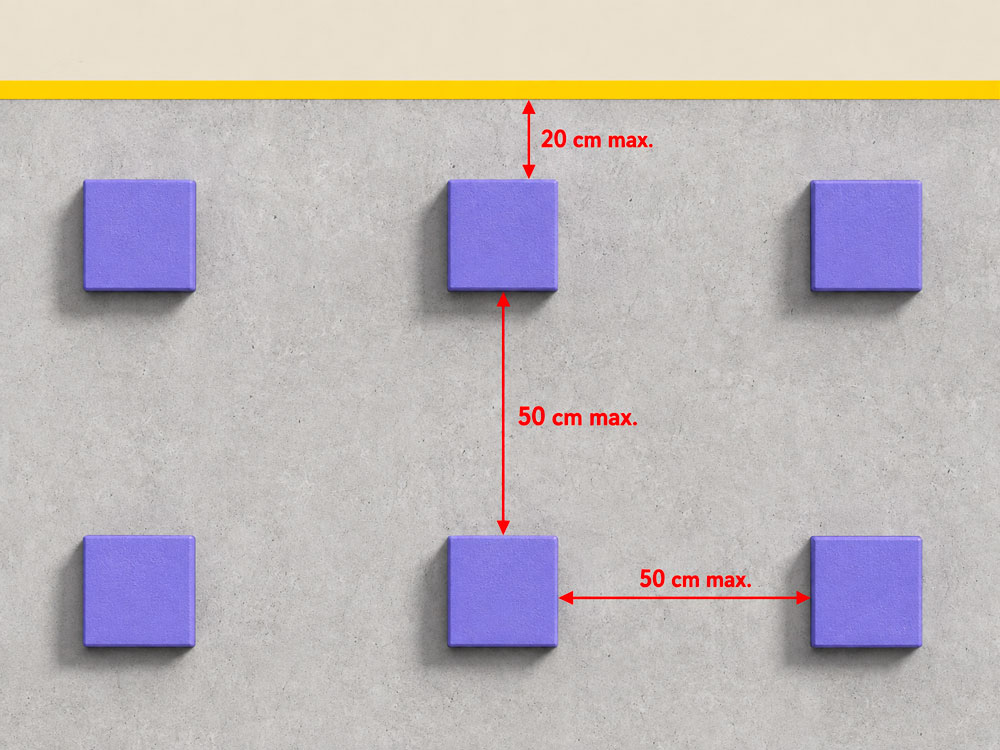
The first pad must be placed no more than 20 cm from the wall. The centre-to-centre spacing between pads must then remain at a maximum of 50 cm, depending on the load and the defined layout.
Mineral wool height
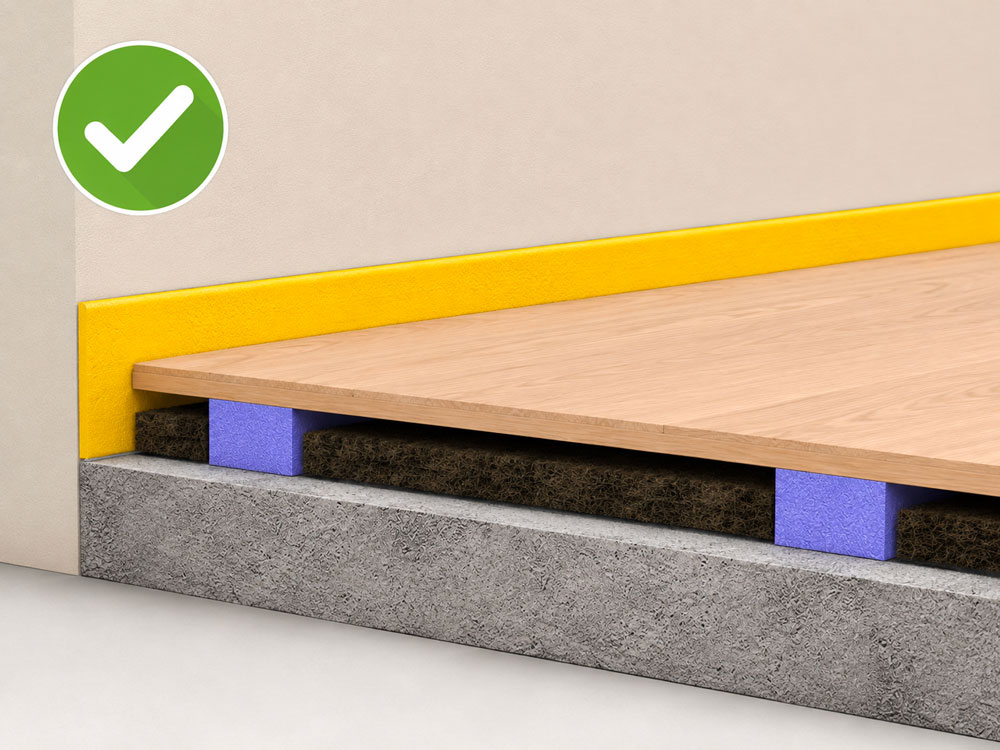
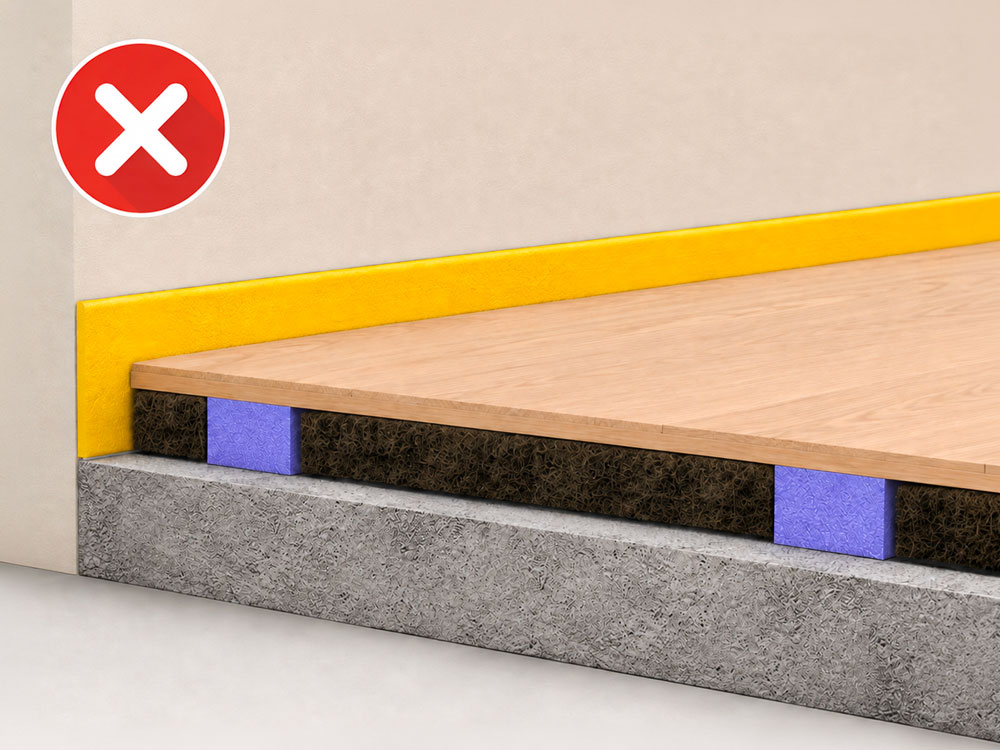
The height of the mineral wool must remain lower than the height of the pads, taking into account compression of the material under load.
Correct installation
Installation to avoid
Points to watch Common mistakes to avoid
In summary An effective acoustic slab depends on correct dimensioning
An acoustic and anti-vibration slab helps reduce the transmission of vibrations and structure-borne noise in music studios, rehearsal rooms or cultural buildings.
The choice of material, thickness, pad format and spacing must be determined according to the loads, surface area, target natural frequency and the acoustician’s recommendations.
Solutions Élastomères supports professionals in selecting suitable anti-vibration solutions, particularly with the Regufoam Vibration range.
Frequently asked questions Frequently asked questions about acoustic and anti-vibration slabs
What is the service life of an acoustic and anti-vibration slab made with Regufoam?
Service life depends on the loads, environment and installation quality. With appropriate dimensioning, Regufoam Vibration provides a stable and durable long-term solution.
How is the ideal natural frequency determined?
The natural frequency depends on the studio use, the loads, the desired level of insulation and the acoustician’s recommendations. For a music studio, a low natural frequency is generally targeted in order to filter vibrations over a broad frequency range.
Which technical criteria must be considered when choosing the pads?
The total load, load per pad, centre-to-centre spacing, available thickness, target natural frequency and floor configuration must all be taken into account.
What mistakes should be avoided during installation?
The most common mistakes are creating rigid bridges, failing to respect the spacing, installing mineral wool that is too high, or incorrectly positioning the perimeter strips.
Is an anti-vibration slab enough to treat the whole studio?
The slab mainly treats vibration transmission through the floor. For a complete studio treatment, it may also be necessary to work on the walls, ceiling, doors and internal acoustic correction using absorbent materials.
Let’s work together An acoustic or anti-vibration project? Let’s discuss it.
Are you working on a studio, rehearsal room, technical room or cultural building project?
Our team helps you select a suitable solution according to the loads, target natural frequency, available thickness and site constraints.