Nos experts à votre écoute :


Wall soundproofing How to achieve sound insulation for a wall?
Wall soundproofing helps reduce noise transmission between two homes, two rooms or a neighbouring space. It is particularly useful when a party wall allows voices, music, television or everyday noise to pass through.
In this article, we explain the main steps for soundproofing a wall, the criteria to consider before choosing a solution, and an installation example using a wall acoustic insulation kit.
Discover our acoustic foamsTable of contents
Understanding the need Why soundproof a wall?
Noise nuisance is now part of everyday life. In a home, office or older building, a poorly insulated wall can allow voices, music, television or noise from a neighbouring space to pass through.
Recent buildings generally include sound insulation solutions from the design stage, especially for walls and floors. In older buildings, treatment is often more complex because the insulation was not originally planned.
The role of a wall soundproofing material is therefore to reduce noise transmission, so that several people can live, work or carry out an activity without creating excessive nuisance for neighbours or adjacent rooms.
Main objectives
• Limit noise transmitted through a party wall.
• Improve comfort in a bedroom, office or home.
• Reduce nuisance between two spaces.
• Preserve peace and quiet and help reduce neighbour-related noise issues.
Material selection Choosing the best soundproofing material for a wall
To choose the best wall soundproofing material, the first step is to assess the available space, the wall configuration, whether the work can be carried out without professional assistance, and the budget allocated to the project.
The simplest solution is to have enough space to create a double partition and integrate a high-performance acoustic insulation material, such as composite foam.
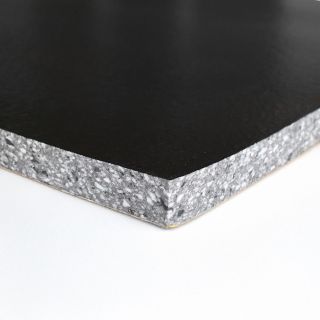
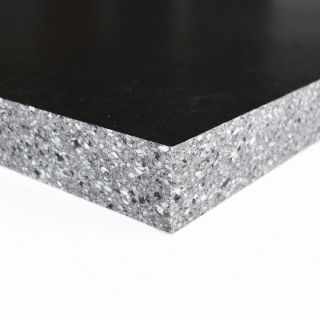
Composite foam is a bonded polyurethane foam. Its high density makes it suitable for effective sound insulation. It is also used in industry to insulate certain noisy machines, particularly in machine enclosures.
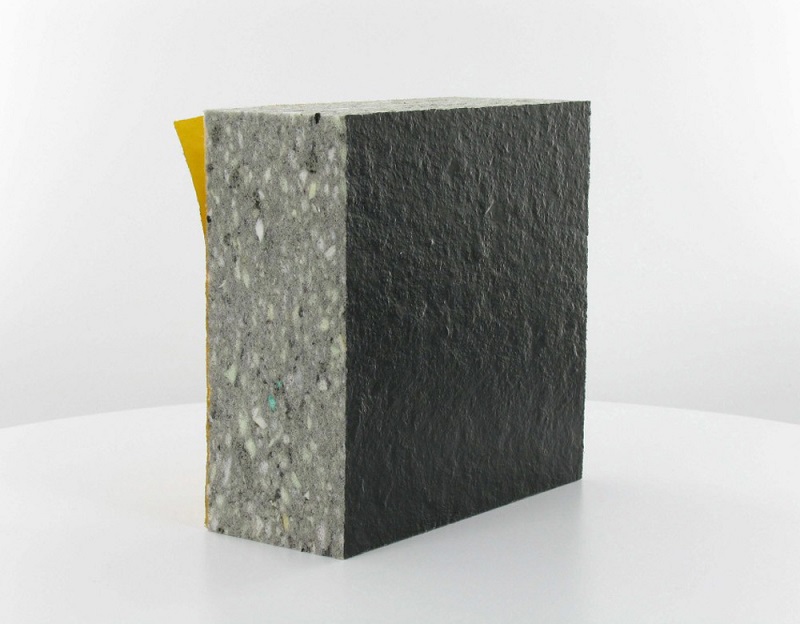
50 mm thick composite polyurethane foam.
Two possible approaches
• Create a double partition using rails, plasterboard and sound insulation material.
• Use a wall acoustic insulation kit designed for easier installation, without fixing rails.
For anyone looking for a simpler solution to install, wall acoustic insulation kits are available. They do not require specific expertise or fixing rails. The insulation material, mounting strips, adhesive mortar and required tools are designed to make installation easier.
Installation How to install acoustic insulation on a wall?
In this example, we present the main installation steps for a wall acoustic insulation kit. This solution was developed to address noise nuisance in older, poorly insulated buildings or in rooms where the aim is to improve wall insulation without rebuilding the entire wall structure.
Step 1
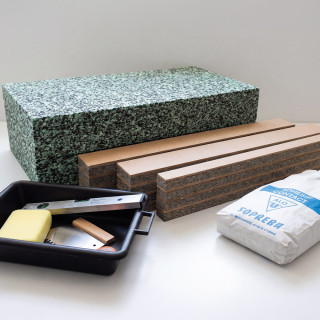
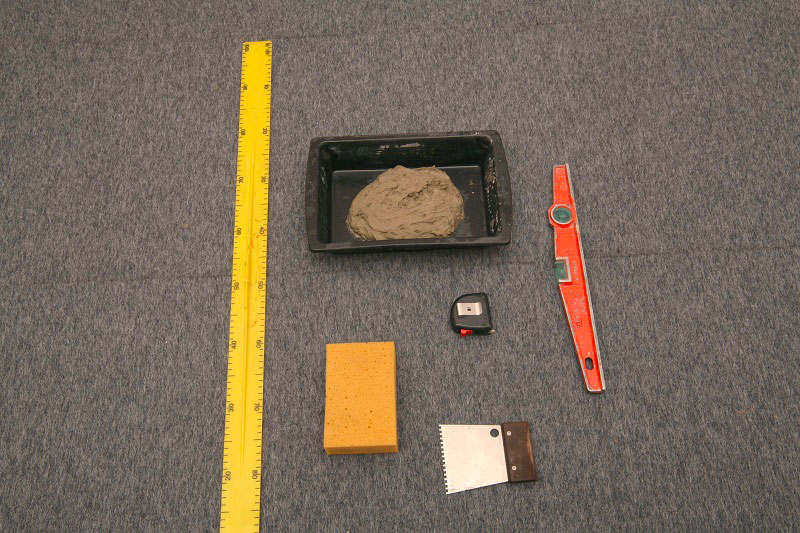
Composition of a 5 m² acoustic kit
The wall acoustic insulation kit consists of insulating foam panels, mounting strips made of two layers, a bag of suitable adhesive mortar and the tools required for installation.
Step 2
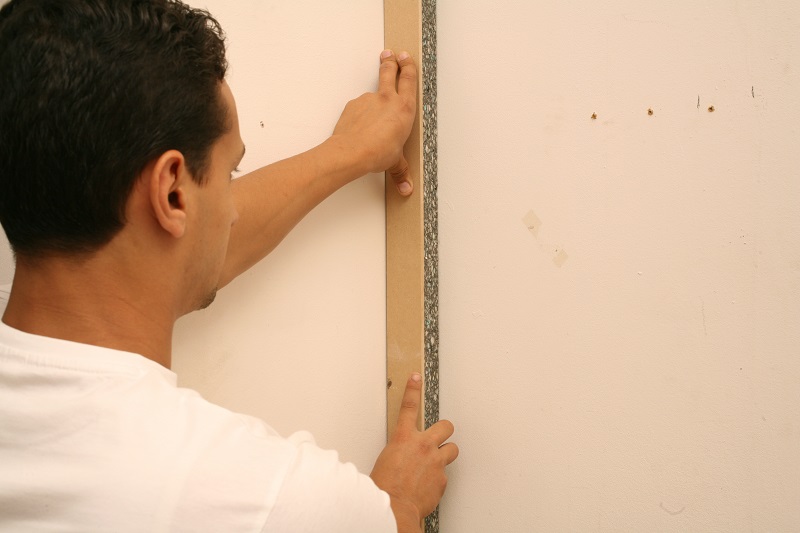
Bonding the kit mounting strips
After cleaning the wall, vertical guide lines must be marked where the mounting strips will be bonded. This step is essential, as the strips will then support the plasterboard sheets, which are not supplied.
Step 3
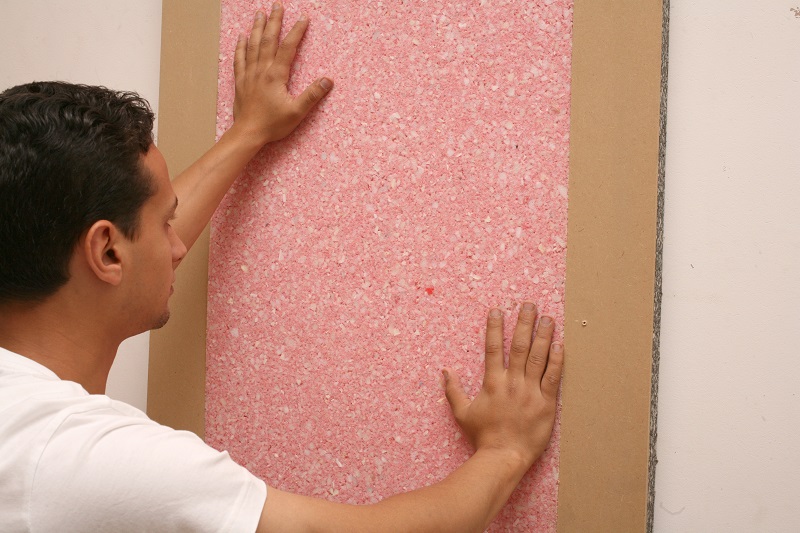
Installing the insulating foam panels
The mounting strips must be spaced 50 cm apart in order to insert the insulating foam panels in 100 x 50 cm format. The panels are not glued: they are held in place at their edges by the mounting strips.
Step 4
Installing the finishing layer
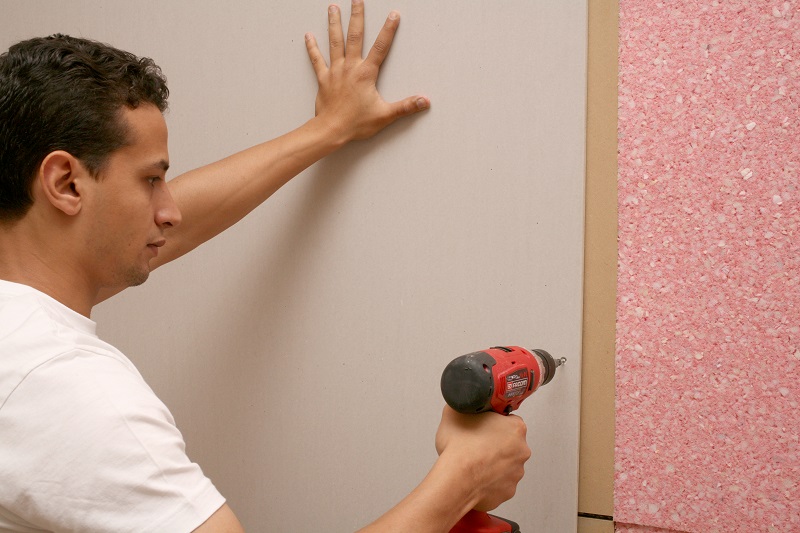
Once the mounting strips and foam panels are in place, the plasterboard sheets simply need to be screwed directly onto the kit strips to obtain a clean and aesthetic finish.
Find the full installation instructions and explanatory video here
Practical example Example of wall soundproofing in a bedroom
Bedrooms are among the rooms where soundproofing materials are most often installed in private homes. They are rest areas where noise from neighbours can quickly become disturbing.
The wall acoustic insulation kit offers an interesting compromise between ease of installation, efficiency and cost. Installing plasterboard then makes it possible to conceal the entire kit and maintain a harmonious interior finish.
Key takeaway
The space lost when insulating a bedroom remains limited: approximately 50 mm, with 35 mm of insulating foam and 13 mm of plasterboard.
This solution helps reduce noise nuisance while maintaining a clean and discreet interior finish.
Let’s work together Not sure about your wall insulation?
Would you like to reduce noise nuisance from a party wall, bedroom or professional space?
Our team can help you choose a solution suited to your project.