Nos experts à votre écoute :


Soundproofing and acoustic treatment Understanding the difference between soundproofing and acoustic insulation
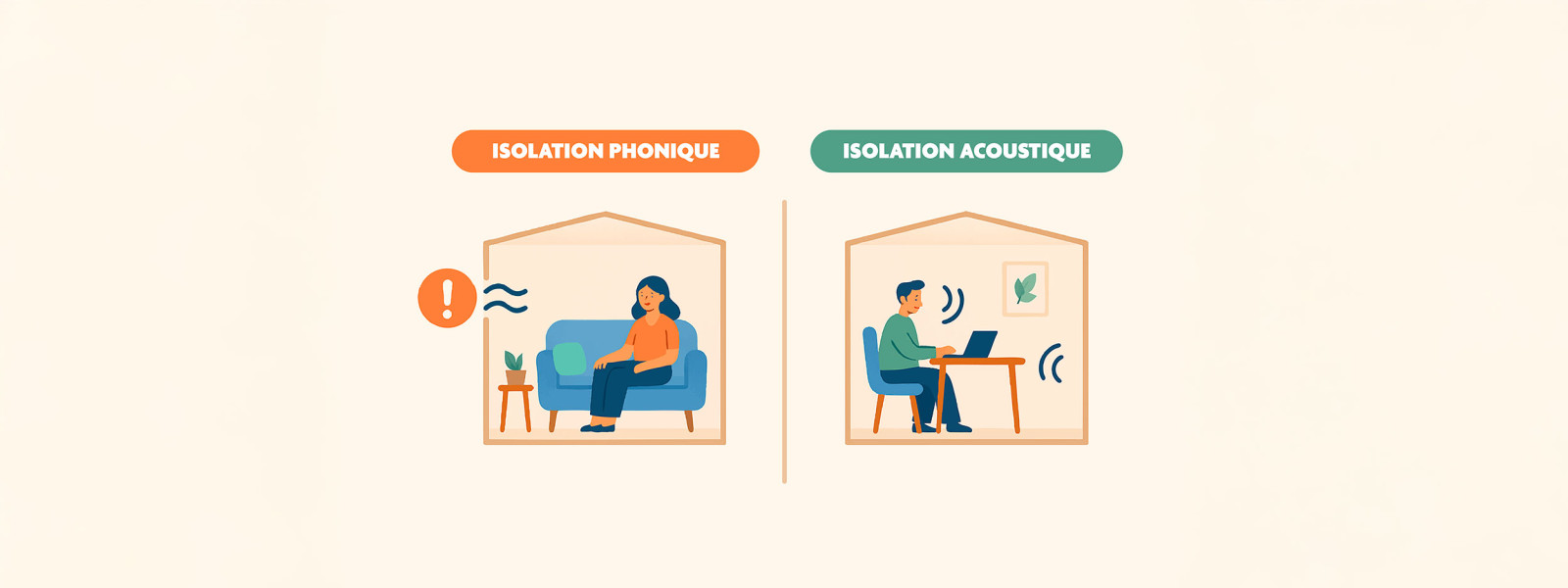
To properly treat noise nuisance, it is essential to understand the difference between soundproofing and acoustic insulation. These two concepts are often confused, even though they do not serve the same purpose.
Soundproofing aims to limit noise transmission between two spaces. Acoustic insulation, or acoustic treatment, improves sound comfort inside a room by reducing echo, reverberation or background noise.
Discover our acoustic foamsTable of contents
Noise transmission What is soundproofing?
Soundproofing consists of limiting the transmission of sound between two areas: two rooms, two homes, a workshop and offices, or a machine and its direct environment.
It acts on walls, floors, ceilings, partitions or building structures. The aim is to reduce the noise perceived on the other side of a wall, floor or technical support.
Airborne noise
These are sounds that travel through the air, such as voices, music, television or traffic. They pass through walls or partitions when these are not sufficiently insulated.
Impact noise
Impact noise is caused by a shock or contact with the structure: footsteps, heels, falling objects or furniture movement. The noise is then transmitted through floors and slabs.
Machines and vibrations
Machines, engines, fans or technical units can generate noise and vibrations. Without a suitable treatment, these nuisances can spread through the building structure and neighbouring rooms.
The objectives of soundproofing
• Reduce sound transmission between two rooms or two homes.
• Limit noise nuisance coming from outside or from a neighbouring room.
• Reduce footsteps, shocks, impacts or machine vibrations.
• Improve comfort in a professional or residential building.
Materials used for soundproofing
For this type of requirement, dense, resilient or multi-layer materials are generally used. The choice depends on the surface to be treated, the level of disturbance and the layout of the premises.
Depending on the case, it may be useful to integrate a soundproofing material, an acoustic insulation panel, a soundproof underlayment, a heavy mass layer, an anti-vibration solution or a specific treatment for machines.
Walls and partitions
Solutions for soundproof wall insulation help reduce noise transmission between two spaces.
Sheets and panels
Technical sheets and panels can complement a wall lining, ceiling treatment or an existing acoustic solution.
Machines and vibrations
For technical equipment, machine soundproofing materials and anti-vibration solutions are often required.
For party wall soundproofing, the exact sound transmission path must be identified. Good performance is often based on a combination of several principles: mass, absorption, decoupling and treatment of acoustic bridges.
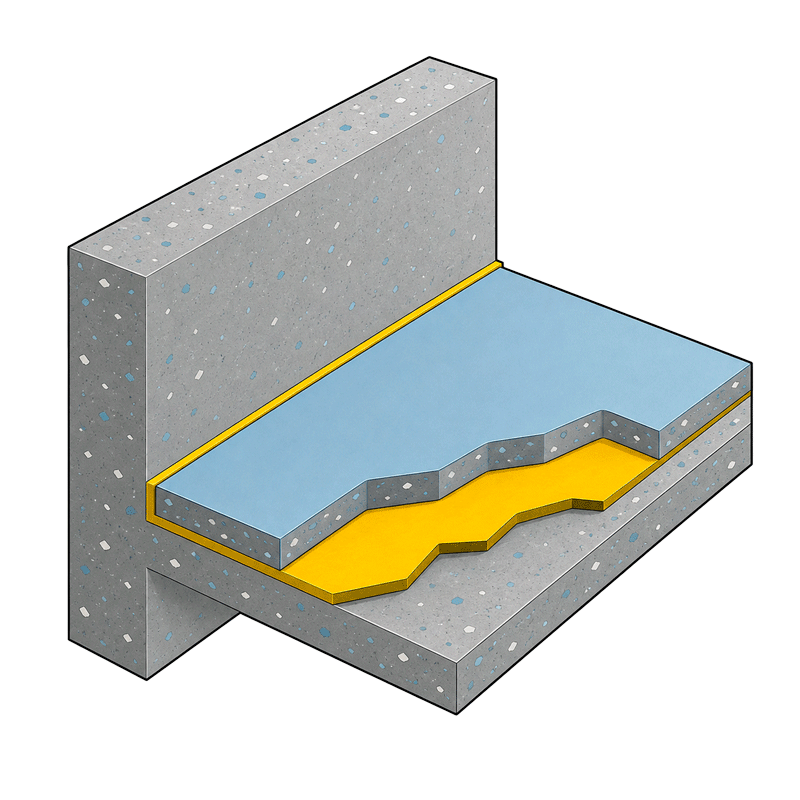
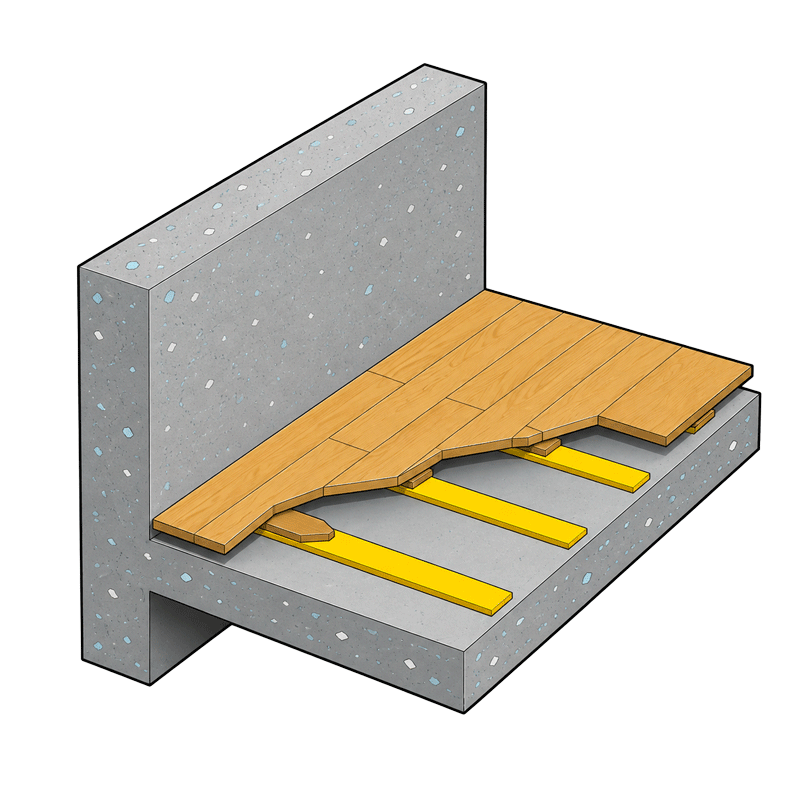
Soundproofing with a floating screed.
Soundproofing with joists.
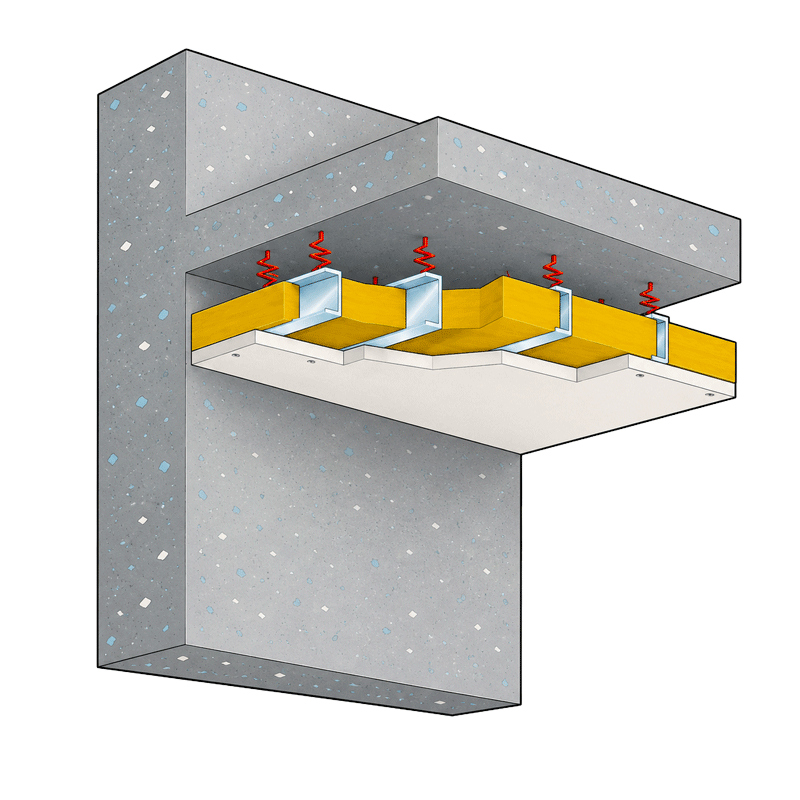
Soundproofing with ceiling supports.
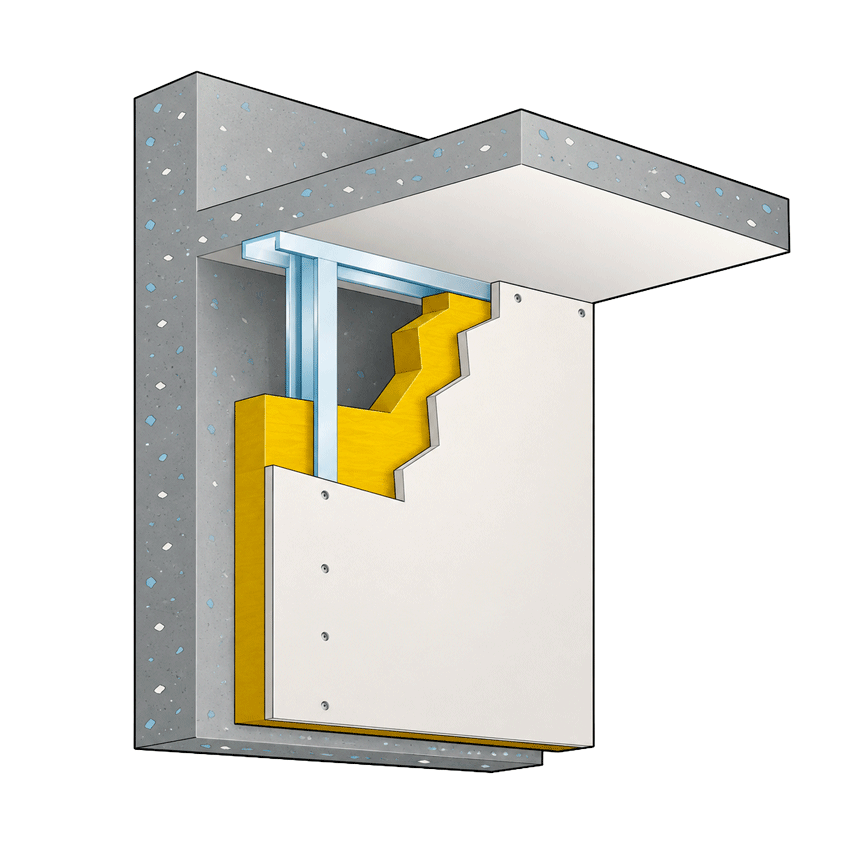
Wall soundproofing.
Indoor comfort What is acoustic insulation?
Acoustic insulation, often referred to as acoustic correction or acoustic treatment when dealing with an interior space, aims to improve sound quality inside a room. It does not necessarily block noise, but it reduces reverberation, echo and background noise.
It is particularly useful in restaurants, meeting rooms, offices, open-plan spaces, event halls, studios, professional premises and public-access buildings.
The objectives of acoustic insulation
• Reduce resonance and echo inside a room.
• Improve speech intelligibility.
• Limit hearing fatigue in noisy spaces.
• Create a more pleasant sound environment for occupants.
Materials used for acoustic insulation
To treat a room, absorbent products are preferred, as they are able to trap part of the sound waves. Acoustic foams are among the most commonly used solutions for improving sound comfort.
Depending on the requirement, it is possible to use alveolar foams, absorbent panels, studio acoustic foam or solutions dedicated to rooms, restaurants and bars.

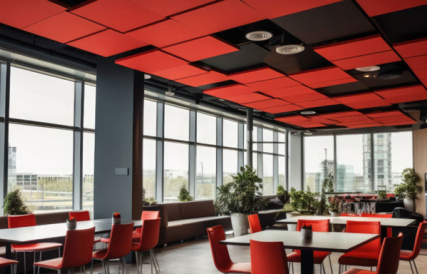
Illustration of a room without an absorbent panel.

Illustration of a room with an absorbent panel.
Comparison Key differences between soundproofing and acoustic insulation
The main difference lies in the objective: either reducing noise transmission from one space to another, or improving the sound environment inside a room. The products, performance criteria and installation methods are therefore not the same.
Performance comparison
On mobile, swipe the table to the right to view all columns.
Cost comparison
The cost depends on the surface area to be treated, the thickness of the materials, the expected level of performance and the complexity of installation.
Soundproofing
Complete soundproofing often requires more technical work. When treating a wall, floor or ceiling, installation may require decoupling, several layers of material and precise treatment of acoustic bridges.
Acoustic insulation
Acoustic insulation, or acoustic correction, can be quicker to implement. Depending on the room configuration, the work may simply involve adding acoustic foams, absorbent panels or decorative acoustic solutions to improve sound comfort.
Selection guide How to choose the right solution for your project?
Before choosing a solution, the first step is to identify the source of the noise disturbance. Is the noise coming from another room, a party wall, a floor, a ceiling, windows or a machine? Or is it more a question of discomfort inside the room, caused by echo, resonance or background noise? This distinction helps determine whether you need soundproofing, acoustic treatment or an anti-vibration solution.
Assess your specific requirements
Blocking noise
If noise is passing from one space to another, the focus must be on sound transmission with a system suited to the surface: wall, floor, ceiling or partition.
Reducing background noise
In a reverberant room, the aim is to improve listening quality and acoustic comfort using absorbent materials.
Treating vibrations
For a machine, engine or technical unit, an anti-vibration solution may be required to limit nuisance in the building.
Tips for successful installation
An effective installation depends on the right diagnosis. The selected material must correspond to the source of the problem, the available surface area, the noise level to be reduced and the layout of the space.
In some cases, treating a single wall is not enough. It may be necessary to take into account the ceiling, the floor, corners, technical penetrations, windows or contact points between structures to achieve better performance.
Which surfaces should be treated?
Depending on the project, the treatment may involve walls, ceilings, floors, partitions, machine enclosures or technical supports. For soundproofing and acoustic insulation for walls, the first step is to determine whether the goal is to block noise or improve comfort inside the room.
The requirements will not be the same for a party wall, a restaurant, an industrial room, an office, a home or an indoor space exposed to regular noise nuisance.
Practical examples Practical application examples
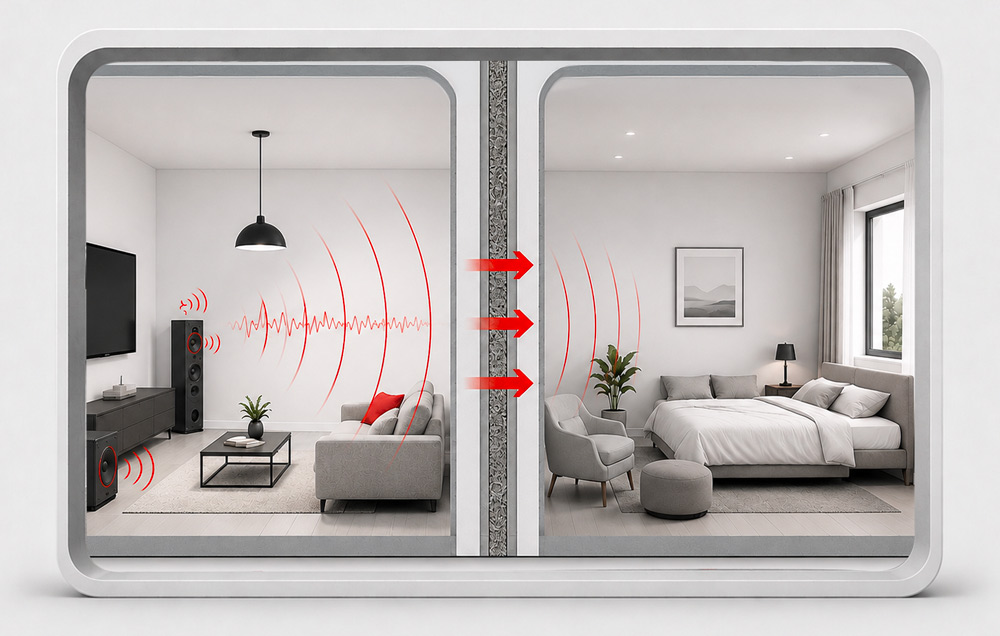
Noisy party wall
The aim is to limit sound transmission between two homes or two rooms using a solution suited to the wall concerned.

Noisy restaurant
The main requirement is often to reduce resonance, echo and internal background noise to improve customer comfort.
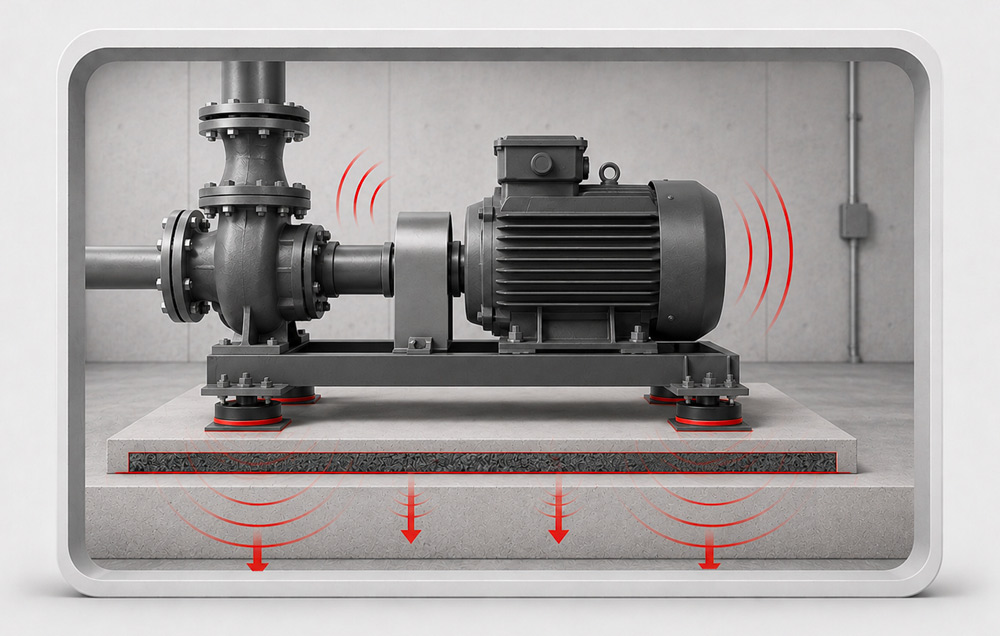
Vibrating machine
Vibrations must be treated at the source using an anti-vibration solution, decoupling system or suitable support.
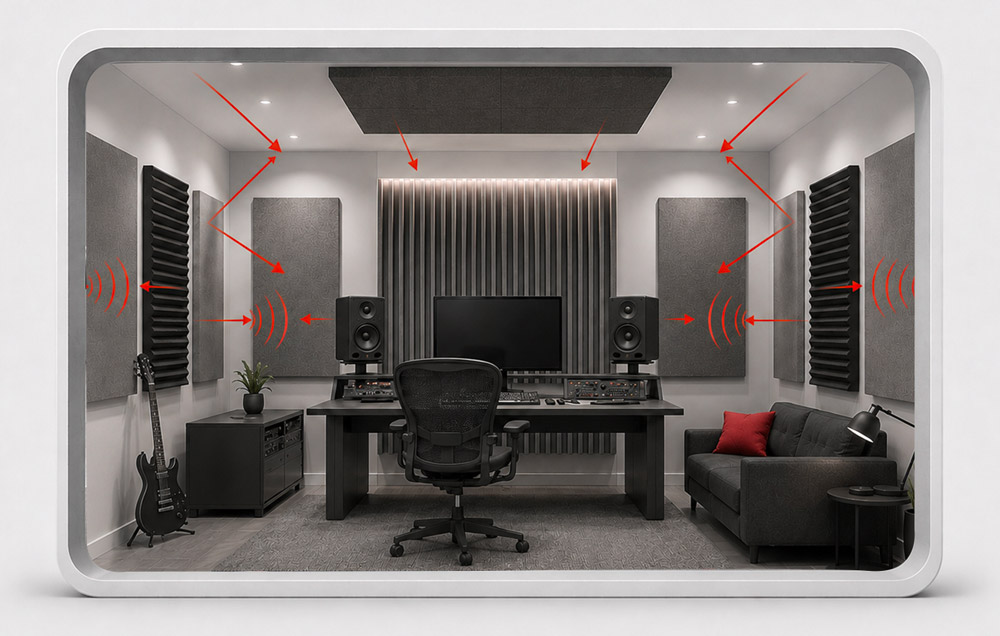
Studio or audio room
The aim is to better control sound reflections using acoustic foams or absorbent panels.
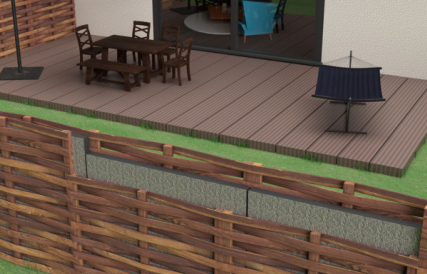
Noise treatment is not limited to indoor spaces. Outdoor solutions can also be used, such as specific acoustic fences or noise barriers. Discover our article dedicated to outdoor sound insulation to learn more.
In summary Identify the problem before choosing a solution
The right solution depends on the type of noise nuisance encountered. If sound is passing from one space to another, the focus should be on transmission. If the discomfort comes from echo or resonance inside a room, the priority is to improve sound absorption.
Party wall, ceiling, industrial room, machine, restaurant or meeting room: every situation requires a solution adapted to the constraints of the premises and the expected result.
Frequently asked questions Frequently asked questions about soundproofing and acoustic insulation
What is the best product against noise?
There is no single answer. To reduce transmission, dense, resilient or multi-layer materials are preferred. To improve a room’s sound comfort, absorbent products such as foams or panels are more suitable.
What is the difference between acoustic insulation and acoustic correction?
Acoustic correction is an interior treatment that reduces echo, reverberation and background noise. The term acoustic insulation is sometimes used more broadly, but it is useful to distinguish between interior acoustic treatment and noise transmission reduction.
What does “soundproofed” mean?
A soundproofed space is designed to strongly limit sound entering or leaving. Interior acoustic treatment, on the other hand, aims to make the sound more pleasant inside the room, without necessarily blocking noise completely.
What should you choose for a restaurant?
In a restaurant, the main issue is often background noise. The priority is therefore to improve absorption inside the room. If the noise also disturbs the neighbourhood, an additional treatment against sound transmission may be required.
Let’s work together Have an acoustic project? Let’s talk.
Are you hesitating between wall treatment, absorbent foam, an anti-vibration solution or a technical panel?
Our team helps you find the most suitable solution for your application.