Nos experts à votre écoute :


Outdoor sound insulation Everything you need to know about outdoor sound insulation
Outdoor noise can quickly become a major nuisance: heat pumps, industrial ventilation systems, noisy machinery, neighbourhood noise, road traffic or technical equipment. In these situations, it may be necessary to install a suitable outdoor sound insulation material.
The objective is to reduce noise nuisance while taking into account the specific constraints of outdoor environments: rain, humidity, temperature variations, UV exposure, fixing method, ventilation and material durability.
In this article, we review the main applications, the possible materials and the precautions to take when choosing an acoustic solution suitable for outdoor use.
Our selection of acoustic foams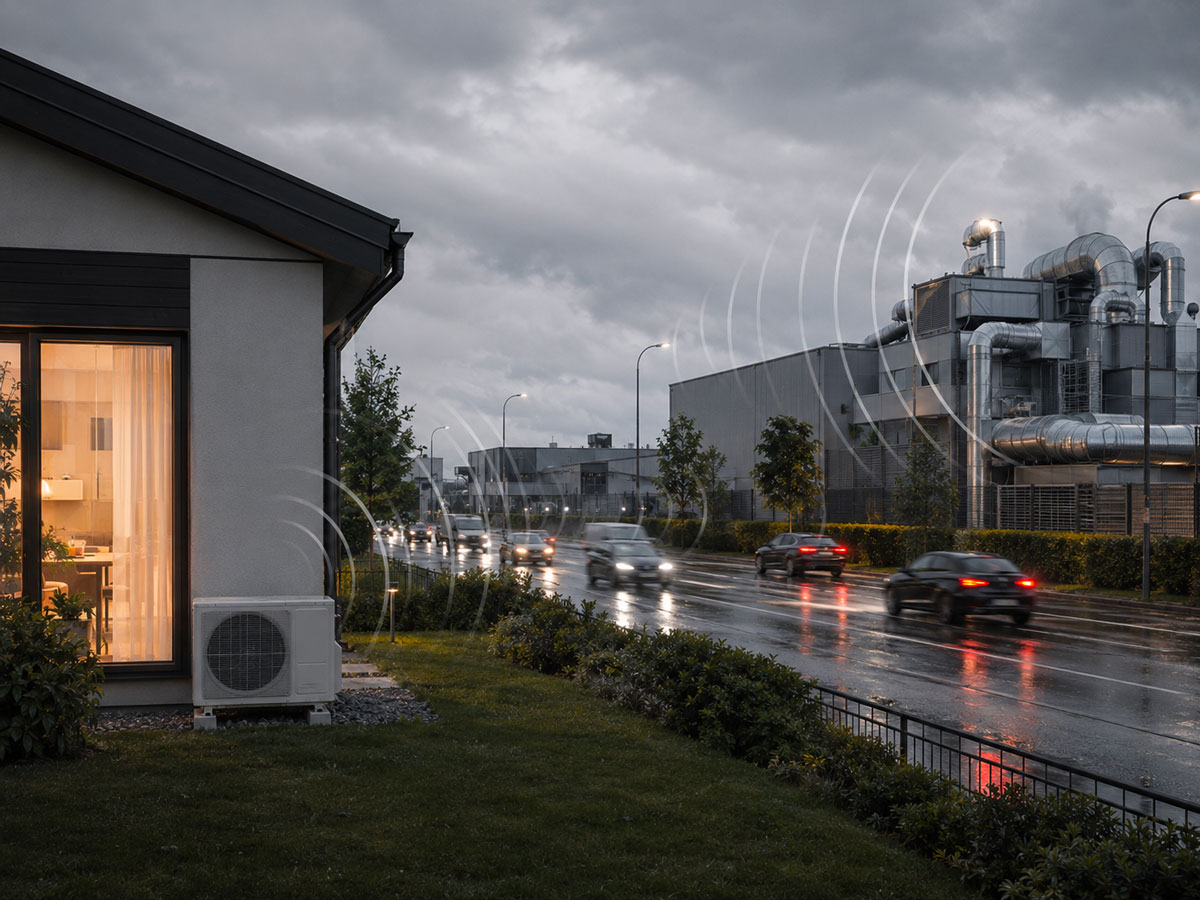
Table of contents
Understanding the need Why treat noise directly outdoors?
The vast majority of acoustic treatments are used indoors: studios, restaurants, offices, workshops or technical rooms. However, some types of noise need to be treated directly outdoors, as close as possible to the sound source.
This is the case when equipment emits noise towards neighbouring properties, when a machine is installed outdoors or when an acoustic barrier must limit sound propagation in a given direction.
The main challenge is to choose a material that can maintain its performance despite bad weather, humidity, UV exposure or mechanical constraints. To compare possible approaches, you can also read our guide to choosing the best sound insulation material.
To view available solutions for absorption and acoustic correction, also see our selection of acoustic foams.
The priority
Outdoors, choosing a foam with good acoustic performance is not enough. The actual exposure of the material must also be checked: direct rain, run-off water, splashes, UV exposure, fixing method and ventilation.
Common applications Heat pumps, ventilation, roads: the most common cases
The most common requirements concern technical equipment, industrial installations and barriers designed to limit noise propagation outdoors.
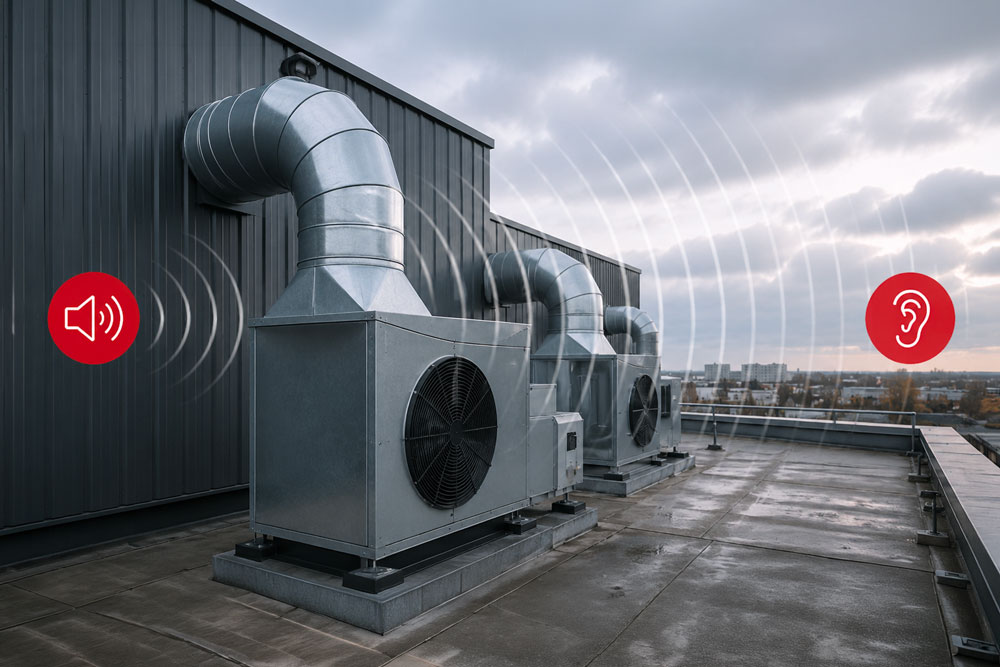
Industrial ventilation
Ventilation or air-handling systems installed on rooftops can generate significant noise nuisance for the surrounding area. One solution may involve integrating absorbent materials into a barrier, enclosure or acoustic baffle.
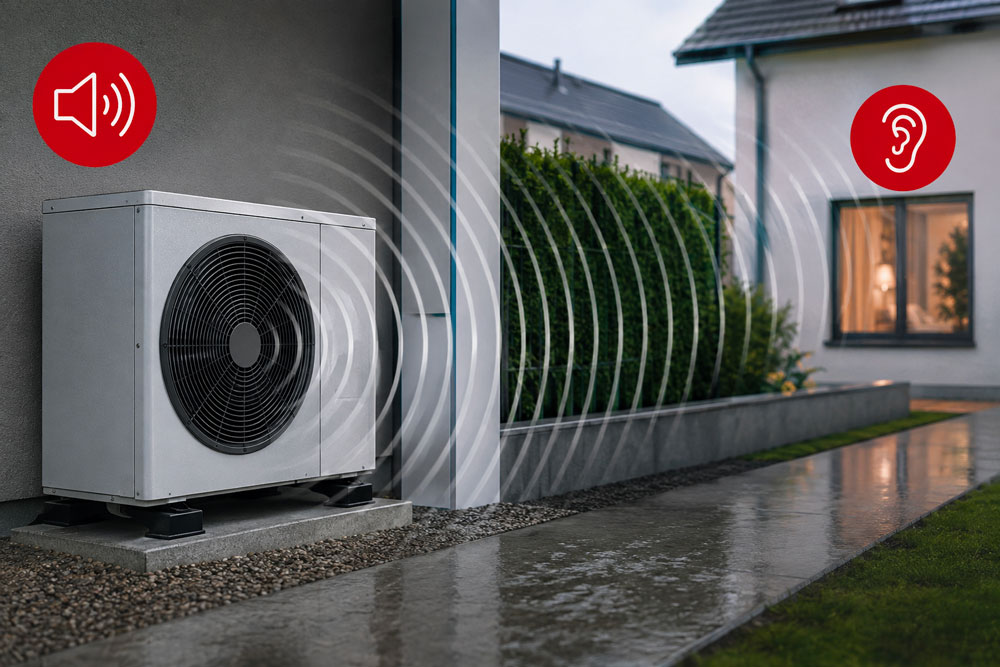
Heat pumps
Heat pumps produce noise through the compressor and air movement. Treatment may involve the enclosure, acoustic baffles or lining certain internal faces with a suitable foam, without blocking the airflow that is essential for the machine to operate correctly.
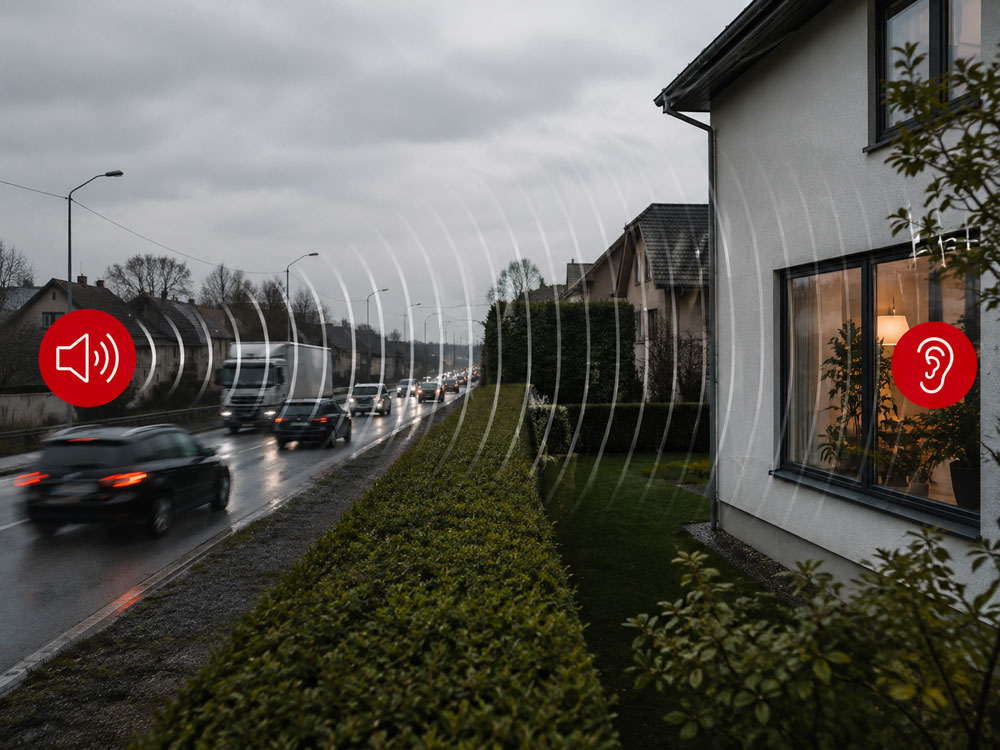
Noise barriers
Outdoor acoustic barriers help reduce noise propagation in a given direction. Their efficiency depends on the material selected, but also on the barrier height, continuity, positioning and the absence of direct passages for sound.
Material selection Choosing an outdoor sound insulation material according to exposure
Choosing an outdoor sound insulation material does not depend solely on acoustic performance. Its level of protection against water, humidity, UV exposure and installation constraints must also be checked.
Sheltered outdoor area
Under an enclosure, canopy or in a sheltered area, certain foams with a protective film may be considered.
Exposed outdoor area
When directly exposed to rain or water splashes, materials genuinely suitable for weather exposure should be preferred.
Enclosure or barrier
The design is just as important as the material: baffles, airflow, fixing method and absence of acoustic bridges.
For wall-related projects, you can also visit our soundproof wall insulation for outdoor applications category and our article on techniques for soundproofing a wall.
Sheltered use Polyurethane foams: only for sheltered outdoor use
Certain polyurethane foams can be used outdoors only when they are protected from direct weather exposure, for example inside an enclosure, under shelter or in a properly designed housing.
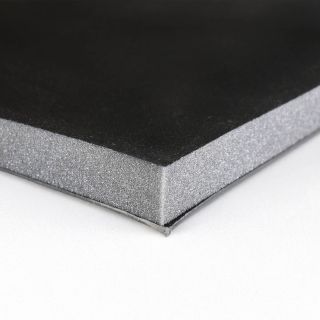
SE30FL and SE30FL-ML foam
The SE30FL polyurethane foam, also known as smooth-side foam, is an open-cell foam with a protective film on one side. It can be used in sheltered outdoor applications, for example inside an enclosure.
To improve performance at low frequencies, a version with an integrated heavy mass is also available: SE30FL-ML.
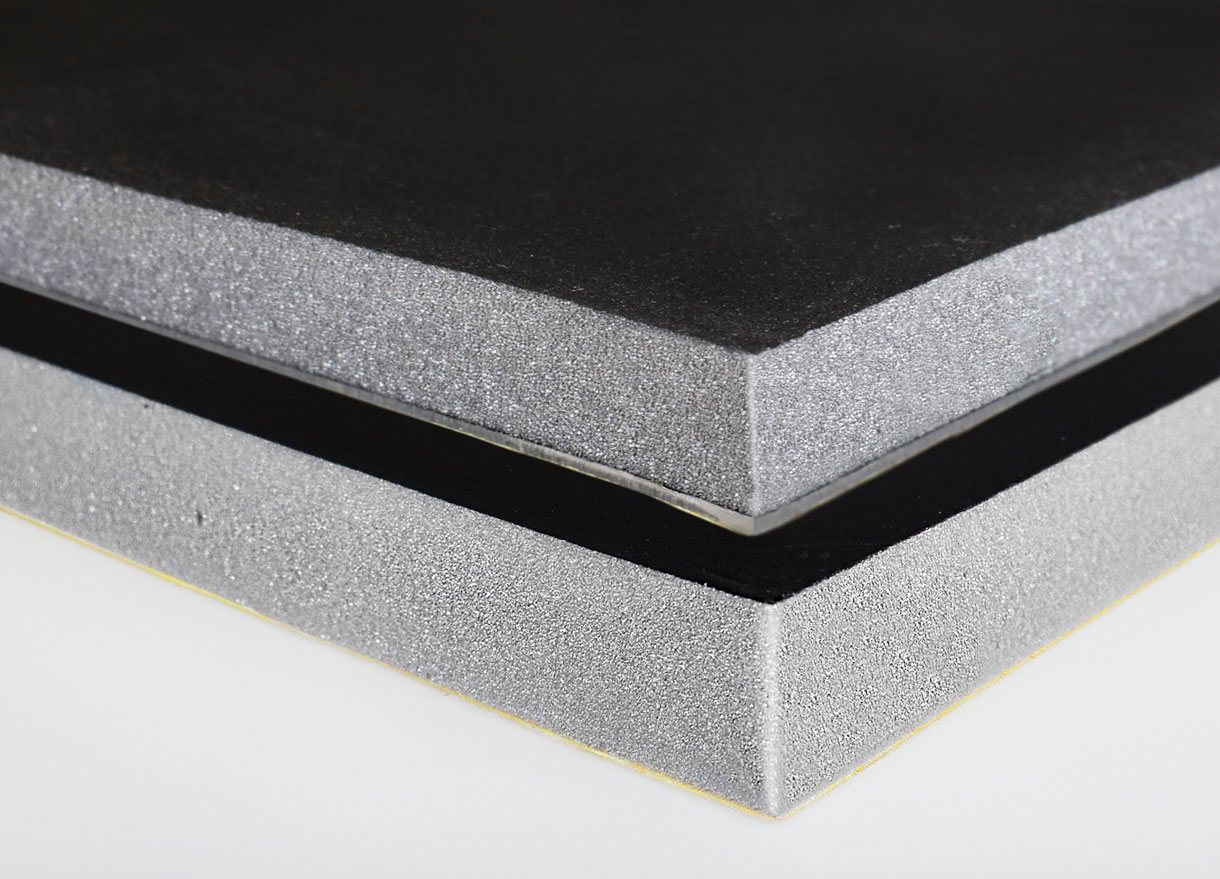
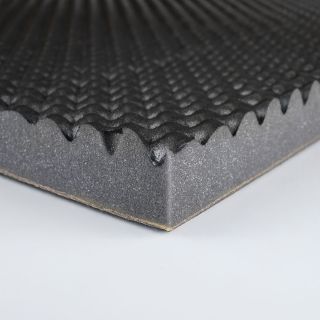
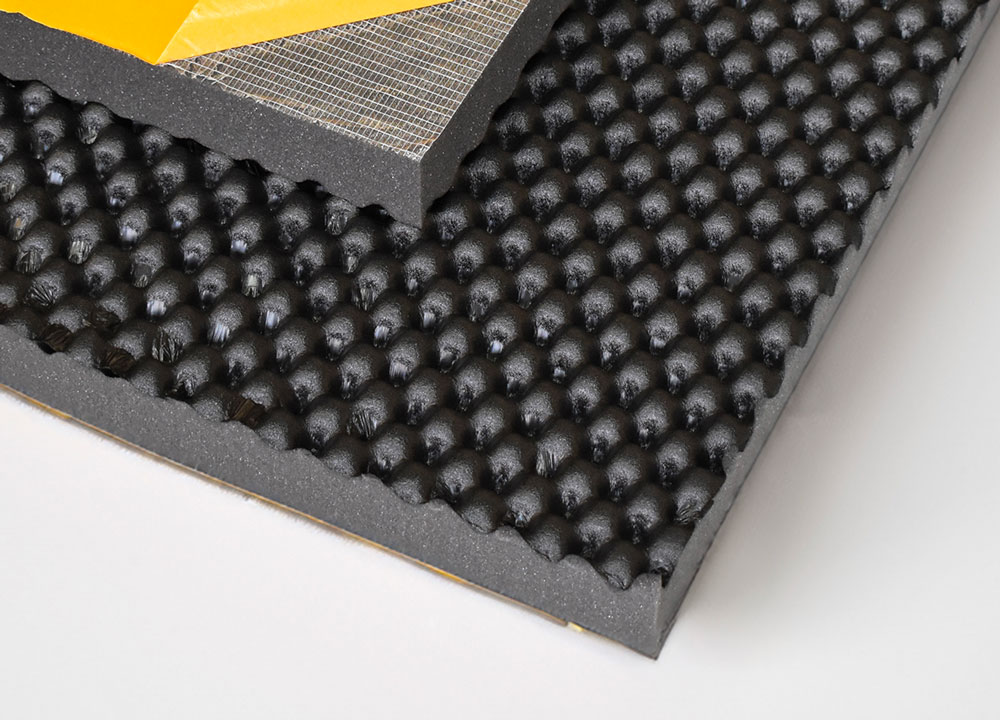
Alveolar foam with protective film
For users wishing to use an alveolar foam, the SE50AL-SM foam features a protective film on one side. Its alveolar shape increases the absorption surface, while remaining suitable only for protected configurations.
Point of attention Composite foam: useful, but not for direct exposure
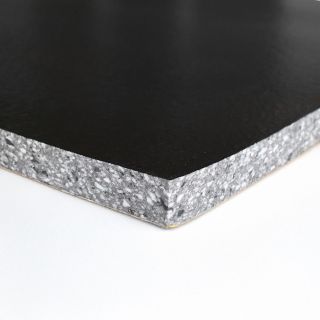
The SE25-Composite foam is a high-density agglomerated polyurethane foam, suitable for soundproofing machinery, enclosures or technical partitions.
It may be relevant for certain outdoor acoustic projects, but rather as part of an enclosure, sheltered area or additional protection system. A foam protected on the surface should not be confused with a foam that is fully waterproof throughout its structure.
In the event of direct and permanent exposure to rain, water splashes or humidity, it is preferable to consider a solution better suited to weather conditions, such as waterproof rubber foam or self-supporting polyethylene foam.
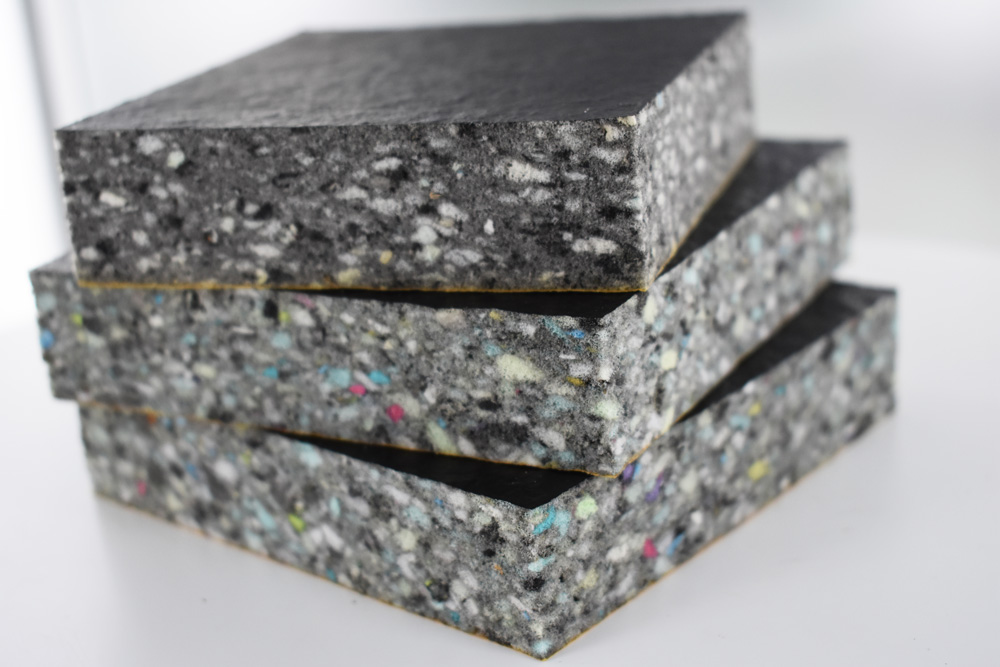
SE25-Composite acoustic foam
Key point
Composite foam may be considered for protected outdoor sound insulation, but it should not be presented as the main solution for direct exposure to bad weather.
Exposed outdoor use SE552 rubber foam: for exposed outdoor applications
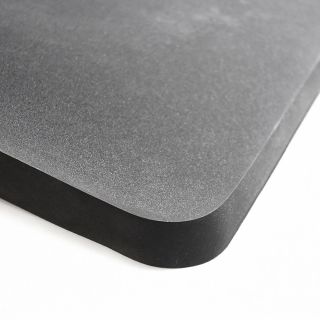
The SE552 rubber foam is a suitable solution when the insulation material needs to withstand more demanding outdoor conditions.
Made with closed cells, it offers very good water resistance and can be used for outdoor applications, particularly in combination with wooden panels, technical supports or noise barriers.
It will generally be less absorbent than an open-cell foam, but its main advantage is its resistance to outdoor constraints and long-term stability.
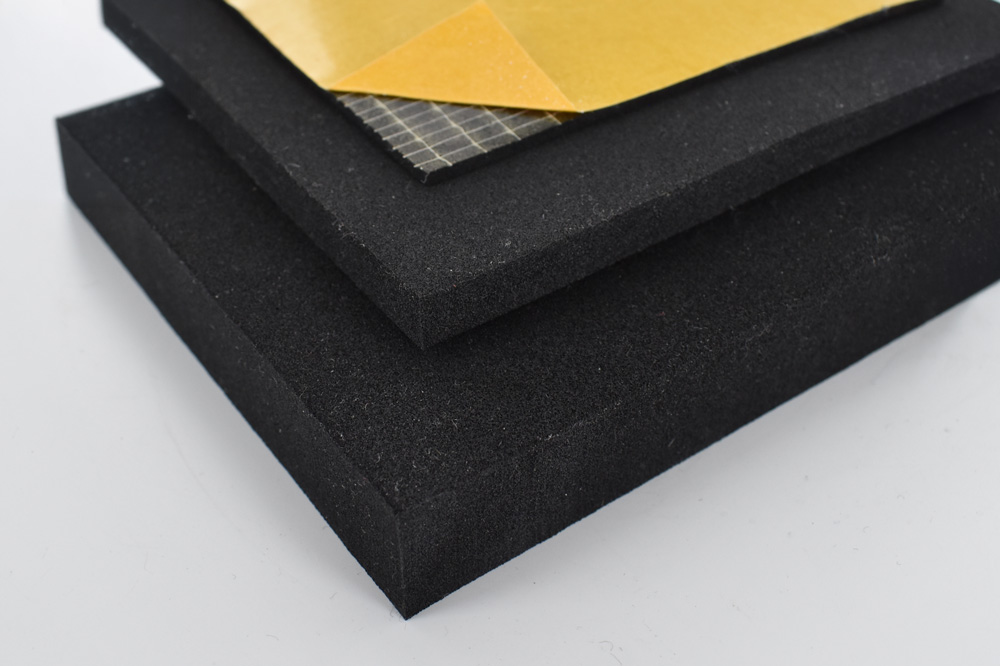
SE552 acoustic foam
Robust solution SER-2AIG: a self-supporting solution for barriers and enclosures
The SER-2AIG reference is a cross-linked polyethylene foam designed to meet demanding technical constraints.
Its main advantage is its rigidity: it can be used in configurations where a more self-supporting solution is required, for example to create acoustic barriers or enclosures around noisy machines.
This solution can be particularly useful in industrial environments or projects requiring a robust, durable material suited to outdoor constraints.
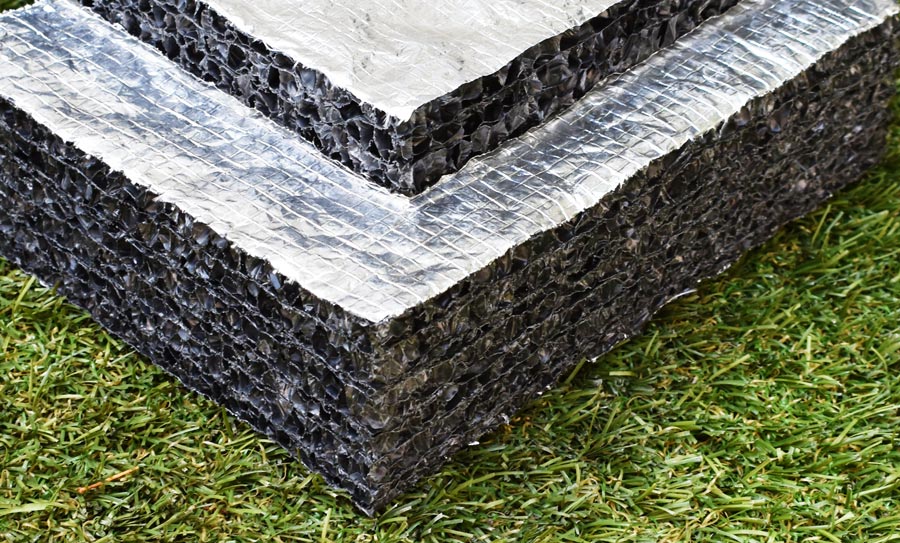
SER-2AIG acoustic foam
Implementation Key points for successful outdoor sound insulation
Identify the noise source
Before choosing a material, it is necessary to determine whether the noise comes from a motor, a fan, a vibration, an airflow or propagation between two spaces.
Preserve ventilation
For a heat pump or ventilation system, the acoustic treatment must never prevent the airflow required for the equipment to operate correctly.
Protect the materials
When the foam is not fully suited to direct exposure, it must be integrated into a design that limits water, splashes and mechanical damage.
In summary Outdoor sound insulation: key points to remember
Effective outdoor sound insulation depends on the type of noise nuisance, exposure to bad weather, the design of the enclosure or barrier, and the material used.
Analyse the noise
Identify the sound source, the direction of propagation and the level of nuisance to be reduced.
Check exposure
Distinguish between a sheltered area and direct exposure to rain, splashes or humidity.
Choose the material
Adapt the foam or acoustic system to the installation, expected durability and technical constraints.
Frequently asked questions Frequently asked questions about outdoor sound insulation
How do you choose the right outdoor sound insulation material?
The noise source, exposure to water, the presence of an enclosure, the necessary ventilation and the required level of performance all need to be considered.
Can acoustic foam be used outdoors?
Yes, but not just any foam. Some foams are suitable only for sheltered outdoor use, while others are better suited to bad weather or direct exposure.
How can the noise from an outdoor heat pump be reduced?
It is possible to work on the enclosure, internal faces, acoustic baffles and the direction of noise propagation. However, the airflow required for the heat pump to operate correctly must always be preserved.
How can the durability of an outdoor sound insulation material be ensured?
The material must be selected according to its real exposure. Edges should also be protected, water stagnation avoided, suitable fixing provided and the condition of the installation checked regularly.
Is an outdoor noise barrier always effective?
Its efficiency depends on its height, continuity, proximity to the sound source and the choice of materials. A poorly positioned or discontinuous barrier may allow a significant amount of noise to pass through.
Let’s work together An outdoor sound insulation project? Let’s discuss it.
Do you want to reduce the noise from a heat pump, ventilation system, machine or create an outdoor acoustic barrier?
Our team will help you choose a solution suited to your environment, outdoor exposure and required level of performance.