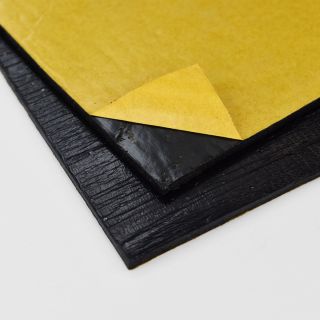
REGUPOL Sound 12 Overview
REGUPOL Sound 12 is a resilient acoustic underlay designed for floating acoustic screed systems. Installed between the structural concrete slab and the screed, it reduces the transmission of impact noise and improves floor acoustic comfort. It is suitable for new buildings and renovation projects in residential and commercial properties.
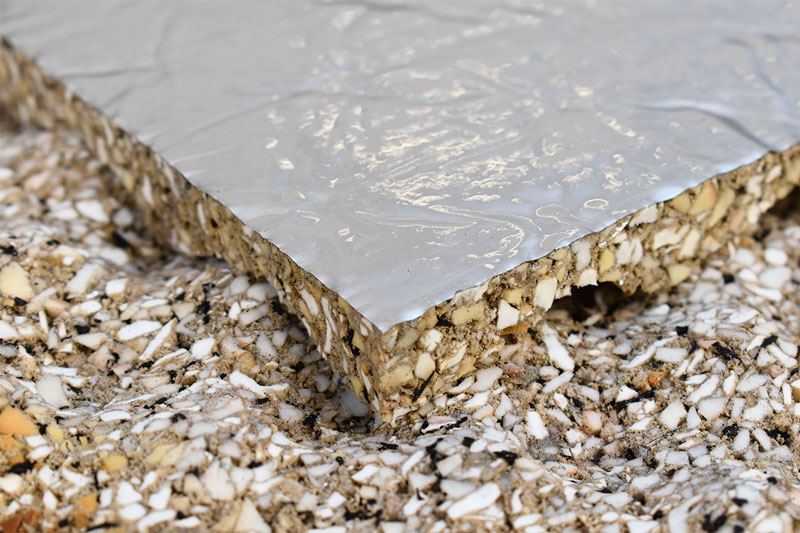
Made from polyurethane and elastomer, this 17 mm thick composite material features a profiled underside and a flat upper surface laminated with an aluminium foil layer.
Its low dynamic stiffness improves floor sound insulation. Depending on the tested configuration, the measured improvement in impact sound insulation reaches 34 dB with one layer and 37 dB with two layers.
Benefits of REGUPOL Sound 12
- Impact sound insulation: reduces the transmission of footsteps, impacts and structure-borne noise through floors.
- Low dynamic stiffness: ≤ 6 MN/m³ for a single 17 mm layer, helping to acoustically decouple the floating screed.
- Load-bearing capacity: suitable for floors with imposed loads of up to 30 kN/m².
- Single or double-layer installation: allows the system to be adapted to the acoustic requirements and constraints of the project.
- Compliance: CE marking based on European Technical Assessment ETA-15/0727.
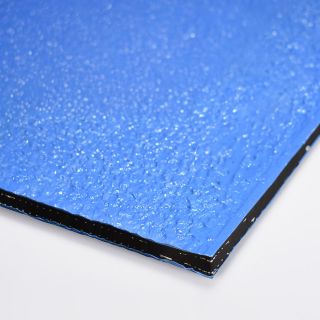
![REGUPOL Sound 12 acoustic panel with aluminium foil upper surface]()
Aluminium foil upper surface
The flat upper surface is laminated with an aluminium foil layer.
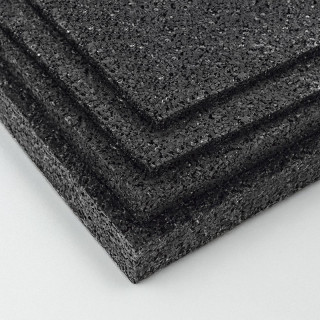
![REGUPOL Sound 12 close-up of the resilient composite structure]()
Profiled resilient structure
The composite structure contributes to the elastic behaviour of the material under load.
Technical Specifications
| Characteristic |
Value |
| Composition |
Polyurethane and elastomer composite |
| Panel dimensions (mm) |
1,200 × 1,000 |
| Thickness (mm) |
17 |
| Panel area (m²) |
1.20 |
| Mass per unit area (kg/m²) |
4.5 |
| Structure |
Profiled underside, aluminium foil upper surface |
| Maximum imposed load (kN/m²) |
30 |
| Operating temperature (°C) |
-20 to +60 |
| Reaction to fire |
Class E according to DIN EN 13501-1 |
| European Technical Assessment |
ETA-15/0727 |
Impact Sound Insulation Performance
REGUPOL Sound 12 improves impact sound insulation when installed beneath a floating screed. Acoustic performance depends on the number of layers, the screed thickness and the construction of the floor assembly.
| Configuration |
Measured improvement ΔLw (dB) |
ETA requirement ΔLw (dB) |
| 1 layer of 17 mm |
34 |
≥ 31 |
| 2 layers of 17 mm |
37 |
≥ 36 |
The measured values are based on laboratory tests using cement screeds over a reference heavy concrete floor. They do not represent guaranteed performance for every installation.
Mechanical Properties by Number of Layers
Installing two layers changes the dynamic behaviour of the system. The configuration must be selected according to the expected loads, acoustic objectives and screed specifications.
| Characteristic |
1 layer |
2 layers |
| Total thickness (mm) |
17 |
34 |
| Average dynamic stiffness (MN/m³) |
≤ 6 |
≤ 4 |
| Compressibility (mm) |
≤ 2 |
≤ 5 |
Dynamic stiffness according to DIN EN 29052-1. Compressibility according to DIN EN 12431.
Applications of REGUPOL Sound 12
REGUPOL Sound 12 is primarily intended for installation beneath screeds subject to significant loads. It is suitable for residential buildings, commercial premises and floor renovation projects.
- Apartment buildings and houses: reduces the transmission of footsteps and impact noise between floors.
- Shops and supermarkets: provides acoustic insulation for floors exposed to foot traffic and rolling noise.
- Hotels and mixed-use buildings: improves acoustic comfort between different areas.
- Floor renovation: allows a resilient layer to be incorporated beneath a new screed, provided the existing structure is suitable.
Looking for other solutions for acoustic floor insulation? Explore our range of acoustic floor underlays for different installation requirements and renovation projects.
Why Install Acoustic Insulation Beneath a Screed?
In apartment buildings, hotels and commercial properties, footsteps, impacts and moving objects can transmit noise through concrete slabs and floors into the rooms below. Installing acoustic floor insulation helps reduce these disturbances and improve occupant comfort.
REGUPOL Sound 12 forms a resilient layer between the concrete substrate and the floating screed. This separation reduces the transmission of vibrations through the building structure. The underlay can be installed during new construction or renovation work, before the screed and final floor covering are laid.
To maintain the acoustic performance of the system, continuity of the insulation and correct treatment of perimeter joints are essential. Acoustic perimeter strips help prevent rigid contact between the screed, walls and other building elements.
Installing an Acoustic Floating Screed with REGUPOL Sound 12
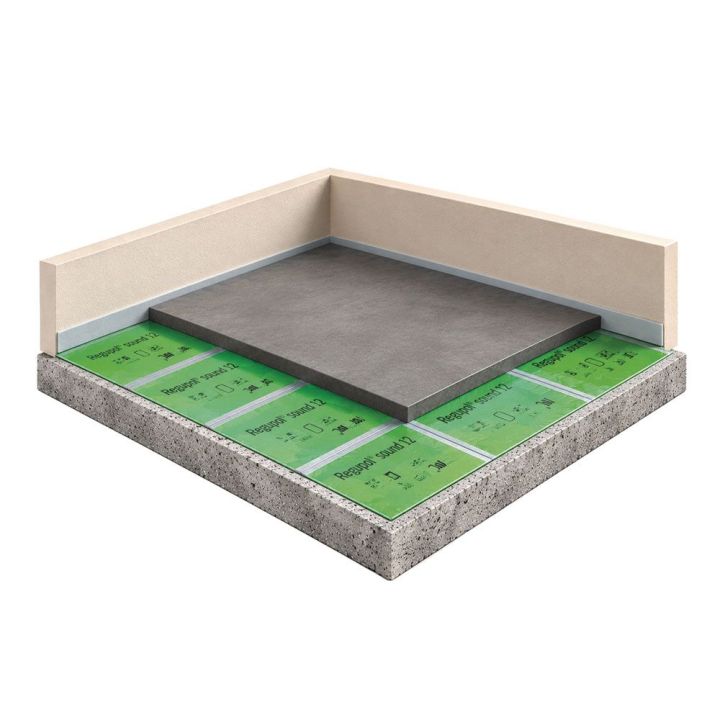
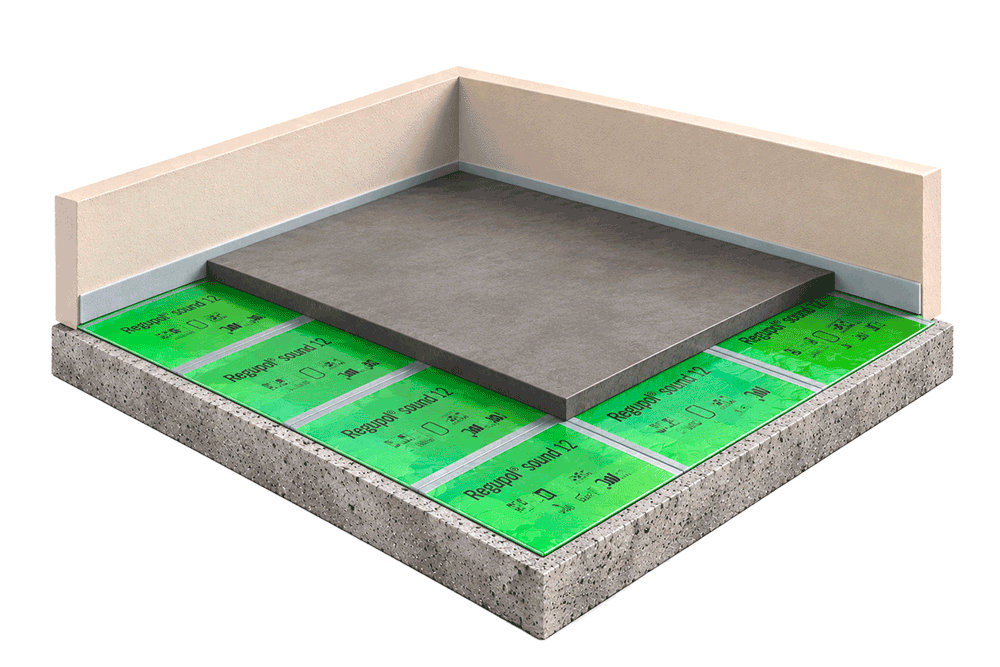
REGUPOL Sound 12 is installed between the structural slab and the floating screed to reduce impact noise transmission and acoustically isolate the floor assembly.
Typical acoustic floor construction:
- Floating screed: distributes loads and provides a base for the final floor covering.
- REGUPOL Sound 12: resilient underlay that reduces impact sound transmission.
- Concrete slab: load-bearing structure of the floor.
- Perimeter isolation strips: separate the screed from surrounding walls and help prevent acoustic bridges.
On-Site Installation Examples
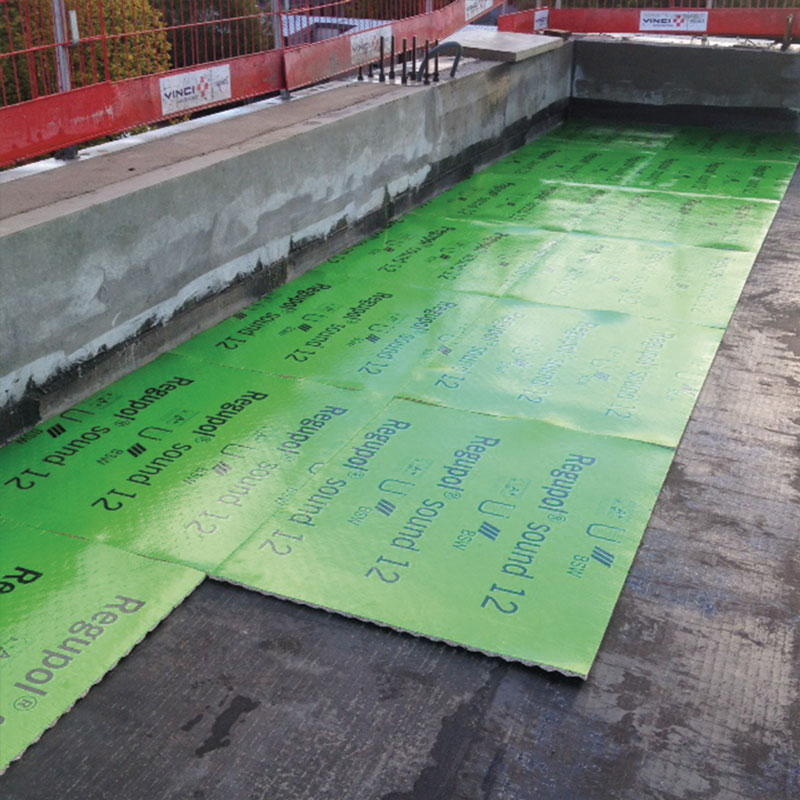
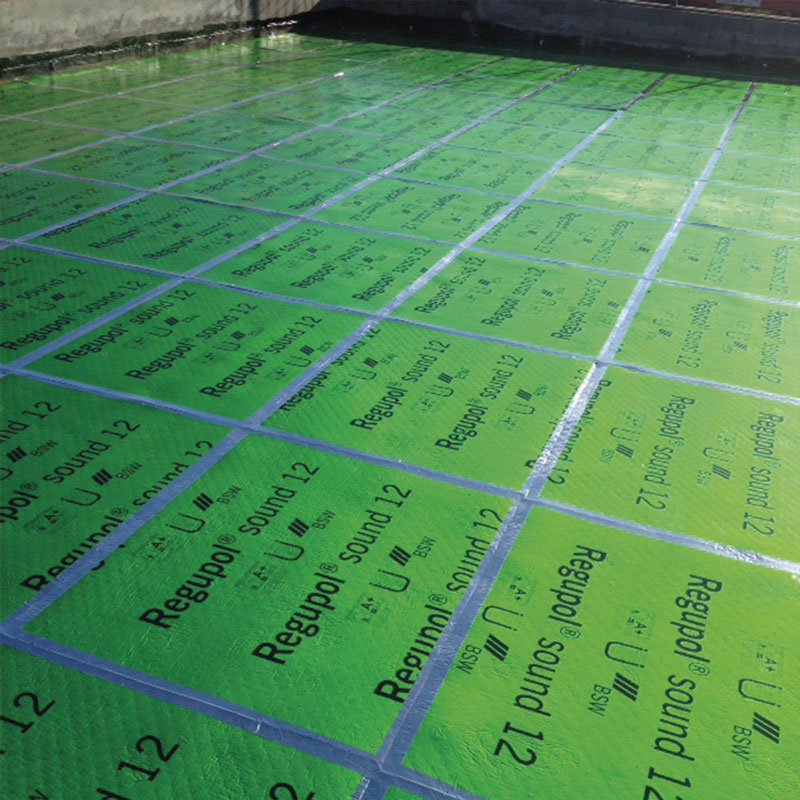
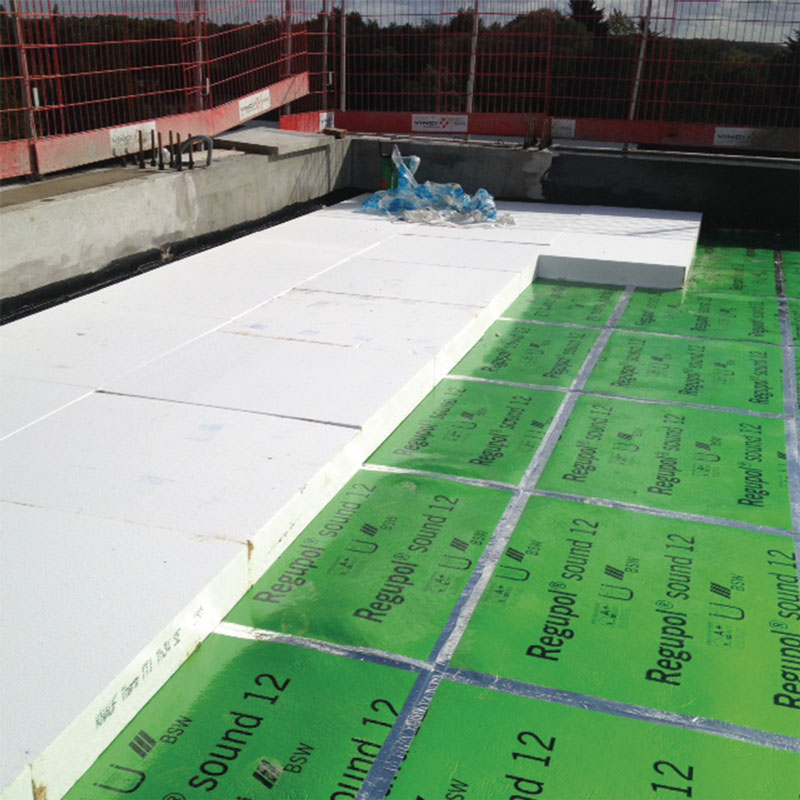
The following photographs illustrate different stages of installing REGUPOL Sound 12 acoustic panels before the screed is applied.
![REGUPOL Sound 12 acoustic panels laid on a concrete floor]()
Panel installation
![REGUPOL Sound 12 panel joints and taped connections]()
Joint treatment
![REGUPOL Sound 12 floor preparation before screed installation]()
Floor assembly preparation
Laboratory-Tested Configurations
1. Acoustic Insulation with One Layer
A single 17 mm layer of REGUPOL Sound 12 is installed between a reinforced concrete slab and a floating screed.
Tested assembly: 90 mm cement screed, 17 mm REGUPOL Sound 12 and a 140 mm reinforced concrete floor slab.
Measured improvement: ΔLw = 34 dB
MFPA Leipzig test report PB4.2/14-154-2 dated 17/07/2014.
2. Acoustic Insulation with Two Layers
Two 17 mm layers of REGUPOL Sound 12 are installed one above the other beneath the floating screed. This configuration provides greater impact sound reduction under the tested conditions.
Tested assembly: 95 mm cement screed, two 17 mm layers of REGUPOL Sound 12 and a 140 mm reinforced concrete floor slab.
Measured improvement: ΔLw = 37 dB
MFPA Leipzig test report PB2.3/19-417-1 dated 27/03/2020.
Installation Recommendations
- Substrate: check its stability, condition and compatibility with the selected screed system.
- Moisture: protect REGUPOL Sound 12 from moisture during storage, transport and installation.
- Acoustic separation: install perimeter isolation strips and avoid rigid connections between the screed and surrounding building elements.
- Structural design: verify the imposed loads, screed thickness and technical requirements of the project.
- Installation: follow the manufacturer's instructions and the specifications of the floor construction system.
Technical documentation: REGUPOL Sound 12 carries CE marking based on European Technical Assessment ETA-15/0727. Detailed specifications and acoustic test results are available in the downloadable technical data sheet.
Frequently Asked Questions About Acoustic Screeds
What Is the Difference Between a Floating Screed and an Acoustic Screed?
A floating screed is separated from the structural substrate by an intermediate layer. When installed over a resilient acoustic underlay such as REGUPOL Sound 12, the system can improve floor sound insulation and reduce the transmission of impact noise.
Should I Install One or Two Layers of REGUPOL Sound 12?
The choice depends on the acoustic objectives and the characteristics of the project. Laboratory tests show an improvement of 34 dB with one 17 mm layer and 37 dB with two layers for the evaluated assemblies. Screed thickness and imposed loads must also be considered.
Can REGUPOL Sound 12 Be Installed Directly Beneath Wood Flooring?
REGUPOL Sound 12 is designed for installation beneath floating screeds. It should not be considered a direct underlay for wood flooring. The final floor covering must be selected according to the complete floor system and applicable installation requirements.
Can REGUPOL Sound 12 Be Installed Beneath an Existing Screed?
REGUPOL Sound 12 must be positioned beneath the floating screed when the floor assembly is constructed. In renovation projects, installation therefore requires a new floor assembly, with checks on the available installation height, permissible loads and suitability of the existing substrate.
Installation Example: Heat Pump Vibration Isolation
This installation combines REGUPOL Sound 12 with anti-vibration mounts to limit the transmission of vibrations from a heat pump into the building structure.
Installation configuration:
- 3 layers of REGUPOL Sound 12 beneath the concrete base.
- 4 PAULSTRA SE110 Paulstradyn anti-vibration mounts beneath the equipment.
The installation must be designed according to the equipment loads and operating frequencies. Impact sound insulation results measured beneath screeds do not apply directly to this configuration.
Discover the SE110 Paulstradyn Mount
Need Advice on Your Acoustic Insulation Project?
Our technical team can help you choose the right acoustic insulation solution for floating screeds, concrete floors or vibration-sensitive equipment.
Contact us for information about REGUPOL Sound 12, product availability or a quotation tailored to your project.
Need Help? Contact Us
 Our experts are here to help: contact us


 0