Nos experts à votre écoute :


2025 buying guide What is the best sound insulation material?
Contrary to what you might think, there is no single best sound insulation material capable of meeting every situation. The right choice depends on the type of noise to be treated, the area to be insulated, the environment, the budget and the expected level of performance.
In this article, we present 15 examples of sound insulation materials suitable for practical applications: roller shutter boxes, shooting ranges, machine tools, heat pumps, restaurants, recording studios, pipework, walls, floors, vibration transmission, low frequencies and Home Cinema rooms.
The aim is simple: to help you identify the most relevant material for your needs, taking into account the price/performance ratio, installation constraints and operating conditions.
Discover our sound insulation materials
Table of contents
Before comparing Efficiency criteria for optimal sound insulation
Before choosing a sound insulation material, it is important to understand the type of noise to be treated. A material may be very effective against airborne noise, but less suitable for impact noise, vibrations, low frequencies or reverberation.
The performance of an acoustic insulation material is assessed using several indicators. They make it easier to compare products and understand why a foam, a heavy mass, an underlay or an absorbent panel do not all meet the same need.
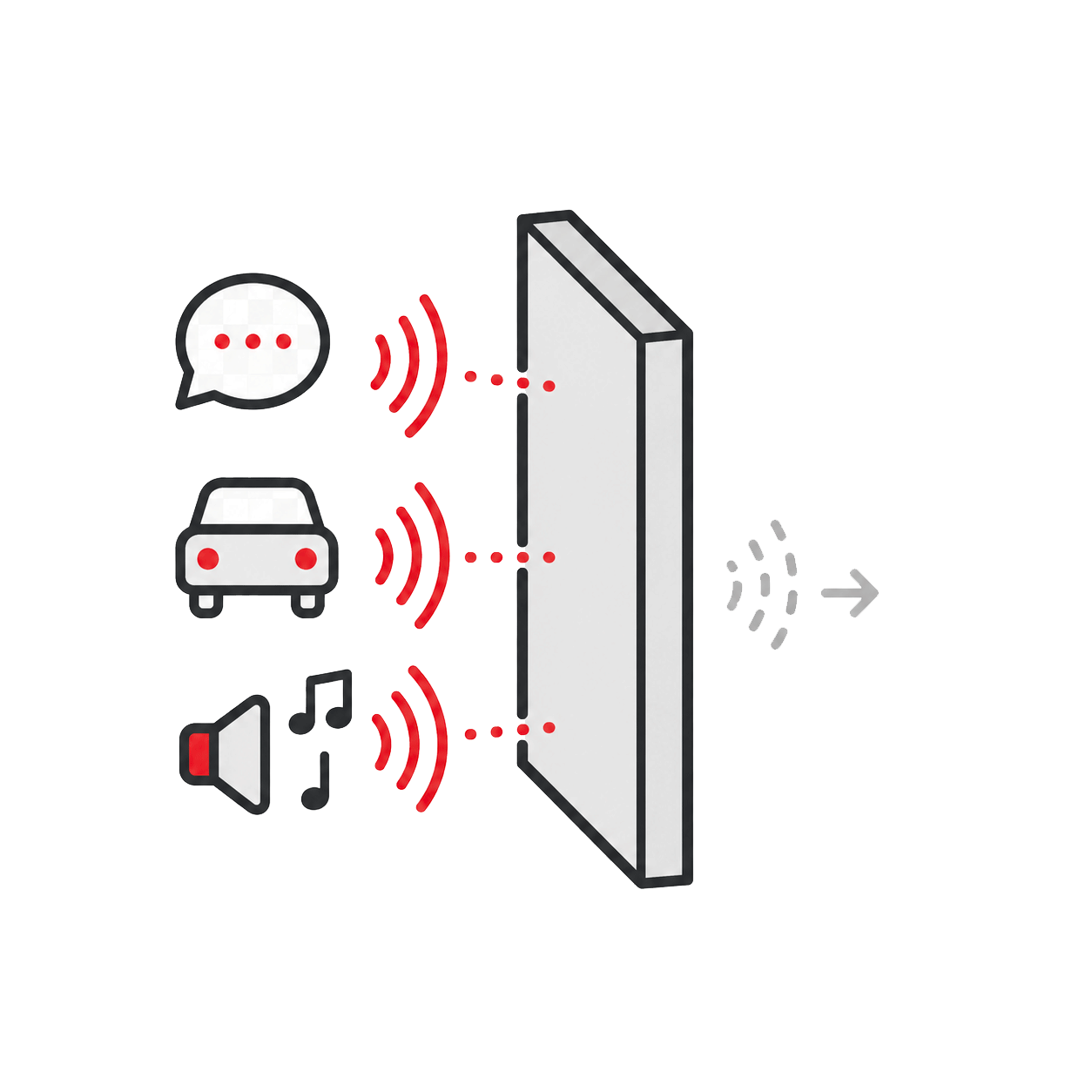
Airborne noise: the Rw index
The Rw index, expressed in decibels, is used to assess the sound reduction of a wall, partition or system against airborne noise: voices, road traffic, music or outdoor noise. The higher the value, the better the attenuation.
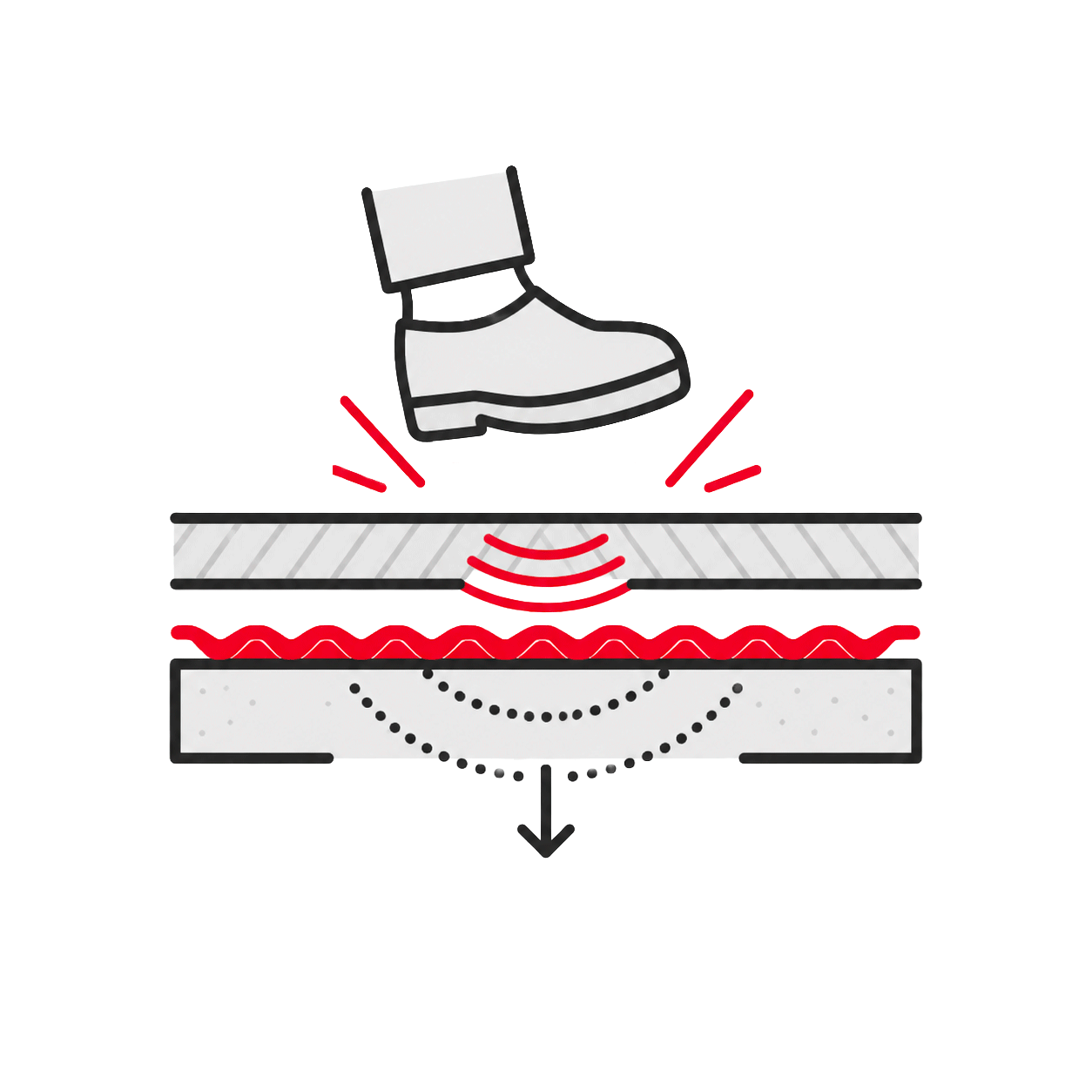
Impact noise: the ΔLw index
The ΔLw index refers to the improvement achieved against impact noise: footsteps, heels, dropped objects or vibrations transmitted through a floor. It is particularly useful for comparing acoustic underlays.
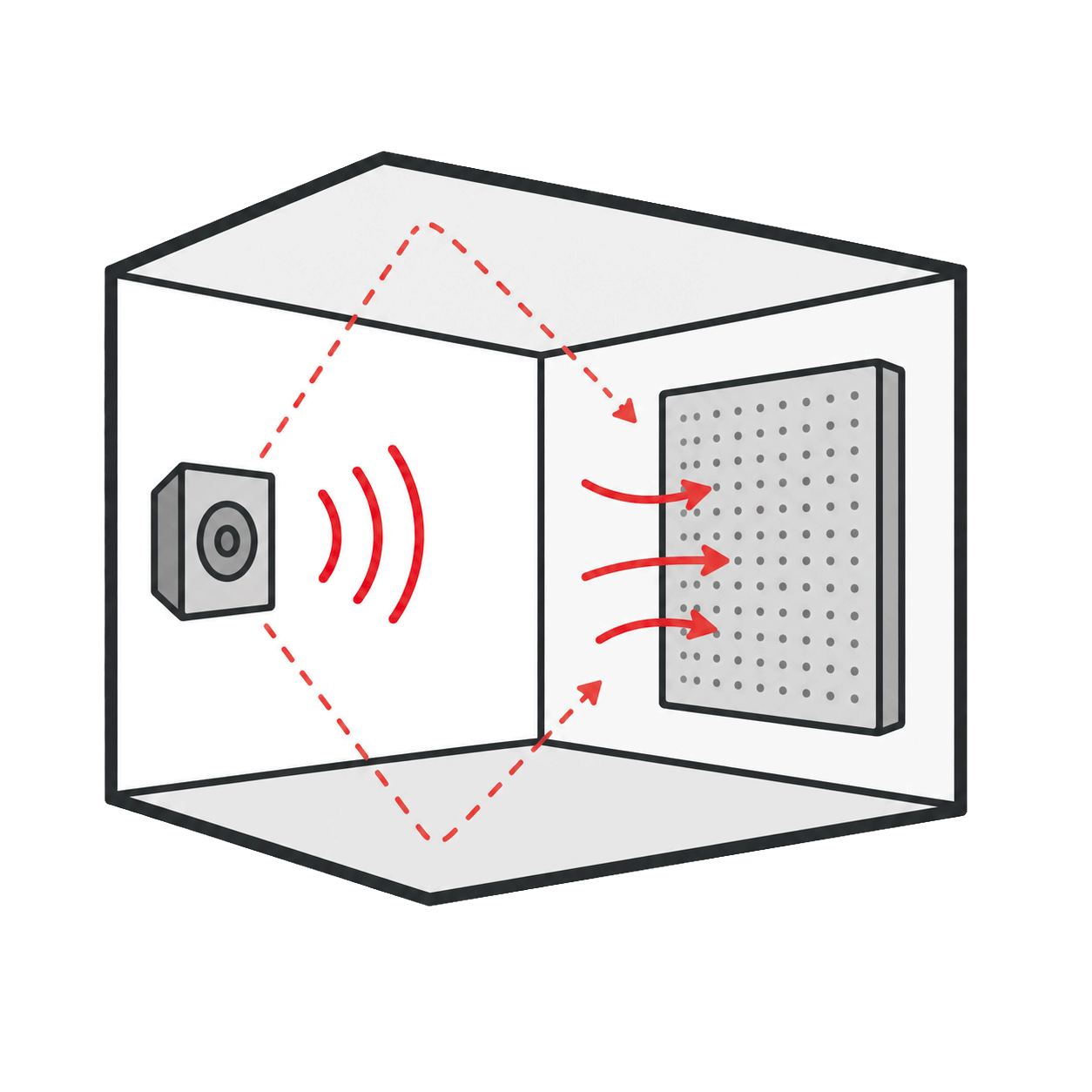
Reverberation: the αw coefficient
The αw coefficient measures a material’s ability to absorb sound waves. It is essential for limiting reverberation in a room, studio, restaurant, office or technical room.
Key point
The best sound insulation material depends first and foremost on the problem to be solved: airborne noise, impact noise, vibrations, low frequencies or reverberation. It is therefore better to reason by use case rather than look for a single universal product.
Materials The different types of sound insulation materials
Sound insulation materials can be classified into several families: mineral insulation, natural insulation, acoustic foams, heavy masses, absorbent panels and technical underlays. Each has its advantages, limitations and preferred applications.
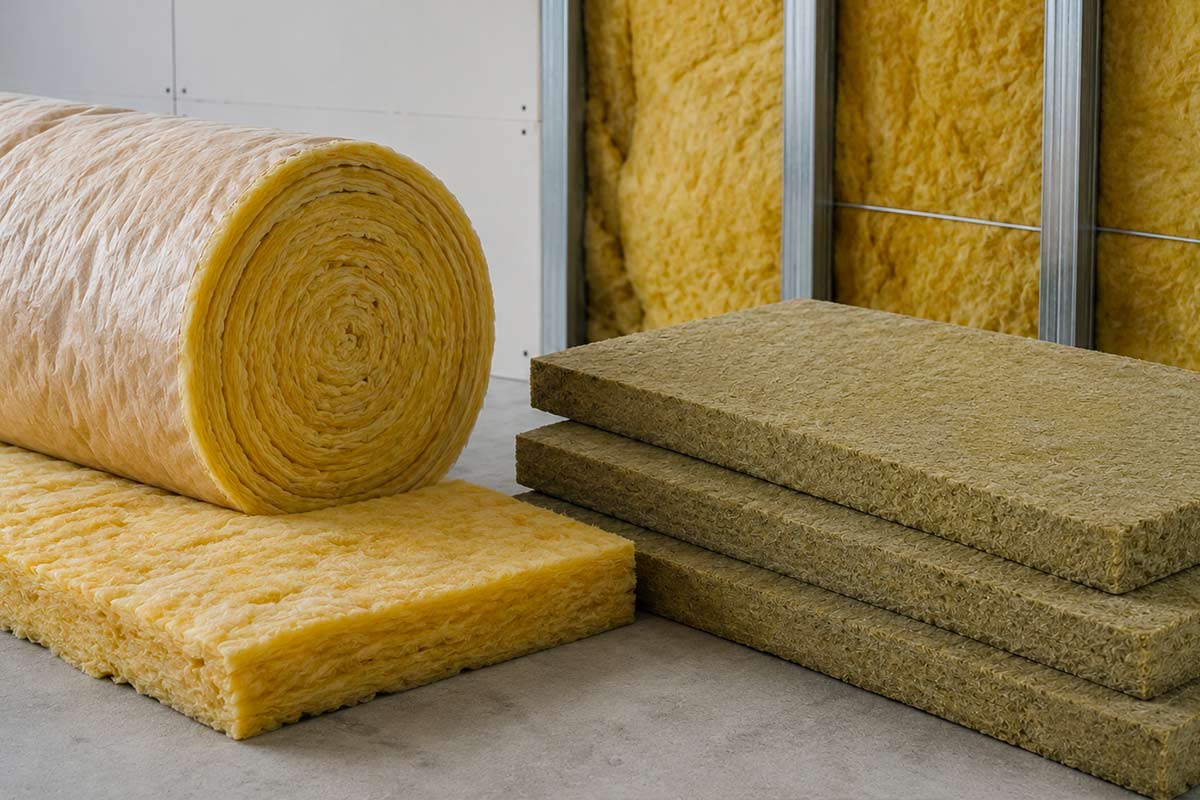
Mineral insulation materials
Glass wool and rock wool are commonly used in the building sector, particularly for insulating walls, partitions or ceilings. They can offer good performance, but often need to be integrated into a complete acoustic build-up.
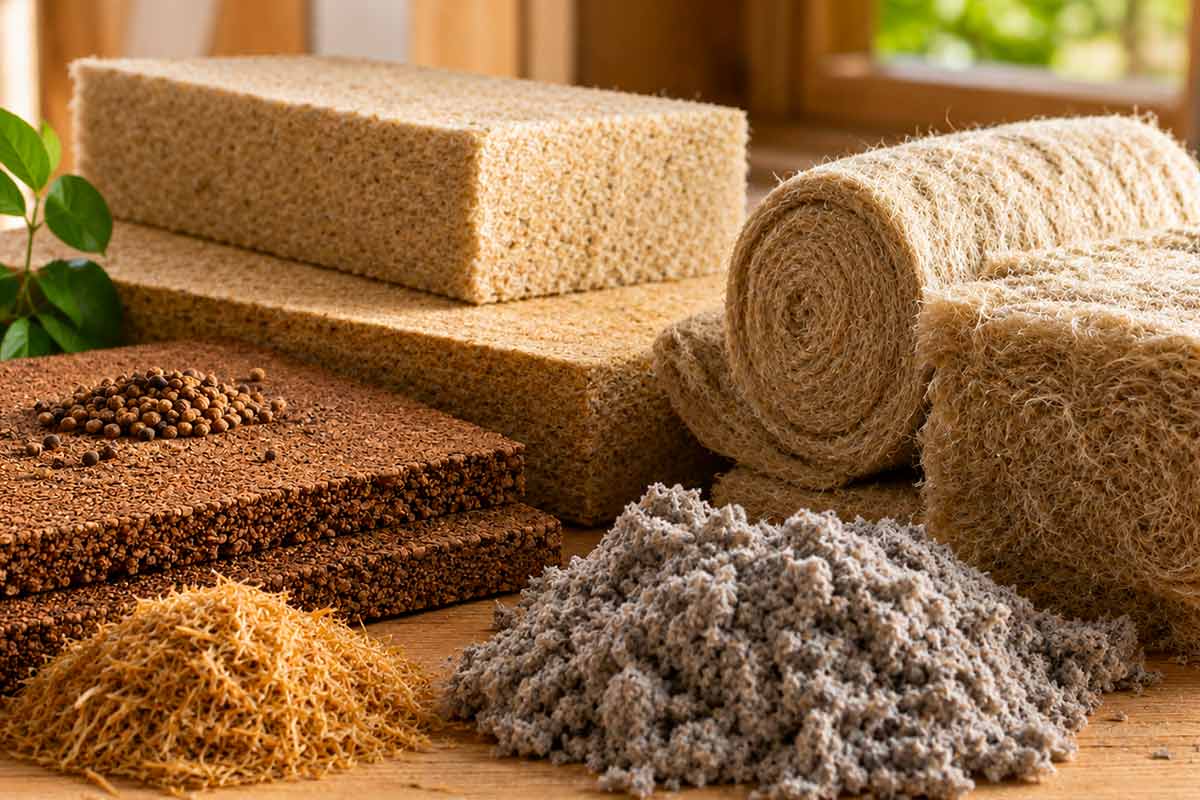
Natural insulation materials
Wood fibre, expanded cork, hemp wool, cotton wool and cellulose wadding are sometimes chosen for their natural origin or thermal performance. Their acoustic efficiency, however, depends on thickness, density and installation method.
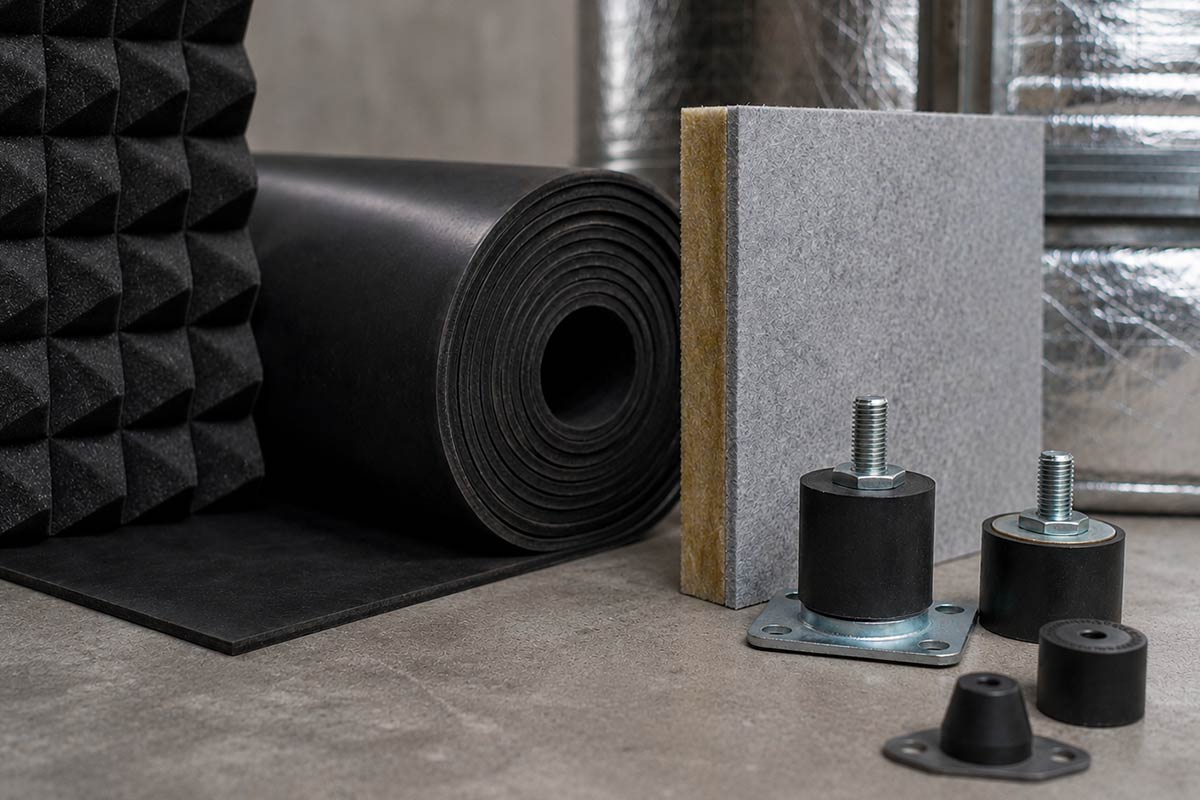
Foams and technical solutions
Acoustic foams, heavy masses, absorbent panels, underlays and anti-vibration solutions can meet more targeted needs: machinery, pipework, walls, floors, engines, heat pumps or outdoor sound insulation.
Depending on your project Comparison of sound insulation materials by area to be insulated
The area to be insulated directly affects the choice of material. A floor, wall, ceiling, roller shutter box or industrial machine does not transmit sound in the same way. The solution must therefore be adapted to the area concerned.
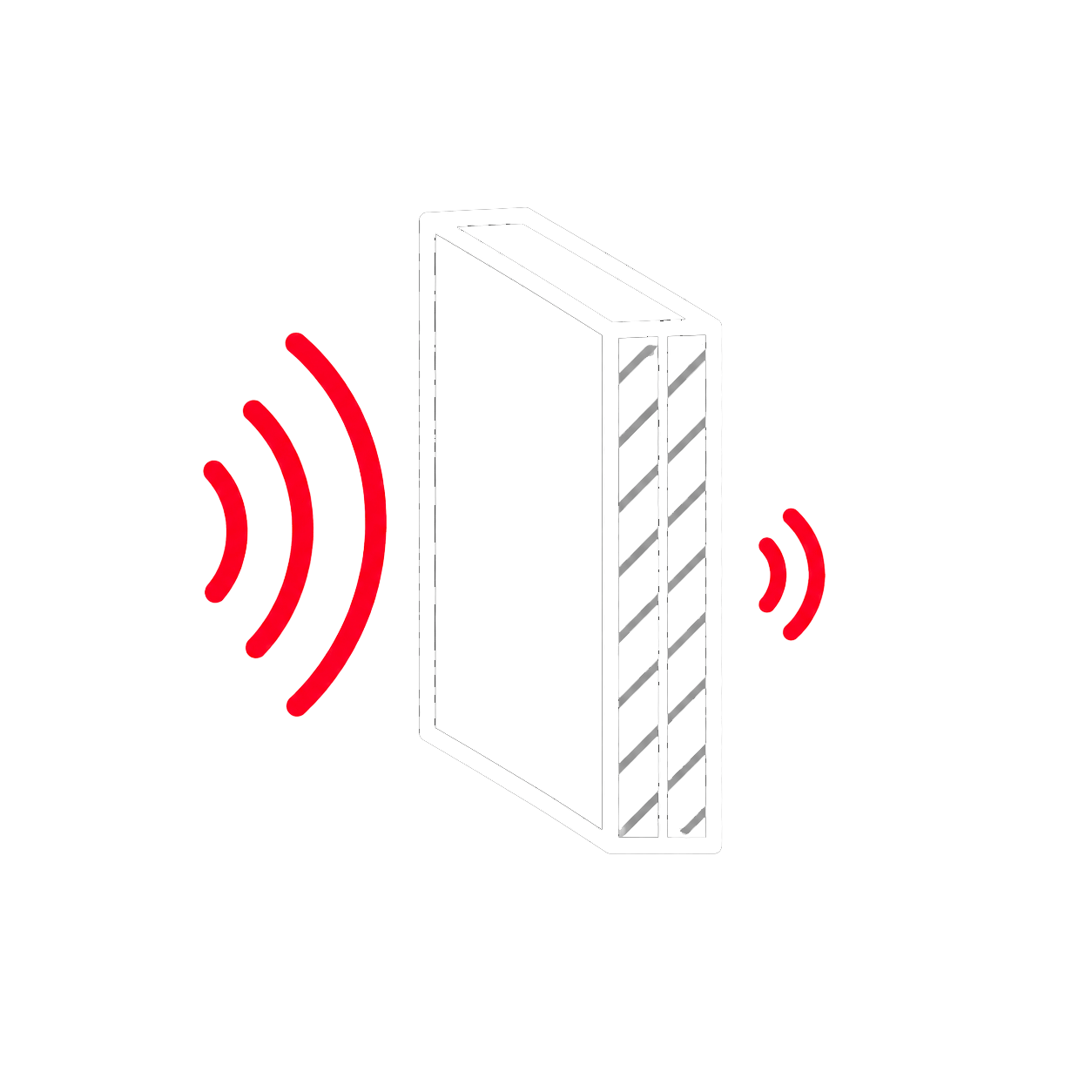
For walls and partitions
To reduce neighbourhood noise or improve an existing wall, you can use soundproof wall insulation solutions or thin sound insulation materials for walls, depending on the space available.

For floors and slabs
To limit impact noise, footsteps, shocks or transmission between floors, it is preferable to use soundproof floor insulation solutions, such as suitable acoustic underlays.
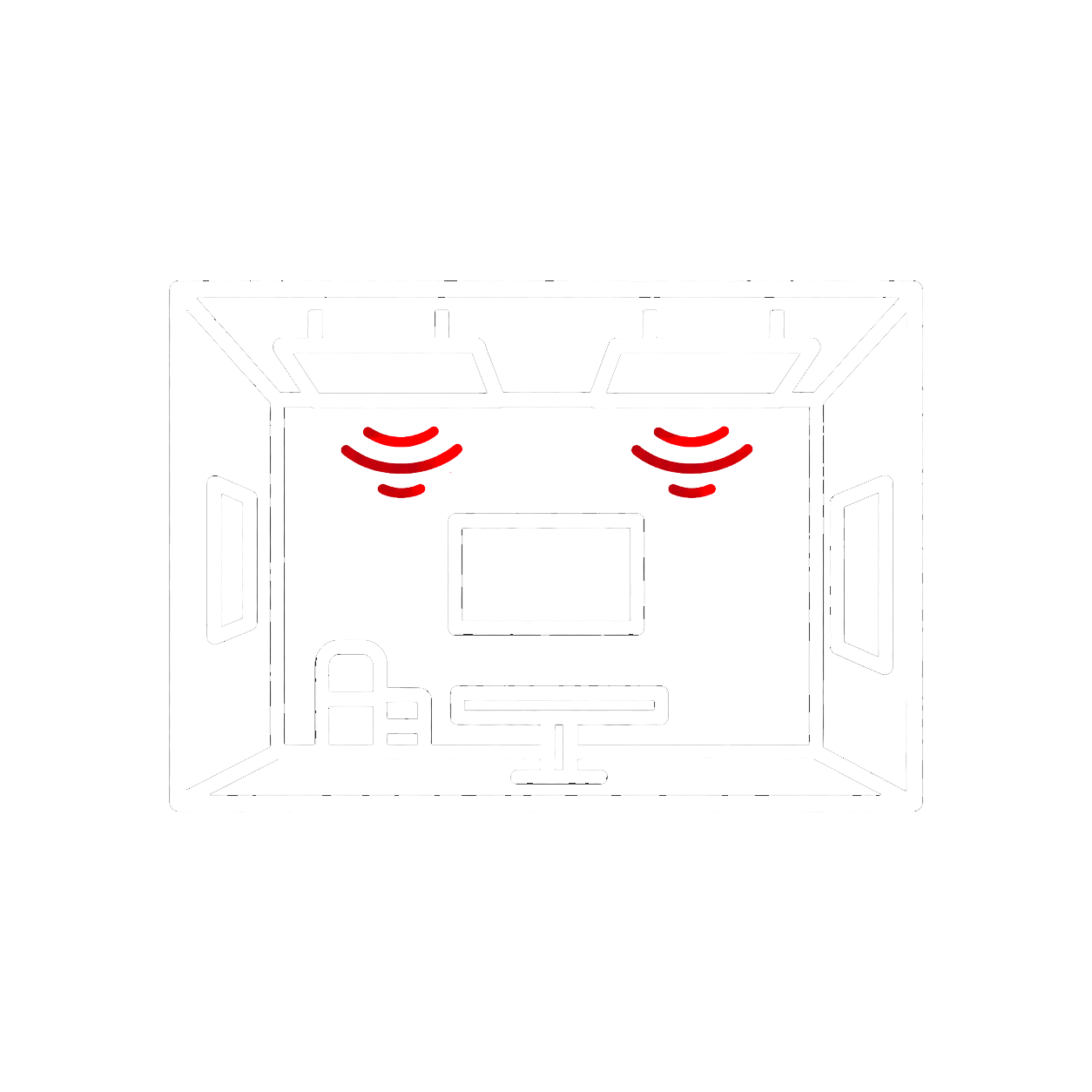
For ceilings and rooms
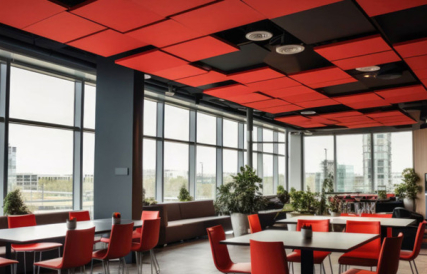
For a restaurant, bar, studio, meeting room or technical room, the choice will often be based on absorbent materials capable of limiting reverberation and improving acoustic comfort, such as our soundproofing solutions for rooms and restaurants.
Key point
To choose correctly, three elements must be cross-checked: the type of noise, the area to be insulated and the installation constraints. The examples below then help identify the most suitable references for each use case.
Selection method How to choose the best sound insulation material for your project?
Choosing a sound insulation material does not depend only on the material itself. You also need to consider the available space, the sound level to reduce, humidity, fire classification, ease of cutting, budget and lead time if special manufacturing is required.
Budget and value for money
A simple foam may be enough for light absorption, while a heavy mass, composite foam or complete system will be more suitable for significant noise. The right choice is therefore often the one that offers the best value for money for the real-life application.
Environment and durability
Outdoors, in humid environments, industrial rooms or public-access areas, the criteria change: water resistance, mechanical strength, fire classification, ease of cleaning or compatibility with oil splashes.
Cutting and special manufacturing
For custom-cut parts, thickness, density, format, adhesive backing, environmental resistance and production lead time must be checked. These elements can influence the choice of product as much as its acoustic performance.
Practical cases 15 examples to choose the right sound insulation material
Here are several common use cases, with the products we usually recommend depending on the type of noise, the area to be treated and the installation constraints.
Case no. 1 The best sound and thermal insulation panel for roller shutter boxes
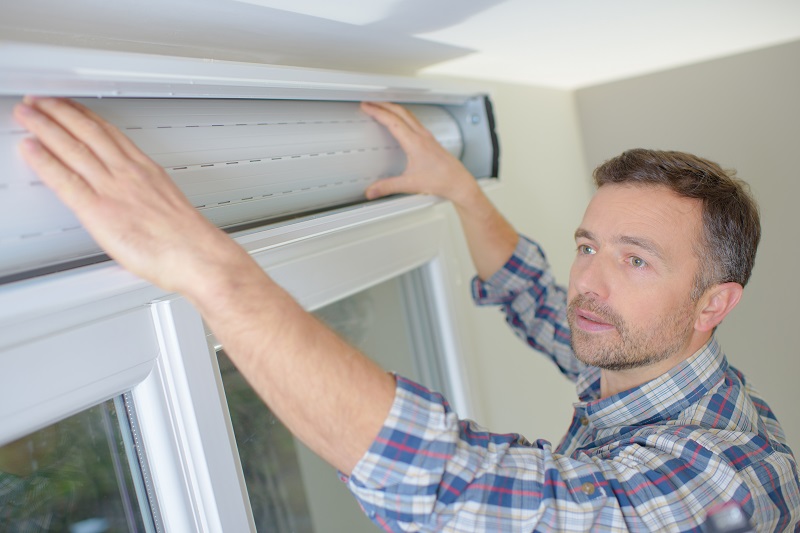
Roller shutter boxes are frequent entry points for outdoor noise: traffic, horns, music or street noise. As they are rarely insulated as standard, they can create a major acoustic weak point in a room.
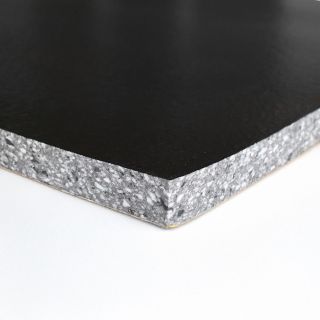
The reference we usually recommend is the agglomerated polyurethane foam SE25-Composite. This material is dense, rot-proof, adhesive-backed, protected on one side by a 100% waterproof film and easy to cut with a professional cutter.
For higher performance, if the available space allows, the thicker SE50-Composite version can be used. Cork insulation or rock wool may also be considered, but they will not always provide the same density or acoustic efficiency as agglomerated polyurethane foam.
Case no. 2 The best sound insulation panel for a shooting range
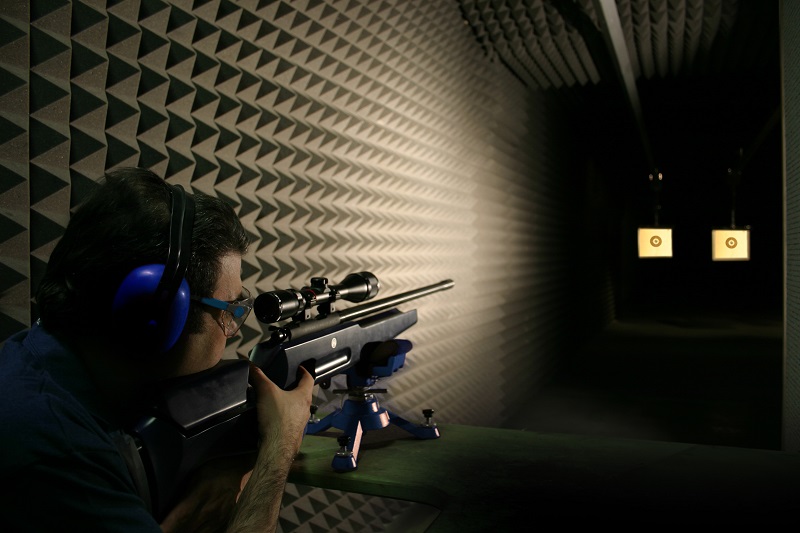
In a shooting range, the main objective is to absorb the sound waves generated by shots as quickly as possible in order to reduce noise levels, protect users and limit disturbance to the surrounding area.
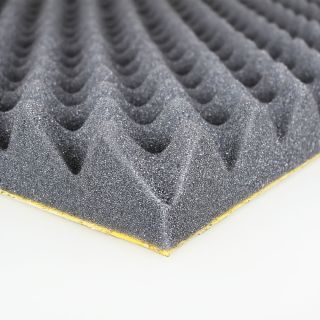
The most common solution is insulation with alveolar foam in 50 mm thickness, such as SE50AL. The alveolar profile increases the absorption surface, helping to attenuate sound reflections. As this foam is not waterproof, it must be installed away from rainfall.
Case no. 3 The best sound insulation panel for a machine tool
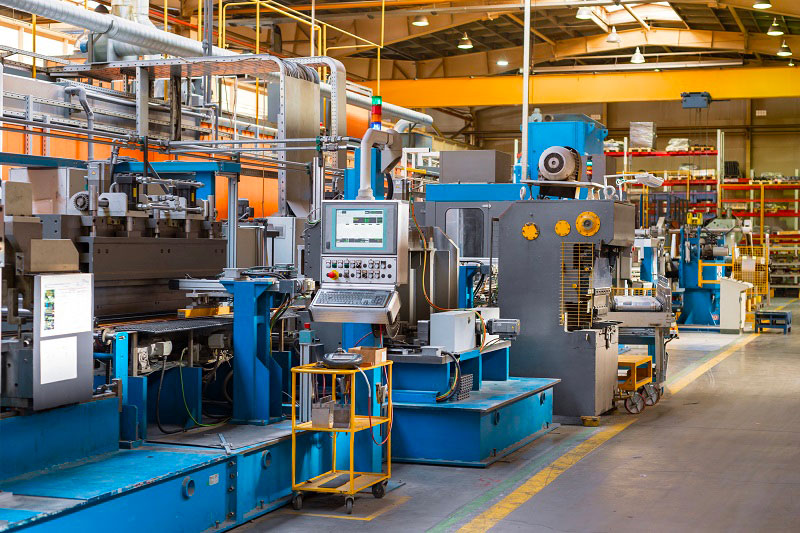
Manufacturing environments are often very noisy. Despite efforts to comply with standards and protect employees, some machines require targeted acoustic treatment. Suitable acoustic insulation for machines can help reduce noise directly around industrial equipment.
For machine enclosures or areas surrounding equipment, we recommend a high-performance foam such as SE30FL-ML. This smooth-face foam with integrated heavy mass combines open-cell polyurethane foam with a 5 kg/m² polymer heavy mass. The waterproof surface film protects the foam from moisture and oil splashes, while the adhesive backing makes installation easier.
Case no. 4 The best sound insulation material for a heat pump
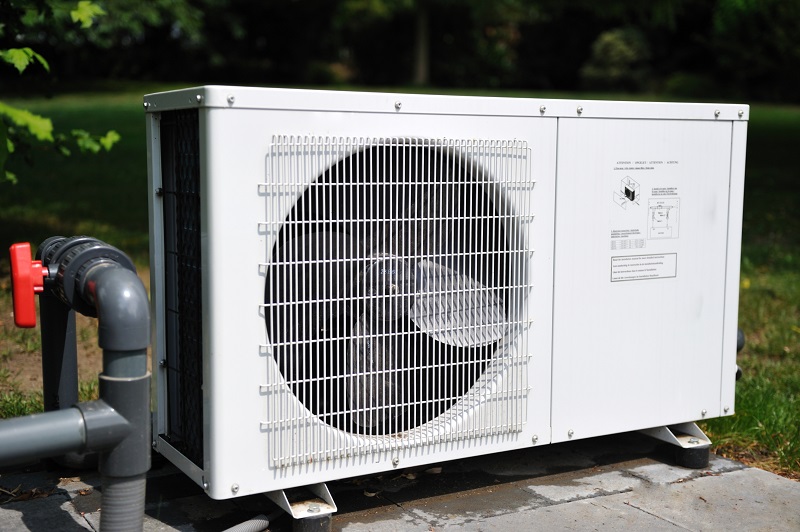
Heat pumps are very common in residential applications, but the compressor and fan can generate regular noise, sometimes disturbing when the installation is close to a neighbouring property.
To improve the situation, it is advisable to line the inside faces of the enclosure with an open-cell polyurethane foam, preferably protected against moisture and dust by a waterproof film. The SE30FL reference can meet this type of requirement. Combining it with a noise barrier placed between the heat pump and the neighbouring property can also improve the result, as explained in the noise barrier section.
Case no. 5 The best sound insulation material for a restaurant or bar

In a restaurant or bar, the objective is twofold: to reduce reverberation in the room while maintaining a neat appearance, as the acoustic treatment often remains visible to customers.
The most suitable solution is generally melamine foam, also known as Basotect foam. Very lightweight, efficient in absorption and M1 fire-rated, it is particularly suitable for public-access premises.
Cork insulation or rock wool may also be considered in some decorative projects, but these solutions will generally be less effective than melamine foam for quickly reducing room reverberation.
Case no. 6 The best sound insulation panel for a recording studio

In a recording studio, the challenge is to limit unwanted sound-wave reflections on walls and ceilings. The aim is not only to insulate, but also to control the acoustic ambience of the room.
The melamine pyramid foam is a particularly suitable solution. The material offers very good performance, while the pyramids increase the absorption surface and provide an attractive visual finish.
Case no. 7 The best sound insulation material for a boat engine
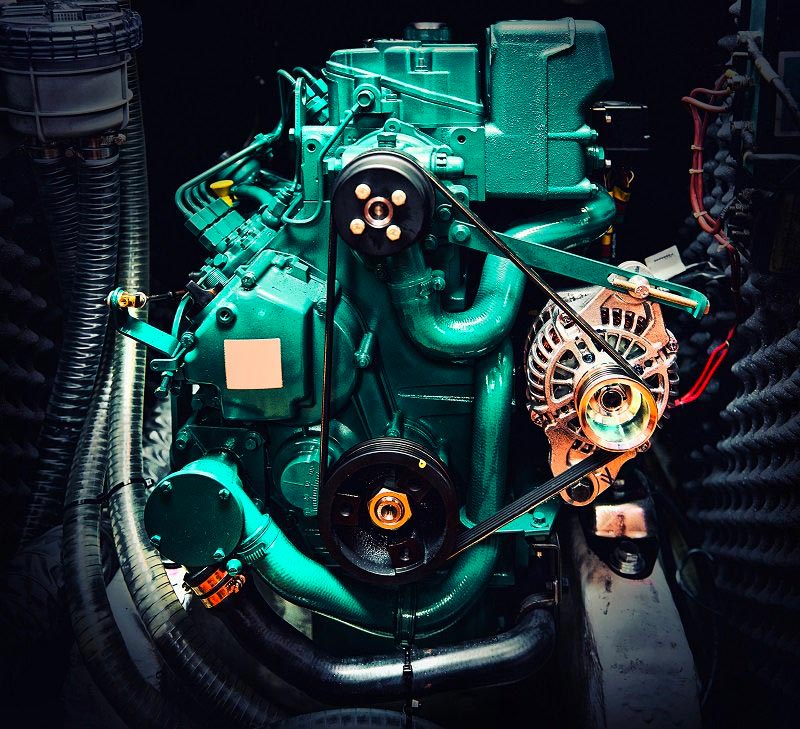
In a boat engine compartment, the insulation material must withstand moisture, dust, oil splashes and the mechanical constraints associated with marine environments.
The SE50AL-SM, an alveolar foam with waterproof protective film, is an interesting solution for absorbing noise nuisance while protecting the surface of the foam.
For applications requiring a fire rating, the SE25M1-CC rubber foam can be a relevant alternative: flexible, waterproof throughout and fire-rated.
Case no. 8 The best sound and thermal insulation material for pipework
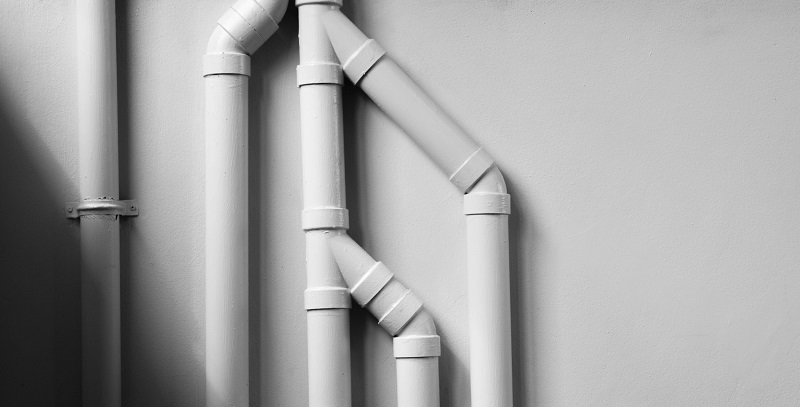
Solutions Élastomères has developed, following regular customer requests, a composite material designed to reduce noise nuisance from pipework in homes: rainwater downpipes, wastewater pipes or technical networks.
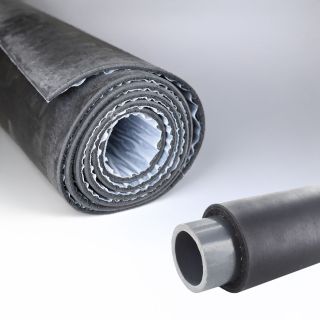
Isol’Tuyaux ST574-AGK consists of an insulating elastomer layer and an absorbent foam layer. It wraps around the pipes and is fixed with the existing adhesive, or with clamps for users who prefer mechanical fastening. One 2000 x 1000 mm sheet can insulate approximately 8 metres of Ø 80 mm pipework or 6 metres of Ø 100 mm pipework.
Case no. 9 The best sound insulation panel for a noise barrier
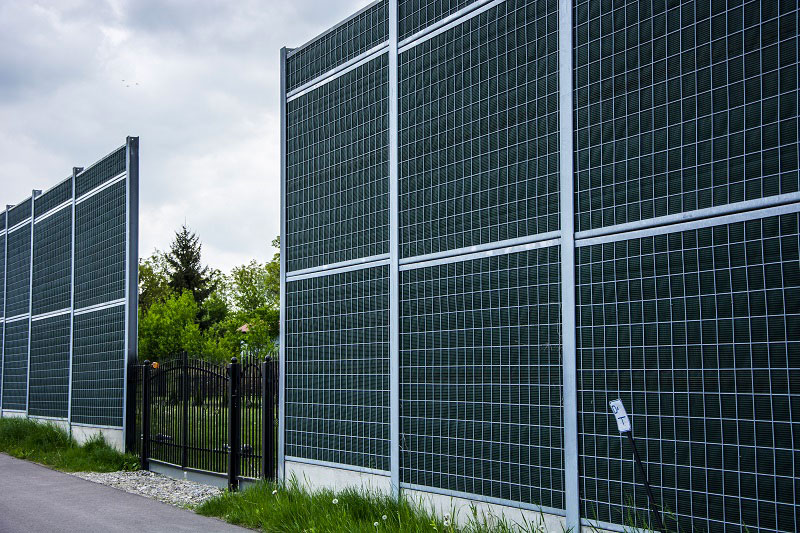
A noise barrier is designed to limit the propagation of sound waves in a given direction, for example between a heat pump and a neighbouring home.
In this type of outdoor configuration, the material must be able to withstand bad weather, UV and temperature variations. The SE552 rubber foam, thanks to its closed-cell structure and Neoprene / EPDM blend, is particularly suitable. It is available in various formats and thicknesses, with a frequently relevant range between 15 and 30 mm for this type of application.
Case no. 10 The best rigid sound insulation panel
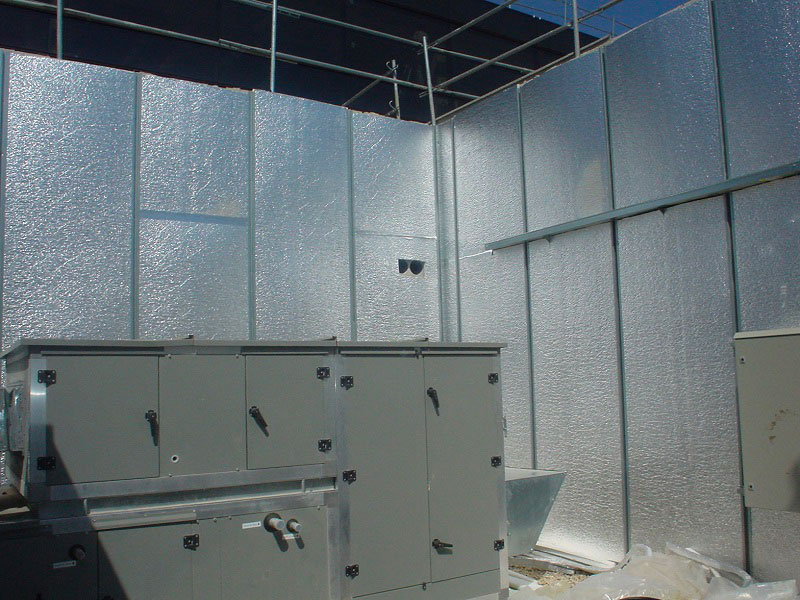
In some maintenance departments or industrial workshops, it can be useful to have a material that is rigid enough to be self-supporting. This makes it possible to create large enclosures around noisy machines without systematically requiring a wooden or plastic support.
The SER-2AIG cross-linked polyethylene foam sheets meet this type of need. They combine rigidity, light weight, self-supporting behaviour and acoustic performance, making them suitable for enclosures or technical partitions.
Case no. 11 The best sound and thermal insulation panel for a wall
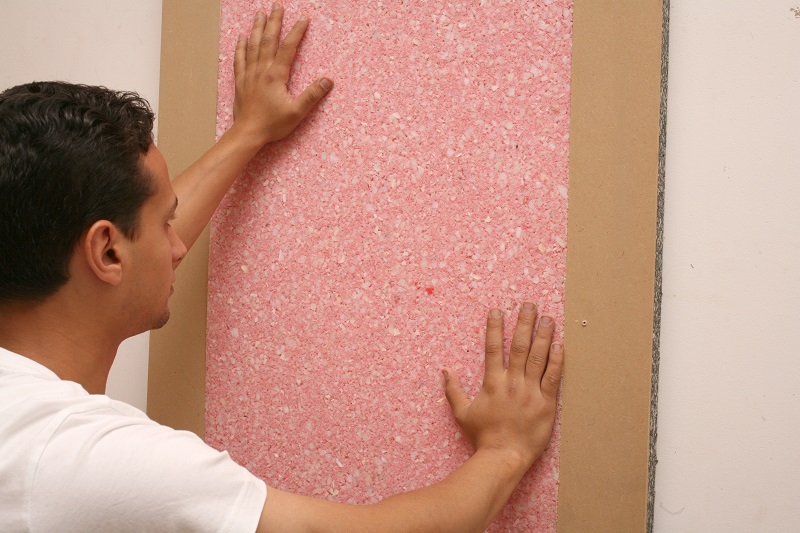
Noise nuisance from neighbouring apartments is one of the most frequent requests. In older buildings, walls and partitions do not always meet current sound insulation requirements.
Solutions Élastomères has developed an Acoustic Wall Kit, designed as a simple improvement solution. It is part of the soundproof wall insulation solutions and can be used as a thin sound insulation material for walls when the available space is limited.
It consists of polyurethane foam panels placed between acoustic studs bonded directly to the wall. Once the system has been installed, a plasterboard-type facing can be fixed directly onto the acoustic studs.
Case no. 12 The best sound insulation material for a floor or tiles
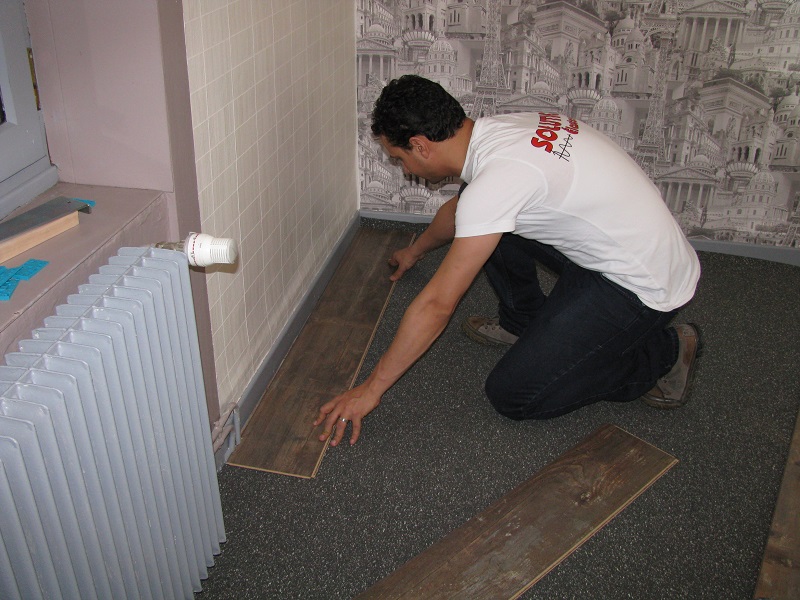
For floors, slabs and tiles, the objective is mainly to limit impact noise: footsteps, heels, falling objects or vibrations transmitted from one room to another.
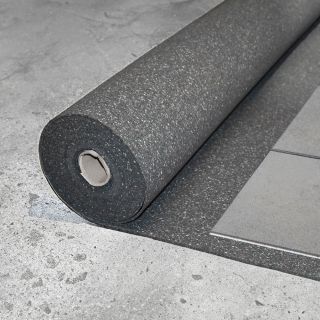
Isol’Carrelage complements the Acoustic Wall Kit. This dense polyurethane foam-based material is installed under flooring or tiles to act as an absorbent layer. For other floor applications, you can also view our soundproof floor insulation solutions.
Case no. 13 The best insulation material against vibration transmission
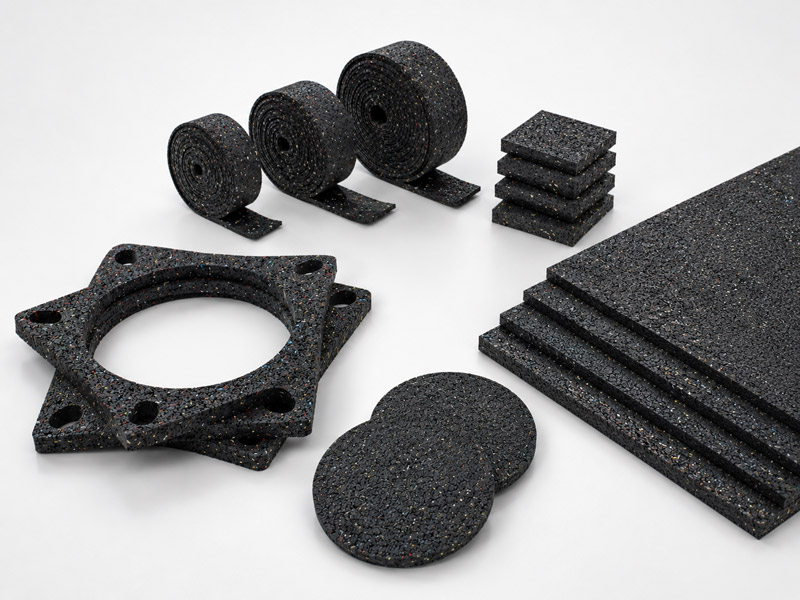
When dealing with vibrations, the problem is no longer only airborne: energy is transmitted through the solid elements of the building or machine. A material capable of dissipating this energy must therefore be used.
Super-Resilient is an acoustic mat made from fine agglomerated rubber particles. It is particularly suitable for decoupling building elements: slabs, beams, stairs or systems requiring vibration damping.
Case no. 14 The best sound insulation material for low frequencies
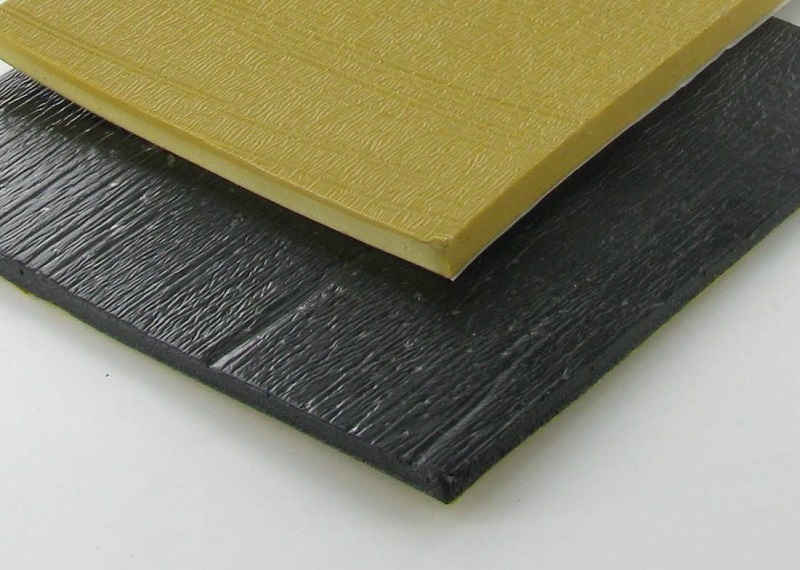
Low frequencies are among the most difficult sound waves to attenuate. They propagate easily through structures and require materials capable of adding mass and dissipating vibratory energy.
The standard bitumen heavy mass offers a surface density of 5 kg/m². For higher performance, the performance heavy mass reaches 7 kg/m² and has a fire rating. These products are bonded underneath elements to be damped, such as thin sheet metal, machine enclosures or metal sinks.
Case no. 15 The best sound insulation panel for a Home Cinema room
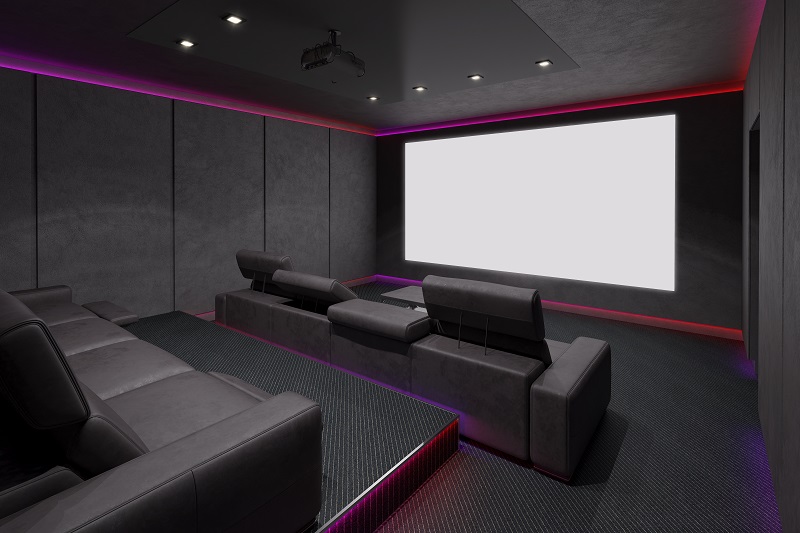
For a Home Cinema room, acoustic comfort is essential. Rigid, flat walls can generate unwanted sound reflections, affect listening quality and reduce the atmosphere of the room.
We recommend installing a wall foam such as the impregnated polyurethane foam SE25M1-PU. It absorbs incoming sound waves and creates an acoustic ambience closer to a cinema room. It can then be covered with fabric to preserve the room’s aesthetics.
Frequently asked questions Choosing the right sound insulation material
What are the advantages of the different sound insulation materials offered by Solutions Élastomères?
Acoustic foams are useful for absorption, composite foams for density, heavy masses for low frequencies, underlays for impact noise and waterproof foams for humid or outdoor environments.
How can the performance of an anti-vibration insulation material be assessed?
For vibrations, load, frequency, bearing surface, material thickness and compression behaviour must be taken into account. A product that is too soft or too rigid may be less effective depending on the application.
Which technical criteria should be checked for a custom-cut part?
The drawing, dimensions, thickness, density, material, adhesive backing, humidity, fire and temperature constraints, and compatibility with the final environment must be checked.
Can a special manufacturing lead time influence the choice of a sound insulation material?
Yes. For an urgent need, a standard in-stock reference may be preferable. For a technical project, custom cutting or special manufacturing may provide a better result, but the lead time must be anticipated.
How can acoustics and sealing be combined on an industrial site?
In environments exposed to humidity, water or oil splashes, foams protected by film, waterproof rubber foams or solutions combining acoustic absorption with environmental resistance should be preferred.
Need technical advice?
Are you unsure between several sound insulation solutions?
Send us your requirement, dimensions, installation constraint or operating environment. Our team will help you identify the most suitable solution before ordering.