Nos experts à votre écoute :


Summary
- Which tool should be used to measure an O-ring?
- Which dimensions should be considered?
- How to choose the material and hardness of an O-ring?
- What criteria should be considered based on usage?
- How to properly store O-rings?
- Conclusion: Why is it essential to measure your O-ring correctly?
O-rings are essential components for ensuring sealing in many industrial applications. To guarantee their efficiency, it is crucial to accurately measure their dimensions before replacing or ordering them. Here’s how to proceed for a precise measurement.
Which tool should be used to measure an O-ring?
To measure an O-ring with precision, it is recommended to use a caliper. This instrument allows for the accurate determination of the inner diameter and the cross-sectional diameter of the O-ring.
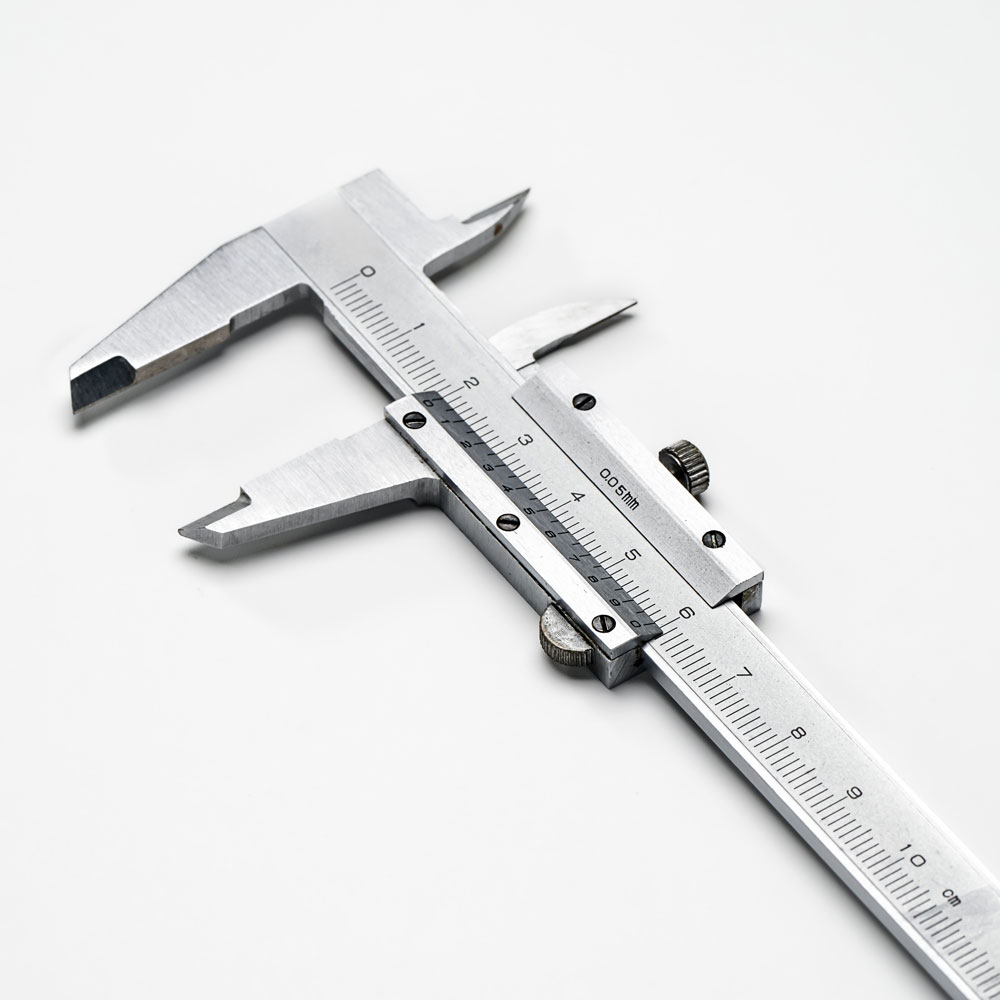
O-ring measuring tool: the caliper
Which dimensions should be considered?
An O-ring is defined by two main measurements:
- The inner diameter (ID): This corresponds to the distance between the inner edges of the O-ring.
- The cross-sectional diameter (CS): This is the thickness of the circular section of the O-ring.
|
Measuring the inner diameter of an O-ring with a caliper. |
Measuring the cross-sectional diameter of an O-ring with a caliper. |
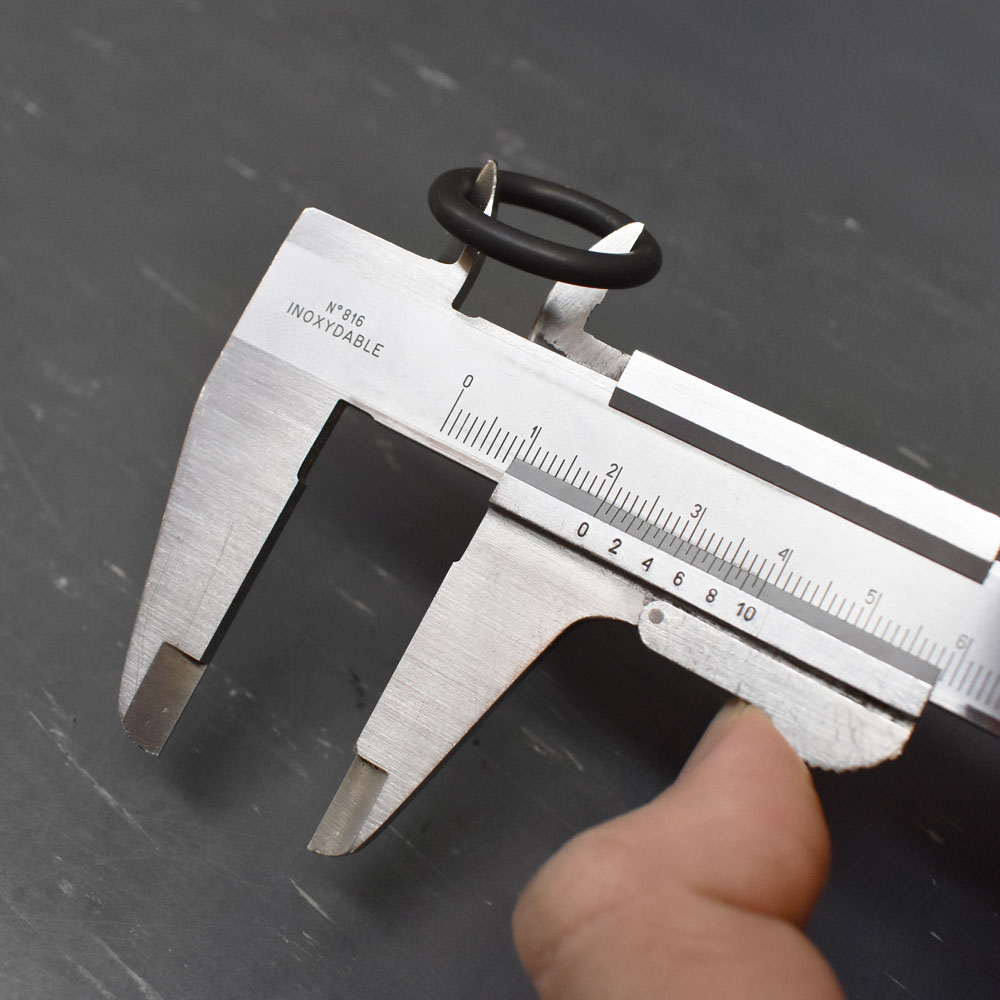
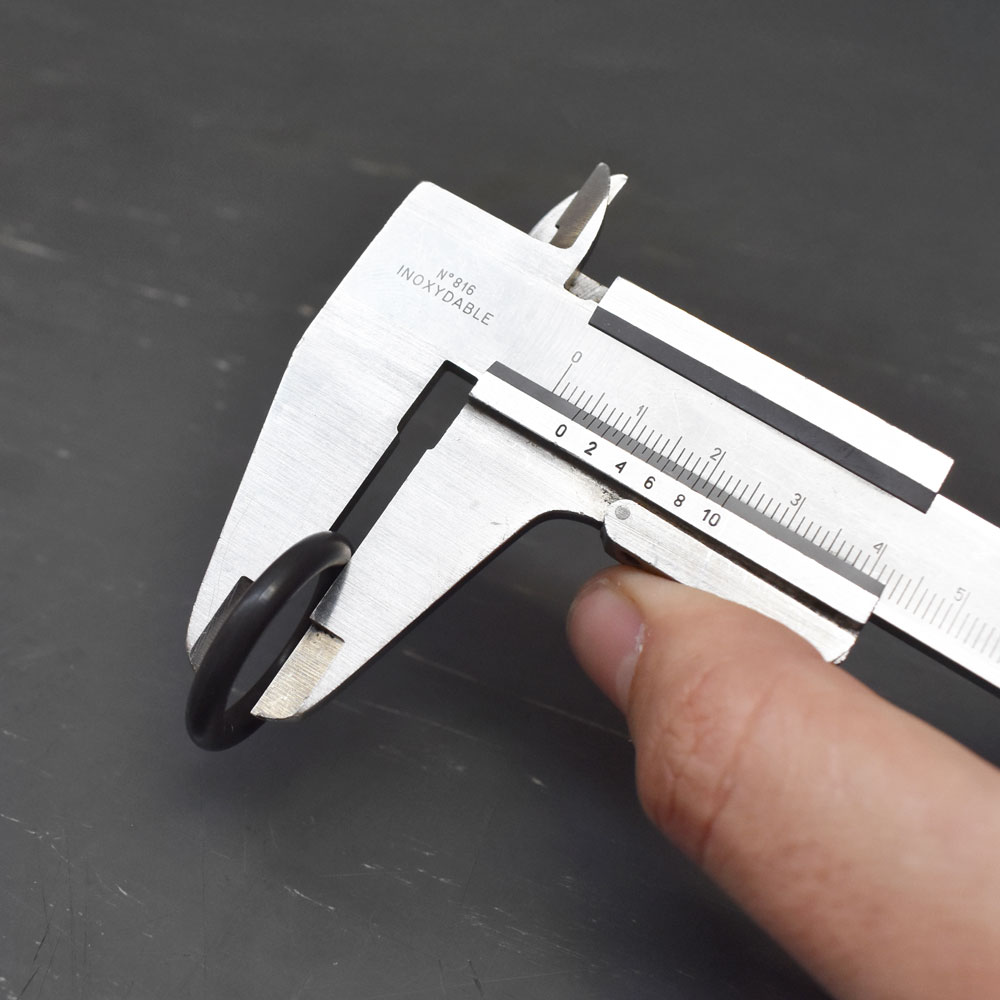
For example, an O-ring of 20 x 4 mm has an inner diameter of 20 mm and a cross-sectional diameter of 4 mm.
Quickly find your dimensions! Use our dedicated search bar to instantly find the O-ring that matches your needs.
How to choose the material and hardness of an O-ring?
Besides size, the material and hardness of the O-ring are essential criteria to ensure its proper functioning according to its application. The main available materials are:
- Nitrile (NBR): Resistant to oils, fuels, and hydraulic fluids, available in multiple hardness levels (70 and 80 Shore A).
- Silicone (VMQ): Excellent resistance to high temperatures and low pressures.
- EPDM: Resistant to chemicals, UV rays, and high temperatures.
- Fluorocarbon (FKM / Viton): Outstanding resistance to chemicals and high temperatures up to 250°C.
Hardness, expressed in Shore A, determines the flexibility or rigidity of the O-ring. A too-soft O-ring may deform under pressure, while an overly rigid one may not provide optimal sealing.
What criteria should be considered based on usage?
O-rings must be selected based on the environment in which they will be used. Here are some key factors to consider:
- Temperature: Ensure that the O-ring material is compatible with the thermal variations of the application.
- Pressure: Some O-rings must withstand high pressure levels without deformation.
- Chemical compatibility: Contact with specific fluids (oils, acids, solvents) must be verified to ensure the O-ring’s durability.
How to properly store O-rings?
To maintain their properties, O-rings should be stored under optimal conditions:
- Avoid exposure to direct light and humidity.
- Prefer a cool and dry place.
- Do not compress them to preserve their shape and flexibility.
Conclusion: Why is it essential to measure your O-ring correctly?
Accurately measuring an O-ring is crucial to ensuring sealing and durability in the systems where it is used. By considering diameter, material, hardness, and operating conditions, you can select the best-suited product for your needs. For more information about our range of O-rings, feel free to browse our catalog or contact our technical team.