Nos experts à votre écoute :


Material guide Which industrial rubber should you choose for your application?
Choosing an industrial rubber depends first and foremost on its operating environment: oil, temperature, abrasion, pressure, sealing, outdoor use or even food contact.
Whether you are an industrial user, craftsperson, professional or private individual with a technical requirement, it is important to choose a material that is compatible with the real conditions of use.
EPDM, NBR, Viton, Neoprene, natural rubber, Parablond, Super-Abrasion or Hypalon CSM: this guide helps you compare the main families of technical rubbers so you can make the right choice.
View our industrial rubbers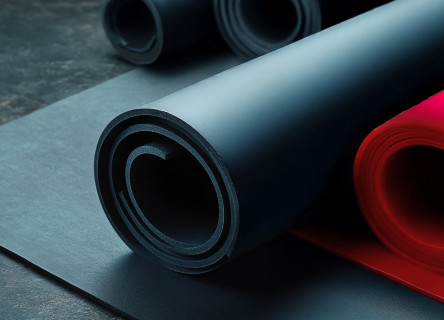
Table of contents
Before choosing Criteria for choosing an industrial rubber
An industrial rubber must be selected according to the real application. A material that performs very well for water sealing will not necessarily be suitable for hydrocarbons, solvents, high temperatures or abrasion.

Temperature
Low temperature, continuous heat, occasional peaks or proximity to a heat source: the temperature range directly influences the choice of material.

Chemicals
Oils, greases, fuels, acids, bases or solvents: each rubber family has a different chemical resistance.

Outdoor use
For outdoor installation, UV, ozone, humidity, weather conditions and rubber ageing must all be taken into account.

Shore hardness
The Shore hardness affects flexibility, compression, sealing, damping and the mechanical strength of the part.

Abrasion and wear
Friction, scraping, sliding, cutting or abrasive particles: wear resistance is essential to extend the service life of the part.

Food contact
For the food industry, it is important to check food-grade compliance, colour, hardness, contact with the products and cleaning conditions.
Key point
The best choice is not necessarily the rubber that is “the most resistant” in general, but the one that resists the right constraint: oil, water, temperature, pressure, abrasion, chemicals, UV or food contact.
Understanding materials Natural rubber or synthetic rubber: what is the difference?
Industrial rubbers can be natural, synthetic or made from blends. The choice depends on the required balance between elasticity, mechanical resistance, chemical resistance, thermal resistance and durability.
To better understand the rubber family, you can also read our article: what is an elastomer?
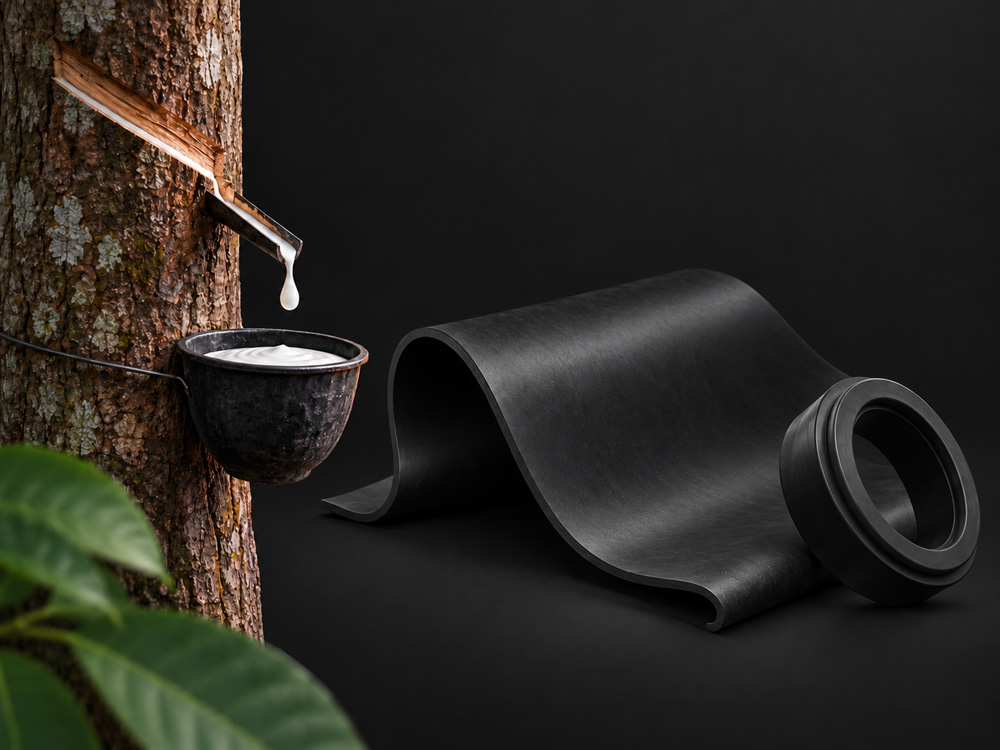
Natural rubber
Natural rubber is valued for its elasticity, flexibility and abrasion resistance. It is suitable for protective parts, packing, lining and certain applications requiring good resilience.
However, it is less suitable for oils, hydrocarbons and aggressive chemical environments.
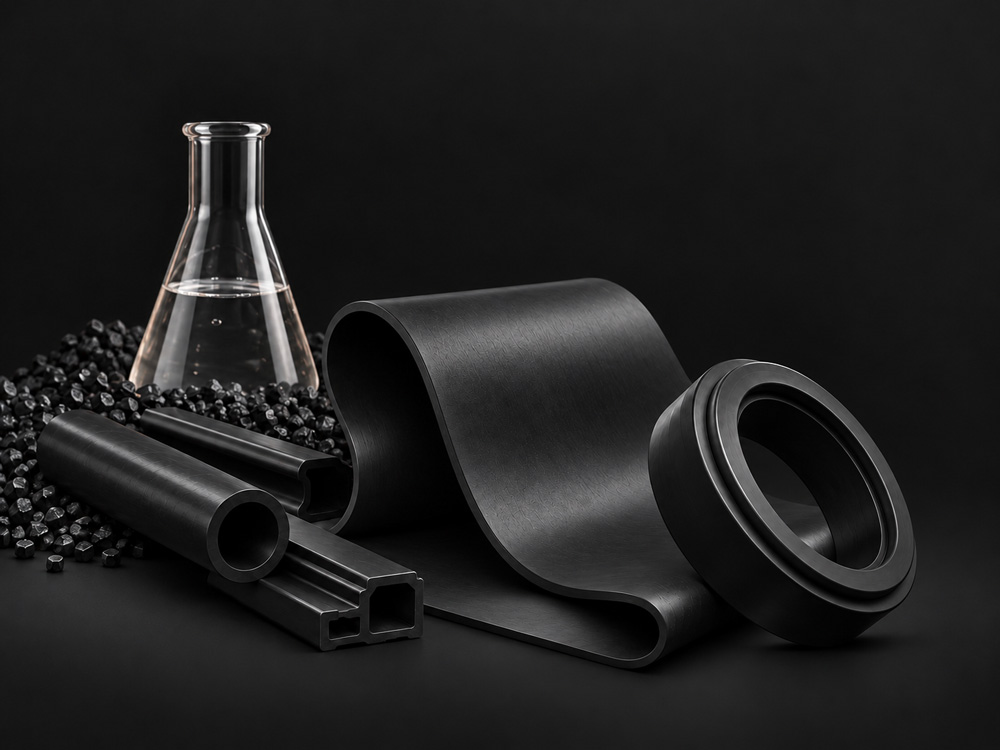
Synthetic rubber
Synthetic rubbers such as EPDM, NBR, Viton / FKM, Neoprene / CR or CSM / Hypalon are formulated to meet specific constraints.
They are often preferred when the environment requires targeted resistance: oils, weathering, temperature, ozone or chemicals.
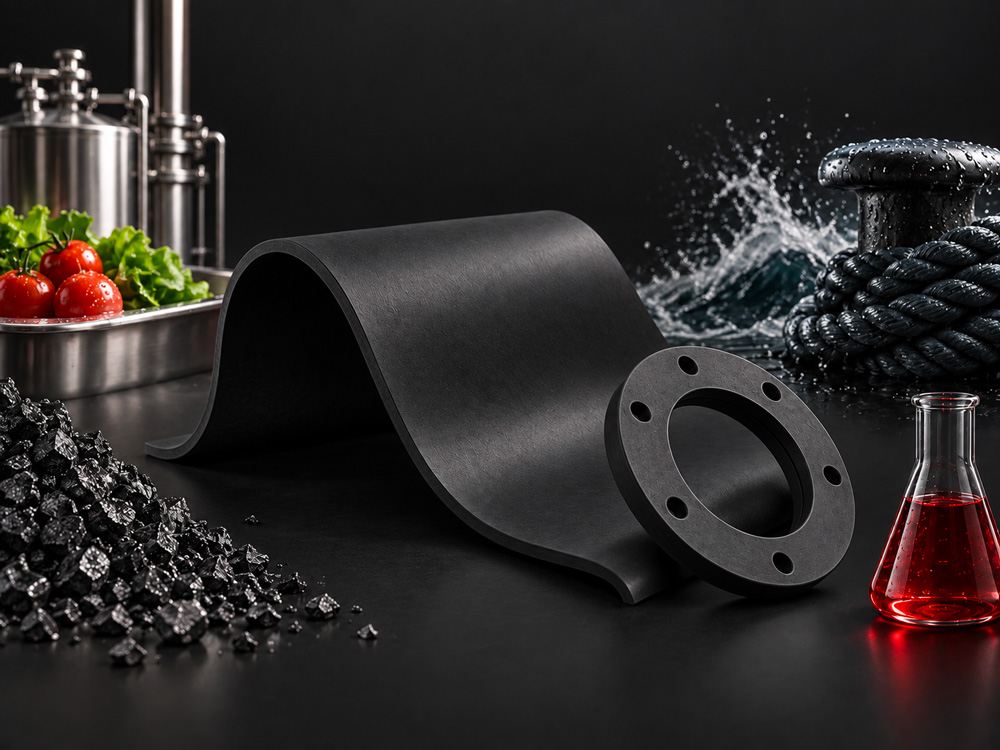
Special materials
Some materials meet very specific needs: food contact, severe abrasion, marine environments, moderate chemicals, cutting based on drawings or technical parts.
The choice must therefore be validated according to the real application, not only according to the material name.
Quick comparison Comparison table of the main industrial rubbers
This table provides an initial guide to help determine which industrial rubber to choose. It compares materials according to their main strengths, applications and points to watch.
Choose by constraint Which material should you choose for your application?
Depending on the operating environment, some industrial rubbers will be more suitable than others. Here are a few simple guidelines to help you choose according to temperature, chemicals, outdoor exposure, abrasion or food contact.
Oils / hydrocarbons
Contact with oils or hydrocarbons
NBR / nitrile is often the first choice for gaskets and parts in contact with oils, greases or hydrocarbons.
Weathering / UV
Outdoor use
For weathering, ozone and UV, EPDM is a reference material for outdoor applications.
Heat / chemicals
High temperature or aggressive chemicals
Viton / FKM is suitable for demanding environments: heat, hydrocarbons and aggressive chemicals.
Versatility
Industrial versatility
Neoprene / CR offers a good balance for gaskets, washers and damping parts in varied environments.
Wear / abrasion
Abrasion and wear
For highly abrasive environments, Super-Abrasion rubber is designed to better withstand wear and cutting.
Agri-food
Food contact
For agri-food applications, food-grade natural cream white rubber may be considered depending on the conditions of use.
Our range Our main rubber materials
Solutions Elastomères offers several families of industrial rubbers in sheets, plates, rolls or custom-cut parts. Here are the main materials to know when choosing the right solution.
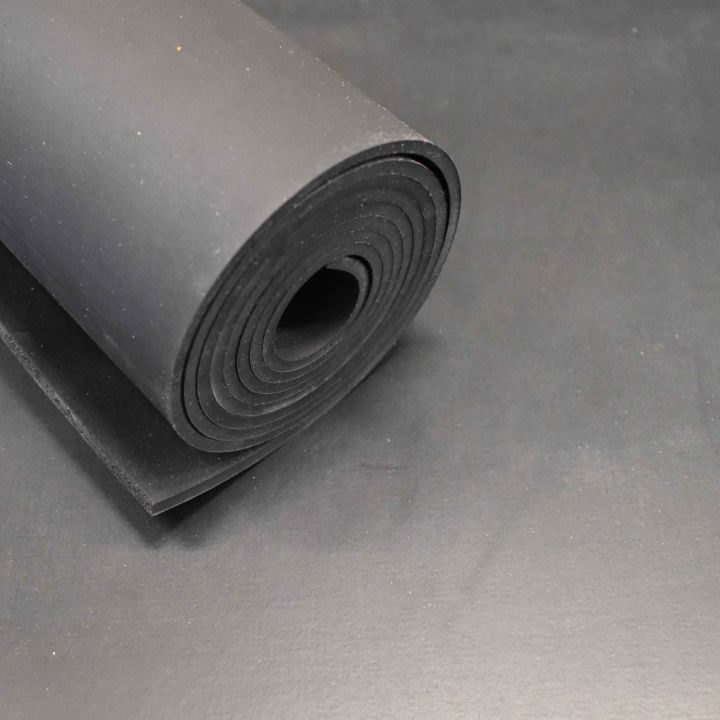
NBR / Nitrile
Nitrile is suitable for applications in contact with oils, greases and hydrocarbons. It is available in black or white versions depending on the reference.
View NBR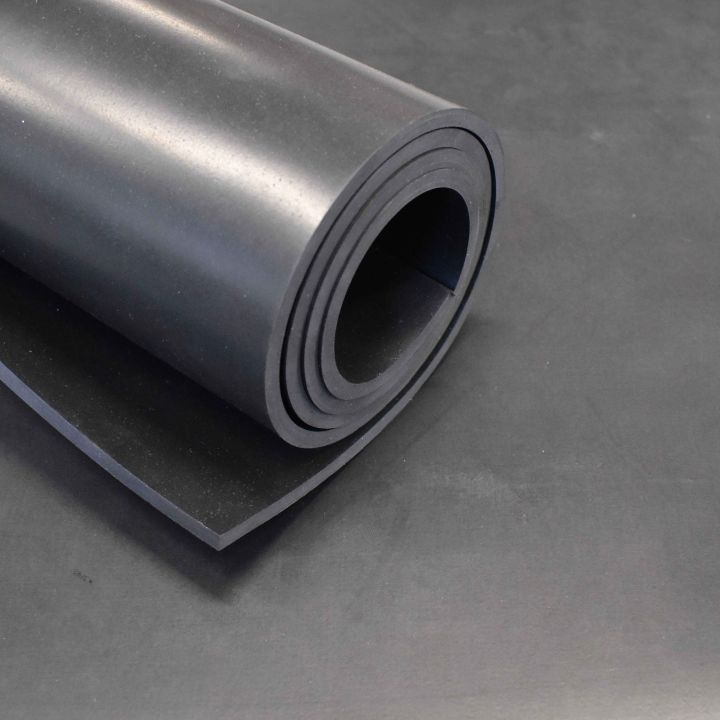
EPDM
EPDM is recommended for outdoor applications, water, ozone and UV. Discover the properties of industrial EPDM rubber.
View EPDM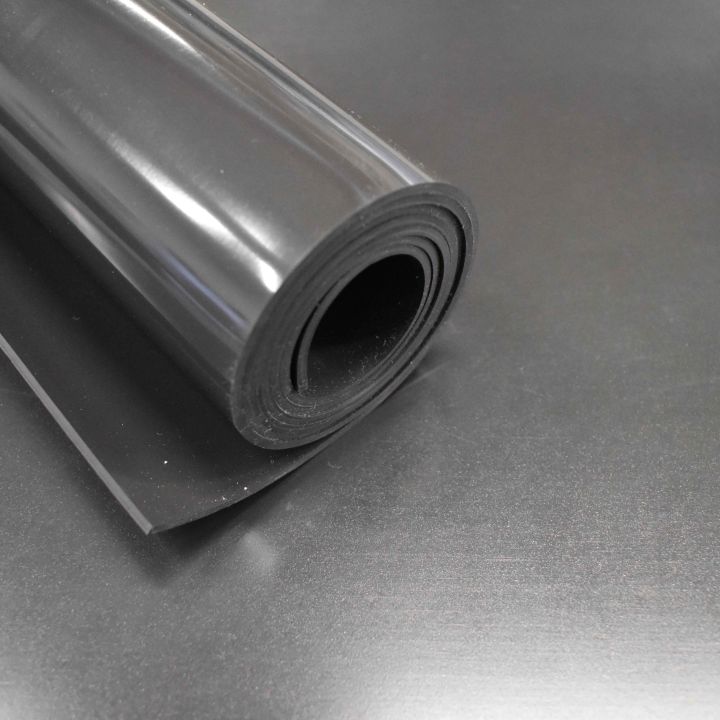
Viton / FKM
Viton is a high-performance material for demanding environments: high temperatures, hydrocarbons, chemicals and critical applications.
View Viton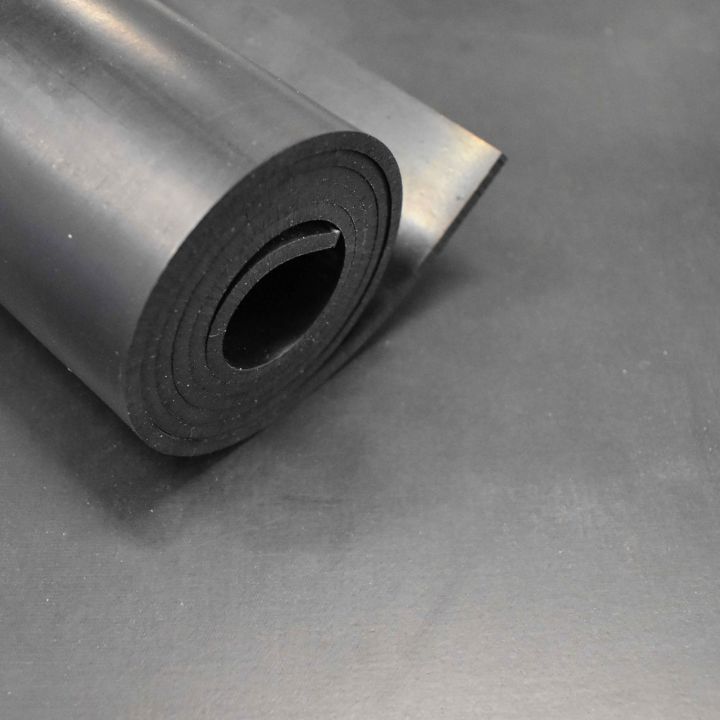
Neoprene / CR
Neoprene is a versatile material, suitable for damping parts, gaskets and applications requiring good mechanical resistance.
View Neoprene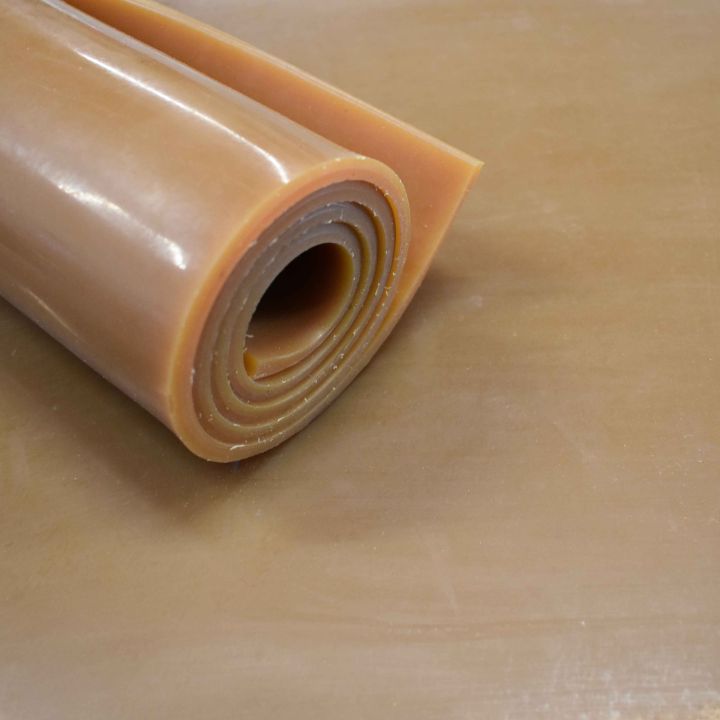
Parablond / NR
Parablond is a natural rubber valued for its elasticity, flexibility and abrasion resistance in suitable applications.
View Parablond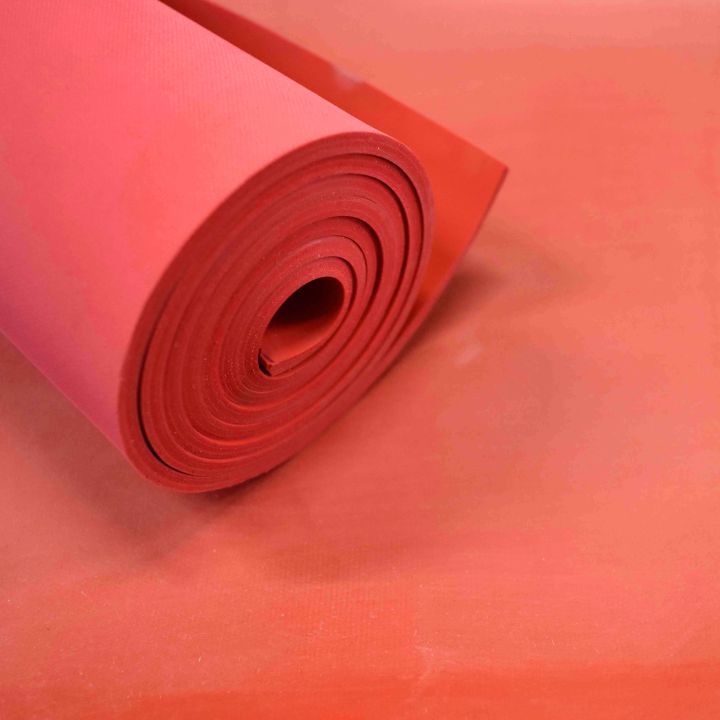
Super-Abrasion
Super-Abrasion rubber is designed for environments exposed to heavy wear, friction, cutting or severe mechanical stress.
View Super-Abrasion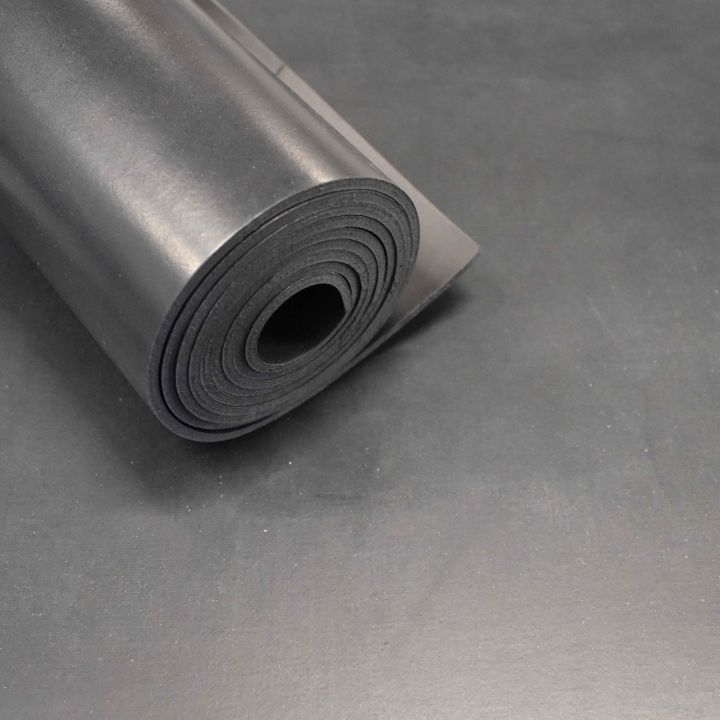
Hypalon / CSM
CSM, also known as Hypalon, is suitable for marine or industrial environments exposed to weathering, heat, cold and certain chemicals.
View CSM / Hypalon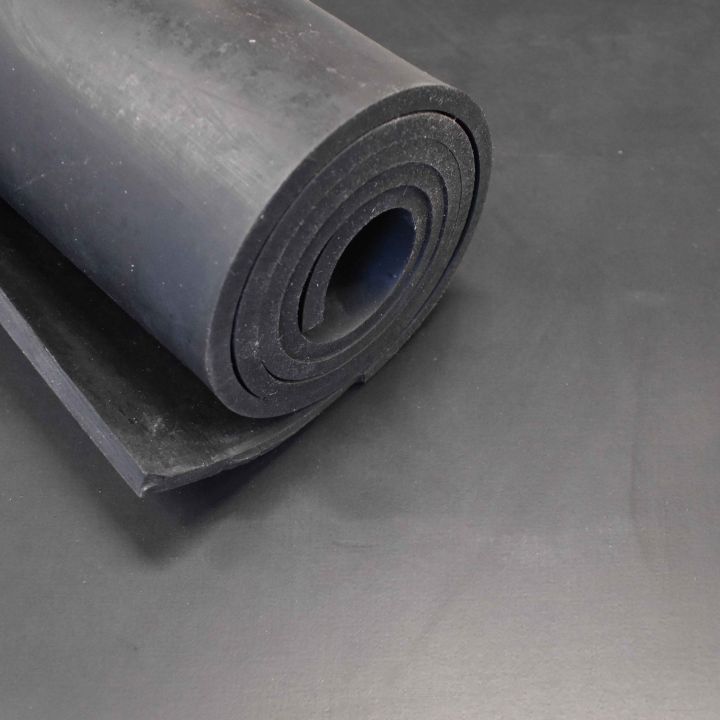
Natural black / SBR-NR
Natural black rubber is suitable for protection, packing, damping or air/water sealing applications under normal conditions.
View natural black rubberApplications Industrial applications of rubber
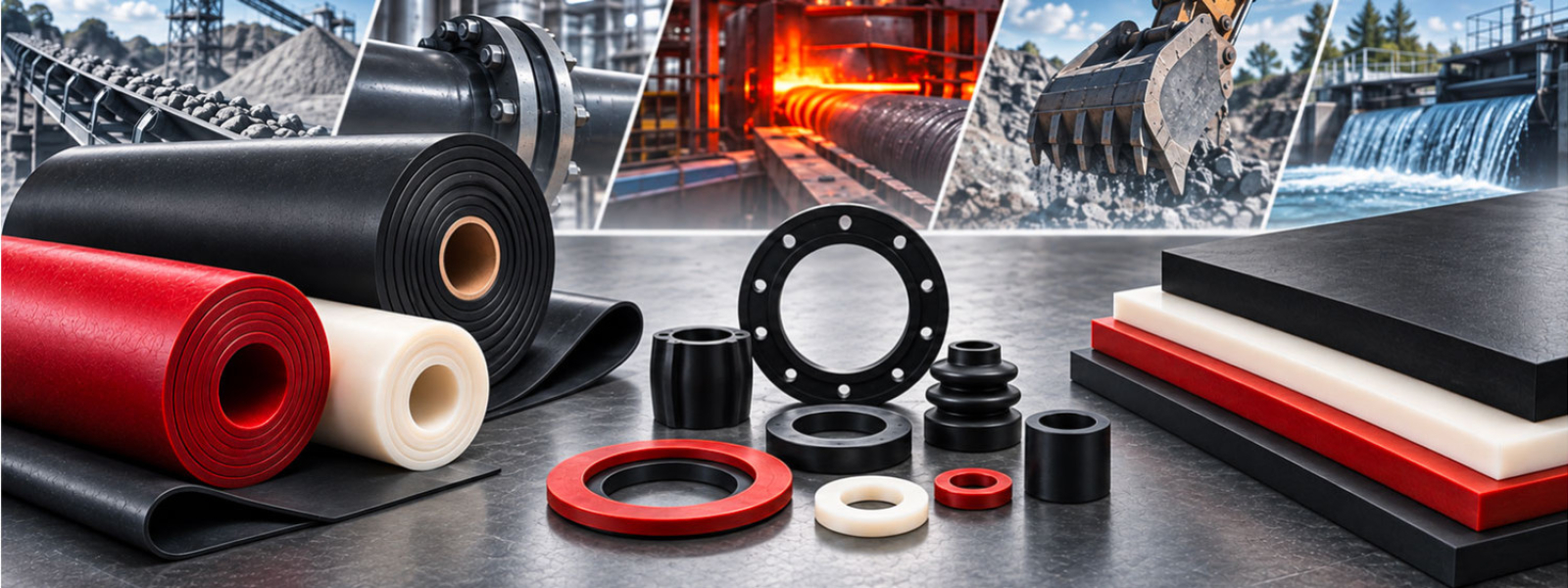
Industrial rubber is used in many configurations: sealing, protection, packing, damping, cutting based on drawings or parts exposed to abrasion.
What if rubber is not the right material?
In some cases, industrial rubber is not necessarily the best solution. Depending on the temperature, the required deformation, abrasion, food contact or mechanical constraints, it may be useful to consider other material families.
For example, silicone may be useful for certain temperature or food-grade constraints, while polyurethane may be considered for specific mechanical resistance or abrasion requirements.
To avoid Common mistakes when choosing an industrial rubber
Choosing based on price only
A cheaper rubber can become expensive if it degrades quickly, causes machine downtime or fails to withstand the fluid used.
Forgetting chemical compatibility
A material may resist water very well but react poorly to oils, solvents, fuels or chemicals present in the installation.
Overlooking Shore hardness
If it is too soft, the part may crush. If it is too hard, it may lose sealing performance or damping capacity depending on the application.
The right method
To choose the right industrial rubber, start with the application: fluid in contact, temperature, pressure, outdoor exposure, abrasion, Shore hardness, part shape and expected service life.
Custom-made Need a rubber part cut from a drawing?
Beyond the choice of material, the final shape of the part is essential: flat gasket, washer, plate, strip, protection, packing or specific technical part.
Solutions Elastomères can support you with custom rubber cutting, based on your drawings, dimensions and operating constraints.
For standard parts available from stock, fast shipping within 24/48 hours may be possible depending on the stock and reference.
Request material adviceUseful information to provide
• Type of fluid or product in contact
• Operating temperature
• Pressure or compression
• Indoor or outdoor environment
• Food contact or not
• Drawing, sketch or required dimensions
In summary Which industrial rubber should you choose?
The right choice always depends on the main constraint. There is no universal rubber, but there is a material suited to each environment: oil, water, temperature, abrasion, outdoor use, pressure, food contact or chemicals.
Identify the constraint
Oil, UV, heat, abrasion, pressure, Shore hardness or food contact.
Compare materials
NBR, EPDM, Viton, Neoprene, Parablond, natural rubber, Super-Abrasion or Hypalon CSM depending on the requirement.
Validate the application
Confirm material compatibility before manufacturing, cutting or ordering.
Frequently asked questions FAQ on choosing industrial rubber
Which industrial rubber is the most resistant to extreme temperatures?
For high temperatures and severe environments, Viton / FKM is often preferred. For low temperatures and outdoor use, EPDM or CSM / Hypalon may be considered depending on the application.
How should I choose an industrial rubber in contact with hydrocarbons?
NBR / nitrile is generally suitable for oils, greases and hydrocarbons. For more demanding constraints, particularly in terms of temperature or aggressive chemicals, Viton can be considered.
What is the difference between EPDM and NBR?
EPDM is mainly used for water, weathering, ozone and UV. NBR is mainly chosen for oils, greases and hydrocarbons. The choice therefore depends on the fluid and the environment.
What are the advantages of Viton compared with NBR?
Viton offers better resistance to high temperatures and certain aggressive chemical environments. It is more expensive than NBR, but better suited to critical applications.
Which rubber should be chosen for a food-grade application?
For an application involving food contact, a material with compliance suited to the intended use must be selected. Food-grade natural cream white rubber may be considered depending on contact conditions, temperature and cleaning.
Which Shore hardness should be chosen for a rubber gasket or part?
The Shore hardness depends on the compression, pressure, shape of the part and required sealing. A lower hardness provides flexibility, while a higher hardness often improves mechanical resistance.
To check or compare the hardness of a rubber, it is possible to use a Bareiss durometer or an analog durometer.
How can the compatibility of a rubber with chemicals be determined?
The products in contact, their concentration, temperature, exposure time and mechanical constraints must be precisely identified. In case of doubt, technical validation is preferable before ordering.
Let’s work together Need help choosing your industrial rubber?
Unsure between EPDM, NBR, Viton, Neoprene, Parablond, natural rubber, Super-Abrasion or Hypalon CSM?
Our team helps you choose the right material for your constraints: temperature, chemicals, sealing, abrasion, pressure, cutting, food contact or outdoor environment.