Nos experts à votre écoute :


Elastomer materials What is an elastomer?
An elastomer is a polymer material whose mechanical properties are characterised by their high elasticity. It can undergo significant deformation under stress, then return to its original shape when that stress is released.
This group of materials is mainly composed of amorphous polymers, meaning they have no ordered crystalline structure, unlike other polymer materials such as semi-crystalline plastics.
This exceptional elastic property is due to the specific molecular structure of elastomers, made up of long linear polymer chains and cross-links.
Discover the materials shopTable of contents
Natural origin Origin of elastomers
The origin of elastomers goes back to nature itself, where these materials were discovered in a raw form: natural rubber.
Natural rubber comes from the sap of certain trees, in particular the Brazilian rubber tree, native to South America. This plant-based material then paved the way for many technical applications, up to the development of synthetic elastomers.
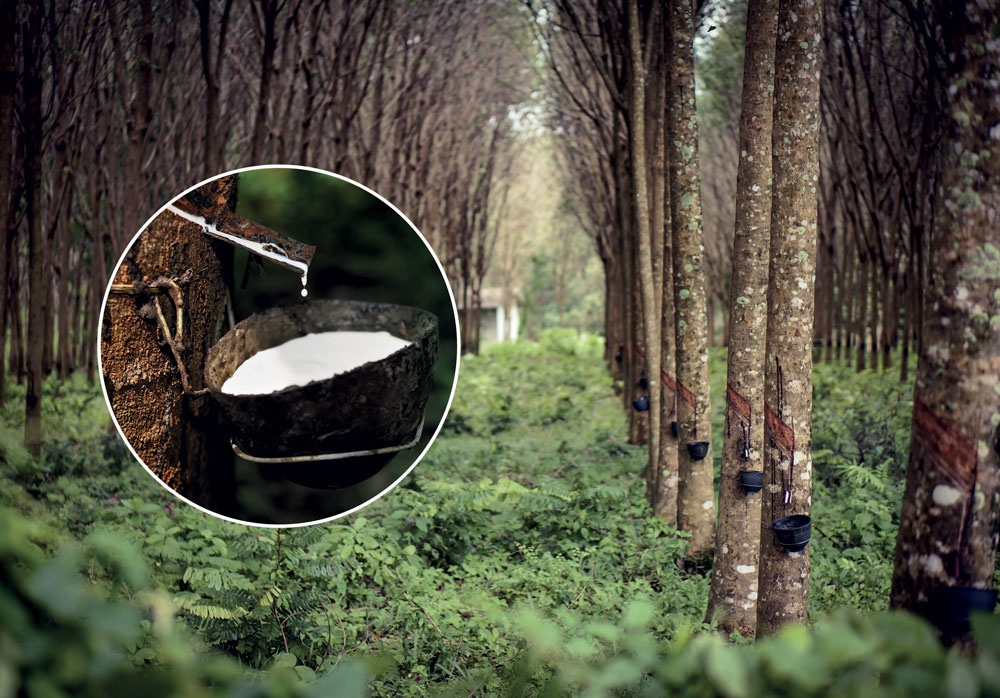
A rubber tree forest on the small island of Koh Yao Noi, Thailand.

Discovery of natural rubber
Indigenous peoples of South America, such as the Aztecs and the Mayans, were among the first to use natural rubber. They collected tree sap, mixed it with other natural substances, and shaped it into various objects, including balls for Mayan ball games.
Natural rubber was later introduced to Europe by Spanish explorers in the 16th century. It did not immediately attract major interest, but began to be studied in greater depth from the 18th century onwards.
The elastomer, an elastic material
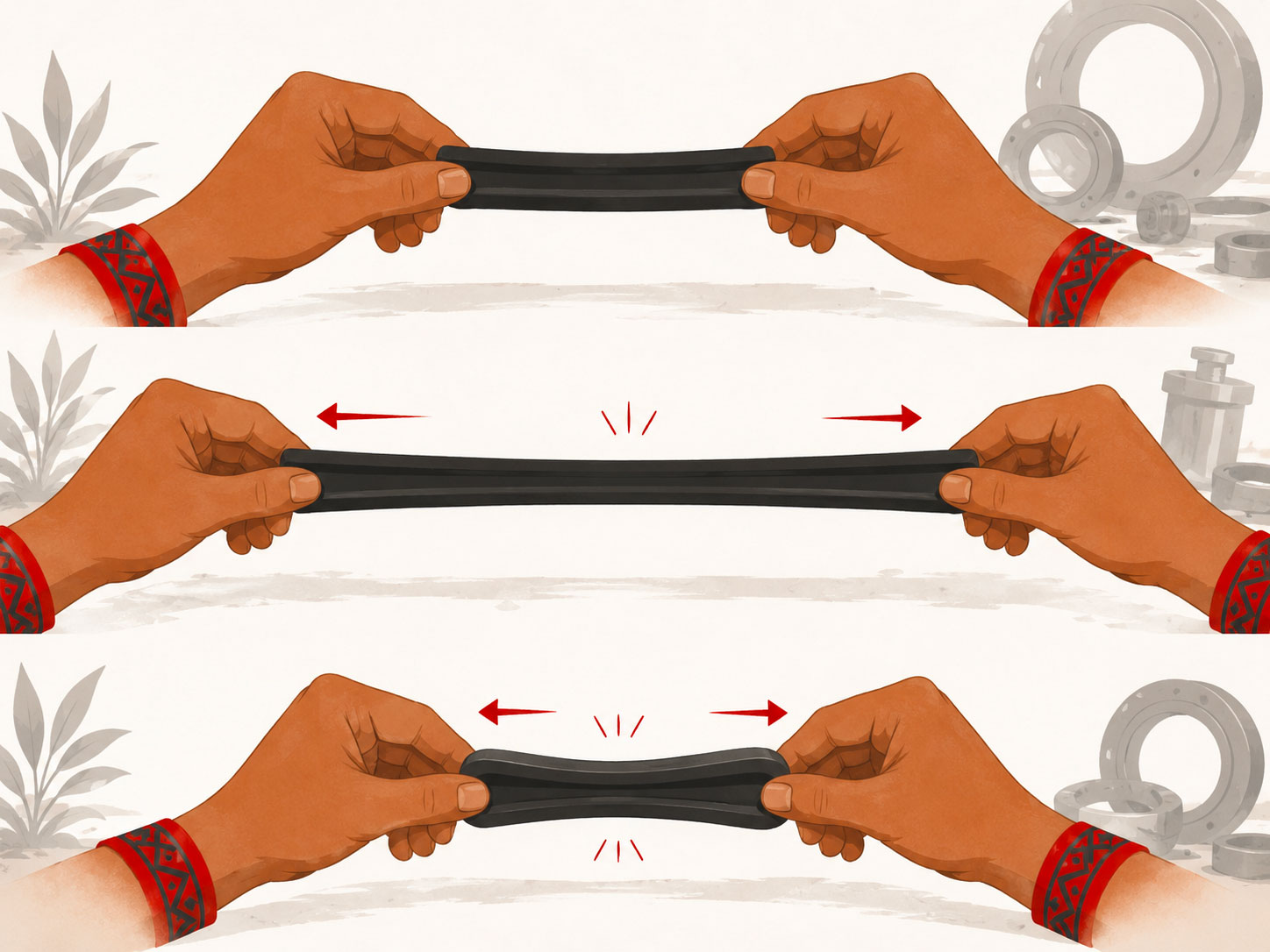
The term “elastomer” is derived from the Greek word “elastikos”, meaning “able to deform and return to its original shape”. This definition perfectly describes the main characteristic of these materials: their high elasticity.
In the 19th century, researchers observed that natural rubber could undergo significant deformation under pressure or tension, then recover its original shape once the stress was released. This property opened the way to many technical and industrial applications.
Vulcanisation and the development of elastomers
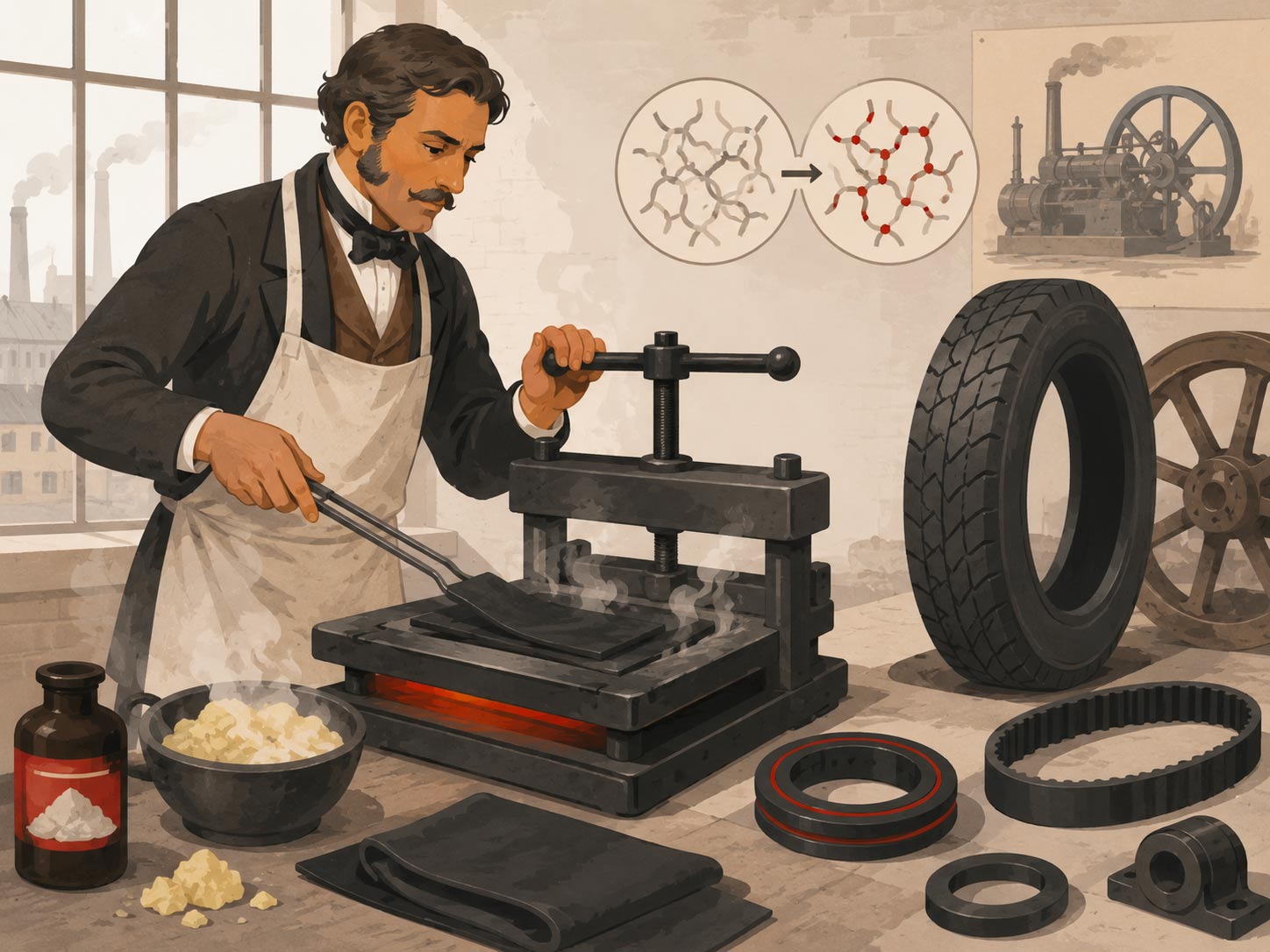
The true development of elastomers was driven by the discovery of vulcanisation by Charles Goodyear in 1839. This process consists of heating natural rubber with sulphur to improve its mechanical properties.
Vulcanisation made rubber more heat-resistant, more stable and less sensitive to permanent deformation. Vulcanised rubber was then rapidly adopted in many industrial applications: tyres, sealing gaskets, transmission belts and technical parts.
Synthetic elastomers
In the 20th century, researchers succeeded in synthesising new elastomers, giving rise to elastic materials with a wide range of properties. Butyl rubber (IIR) and styrene-butadiene rubber (SBR) are among the most common synthetic elastomers.
These synthetic elastomers offer a greater variety of properties and can be formulated to meet specific needs in many sectors: tyres, automotive parts, sealing products, industrial parts and technical components.

Key point
The origin of elastomers dates back to the discovery of natural rubber by the indigenous peoples of South America. Their development was then marked by vulcanisation and the creation of synthetic elastomers. Today, these materials play an essential role in many industries and continue to evolve to meet modern technical requirements.
Current rubber production
Today, rubber is produced in many regions of the world. The main natural rubber production areas are generally located in tropical regions, particularly in Southeast Asia, West Africa, South America and South Asia.
The major natural rubber-producing countries often include Thailand, Indonesia, Malaysia, Vietnam, India, Nigeria, Côte d’Ivoire, Ghana, Cameroon, Brazil and other countries in the equatorial belt.
It is also important to note that synthetic rubber is produced worldwide, often in industrial facilities spread across several continents. Synthetic rubber production depends on chemical companies and the manufacturing industry in many countries.
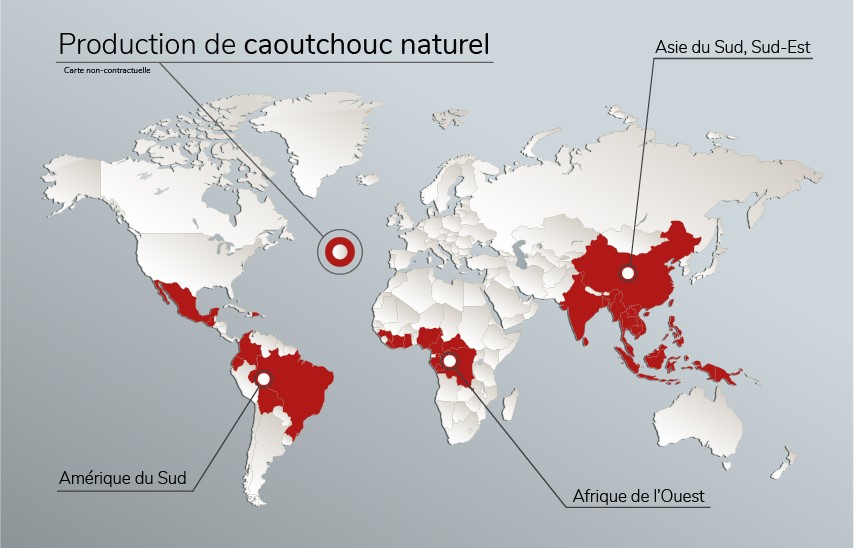
Approximate map of the 3 largest natural rubber producers.
Technical properties Characteristics of elastomers
Elastomers stand out due to several key characteristics. Their mechanical behaviour, flexibility and ability to absorb stress make them widely used materials in industrial applications.
Exceptional elasticity
Elastomers can undergo significant deformation, sometimes by several hundred percent of their initial length, without permanent damage. They can recover their original shape once the stress is released.

Cross-linked structure
Elastomers contain cross-linked chemical bonds between polymer chains. These bonds form a three-dimensional cross-linked structure that gives the elastomer its elastic capacity. Vulcanised elastomers, for example, are obtained by treating the material with sulphur, which creates cross-links between the chains.

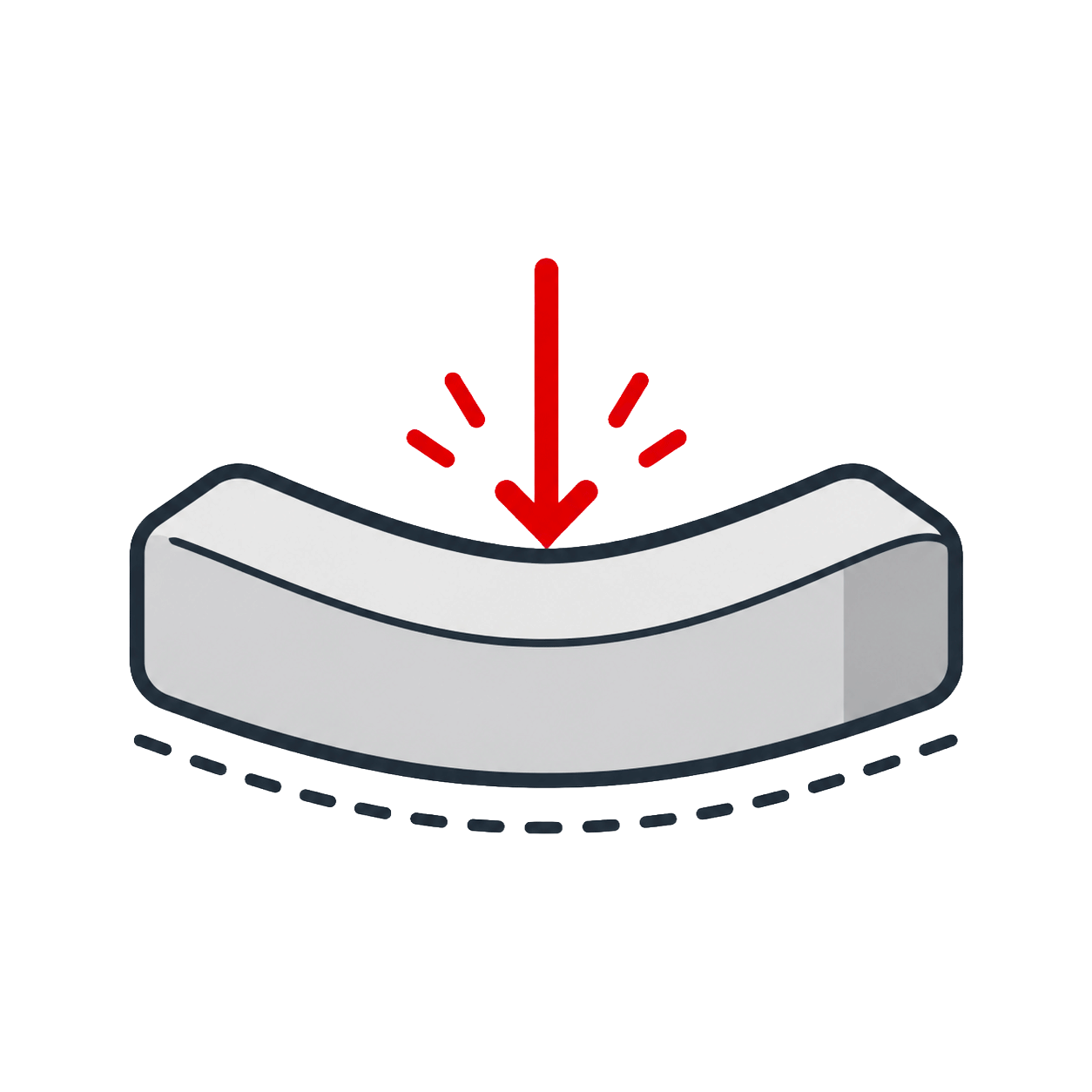
Low Young’s modulus
Young’s modulus is a measure of a material’s stiffness. Elastomers have a relatively low Young’s modulus, which means they are flexible and deformable under low stress.
Viscoelastic behaviour
Elastomers also display viscoelastic behaviour. They combine viscous properties, such as slow flow under stress, with elastic properties, such as recovery of the original shape. This makes them particularly suitable for shock absorption and vibration damping.

How can their properties be understood in application?
The properties of an elastomer must always be analysed according to its operating environment, mechanical stresses and working conditions.
Physical properties
Elastomers are characterised by their ability to undergo significant deformation under pressure or tension, then return to their original shape once the stress is released. This remarkable elasticity makes them suitable for many applications, such as the manufacture of sealing gaskets.
Temperature resistance
Temperature is an important factor to consider when using elastomers. They are generally classified according to their heat resistance. Some elastomers, such as standard rubbers, are suitable for temperatures up to 80°C. Others, such as special rubbers, can withstand temperatures up to 150°C. Finally, high-performance special rubbers, although rarer and more expensive, can withstand temperatures up to 250°C.
Use
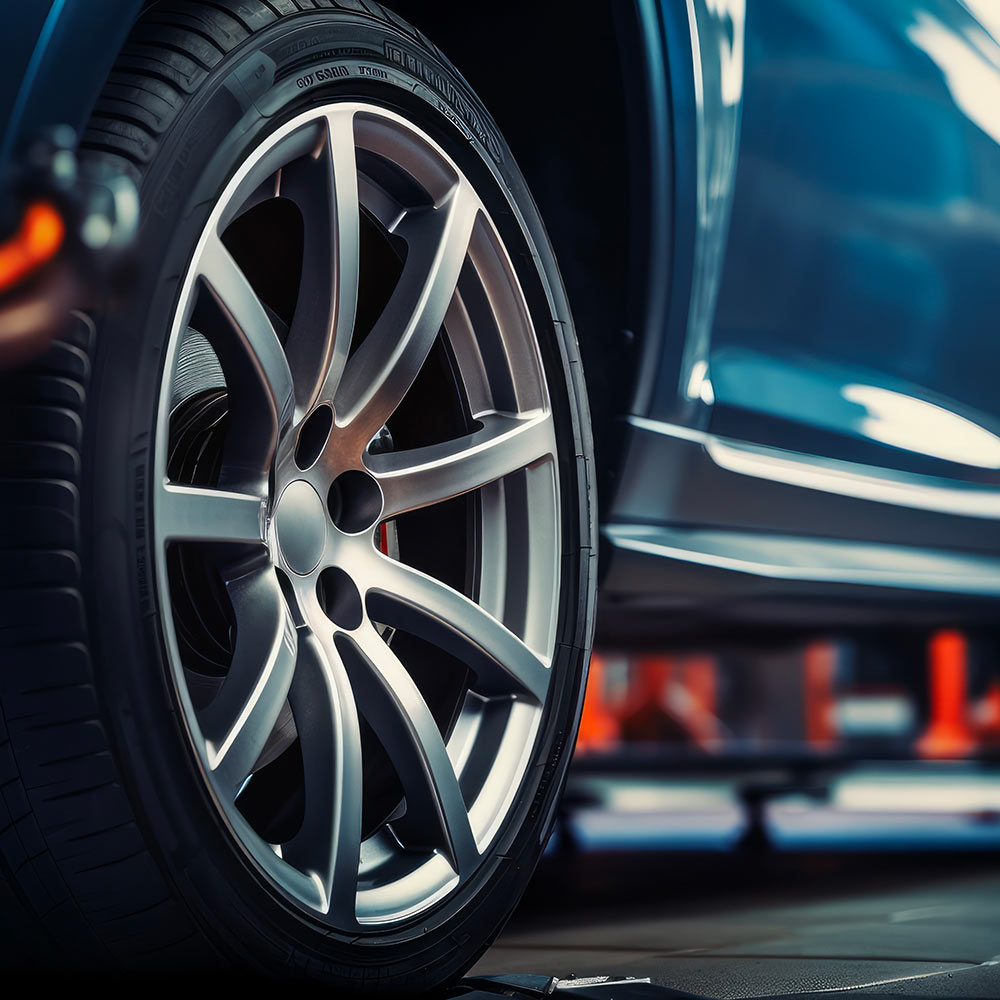
Elastomers are used in various sectors, including the automotive, construction and chemical industries. In the automotive sector, they are found in tyres and sealing gaskets. In construction, they are used for expansion joints and acoustic insulation materials. In the chemical industry, fluoroelastomers, such as FKM, are valued for their resistance to aggressive chemicals.
Deformation and compression
Elastomers can withstand significant deformation without permanent damage. They are also excellent for absorbing shocks and vibrations, making them ideal for manufacturing anti-vibration mounts. They can also be moulded into a wide variety of shapes, including gaskets, industrial mounts and many other technical parts.
Other technical criteria to consider
Other parameters can help refine the choice of an elastomer depending on the part, expected function and project constraints.
Hardness
The hardness of elastomers can vary depending on their composition. Some elastomers may be relatively soft, while others may be harder, depending on application requirements.
Versatility of thermoplastics
In addition to traditional elastomers, thermoplastics can also provide elastic properties and be used in similar applications. They are known for their ability to become soft and malleable when heated, then harden when cooled.
Colour and volume
Elastomers can be produced in a variety of colours to meet aesthetic or technical requirements. The volume of elastomer material used in an application will depend on the design specifications.
Elastomer service life
One of the remarkable characteristics of elastomers is their ability to extend product service life thanks to their exceptional resilience under mechanical stress.
Elastomer testing and measurement
Elastomers are known for their breaking strength and hardness, two important criteria when selecting a material for a specific application.
Breaking strength
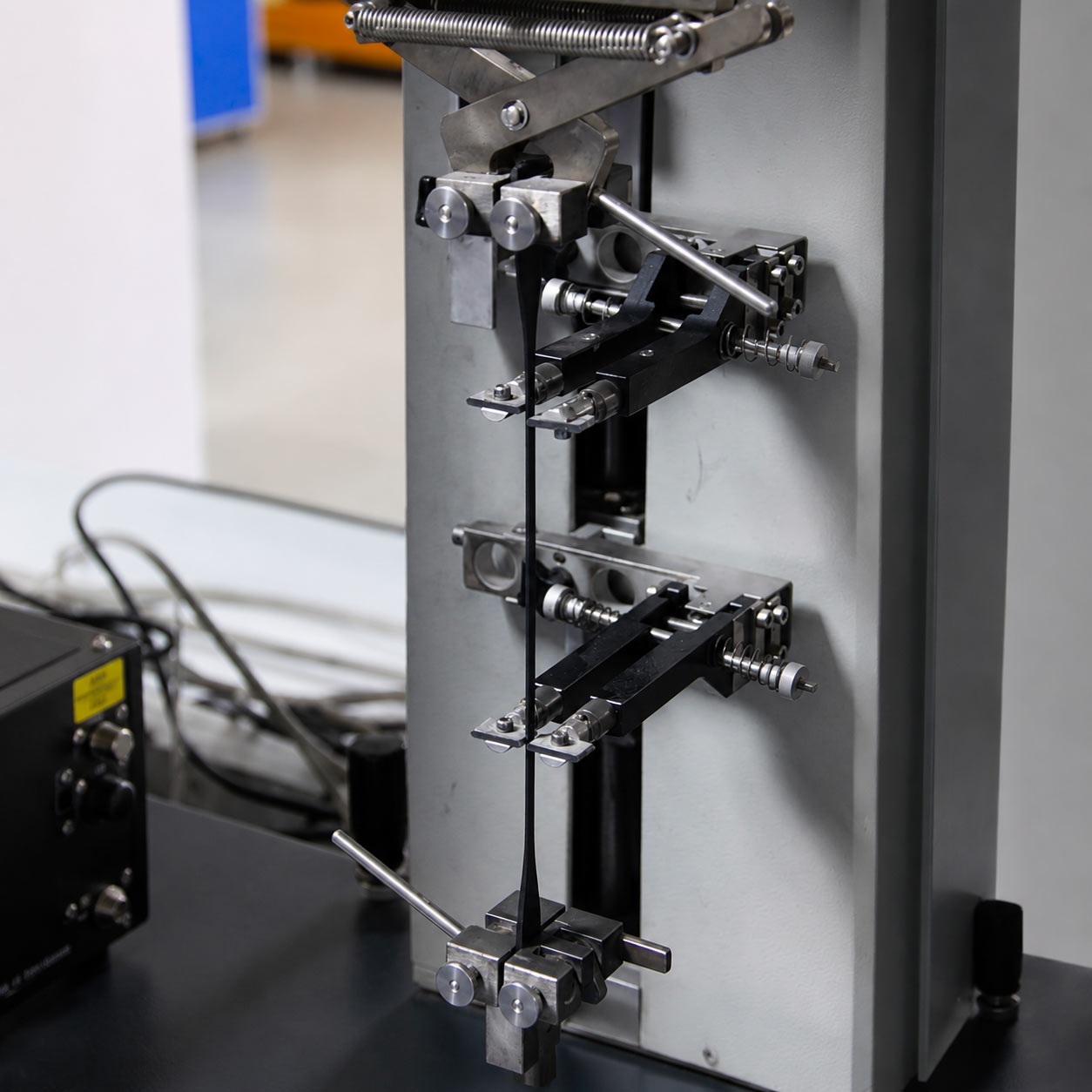
Elastomers are known for their breaking strength, which makes them essential in the design of mechanical parts exposed to significant forces.
Example of a test used to measure the breaking strength of rubber.
Hardness measurement with a durometer
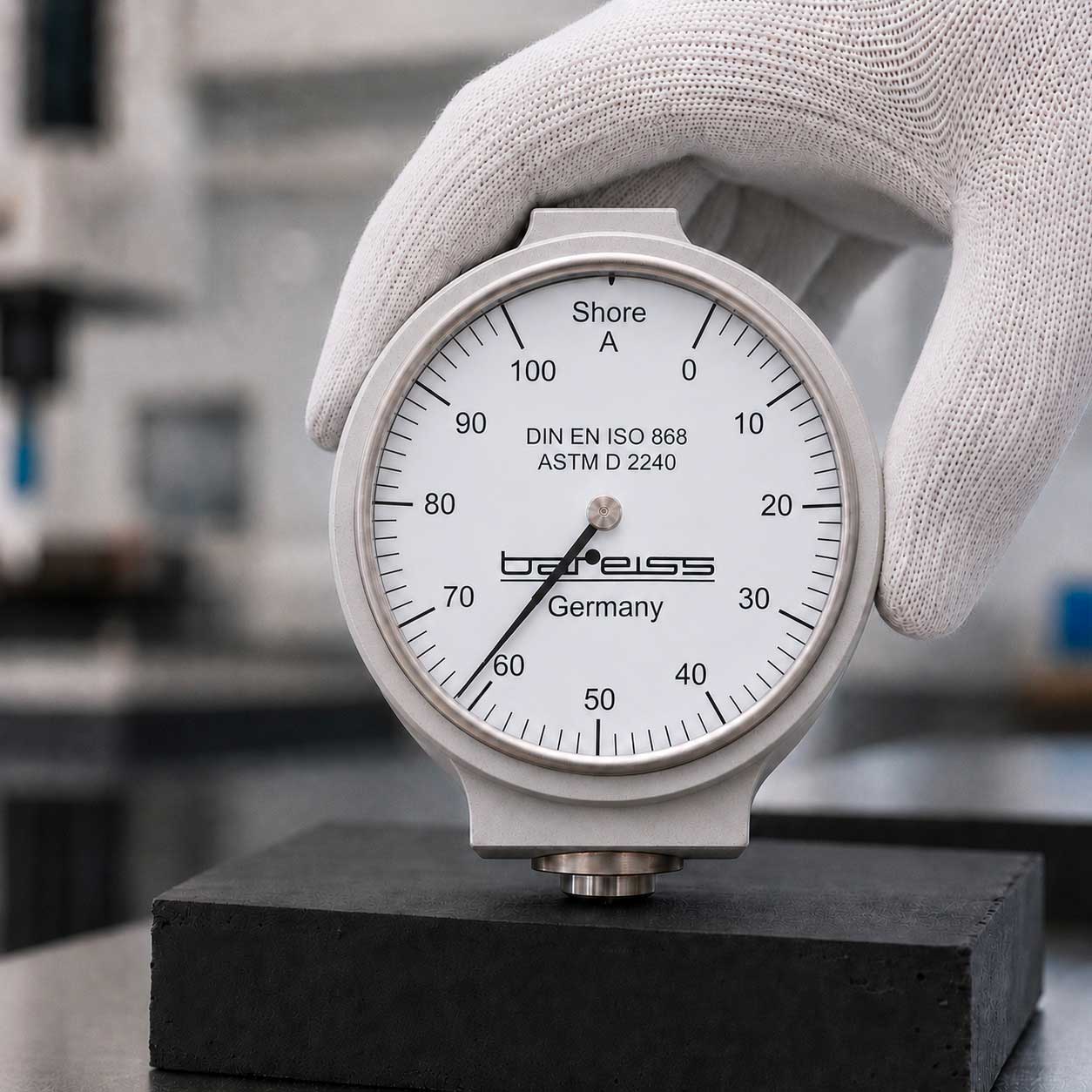
Their hardness can also be checked using a specific measuring device: the durometer. It is used to measure the Shore hardness of elastomers.
The durometer is used to measure the Shore hardness of elastomers.
Material families Types of elastomers
There are many types of elastomers, each with its own properties and specific applications. The main types of elastomers include natural rubber, synthetic rubber, silicone, nitrile, fluoroelastomers and polyurethane.
Main elastomers
Natural rubber
Natural rubber is extracted from the sap of the rubber tree. It is valued for its high elasticity, flexibility and good abrasion resistance. It is used for gaskets, protective parts, packing pieces and custom-cut parts based on drawings.
Synthetic rubber
Synthetic rubbers are manufactured from specific formulations to meet targeted constraints: resistance to oils, hydrocarbons, UV, weathering, abrasion or chemicals.
Silicone
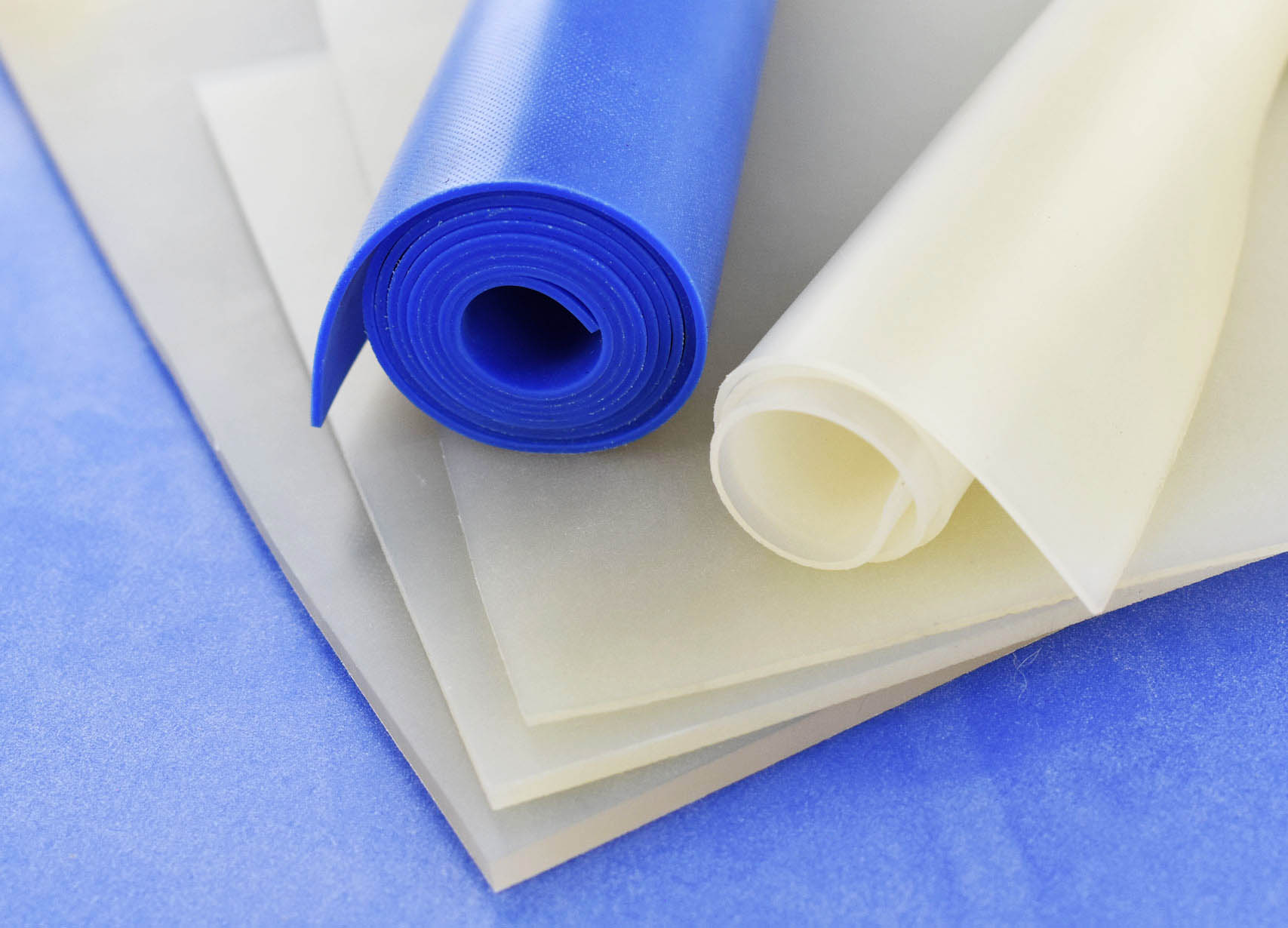
Silicone elastomers resist high temperatures, chemicals and radiation. They are commonly used in medical, food-grade, electronic and industrial applications.
Nitrile (NBR)
Nitrile, or NBR, is known for its resistance to oils, greases and hydrocarbons. It is often used for sealing gaskets, washers and technical parts in industrial environments.
Fluoroelastomers (Viton)
Fluoroelastomers, such as Viton or FKM, offer excellent resistance to aggressive chemicals, hydrocarbons and high temperatures. They are used in the chemical, oil and mechanical industries.
Polyurethane
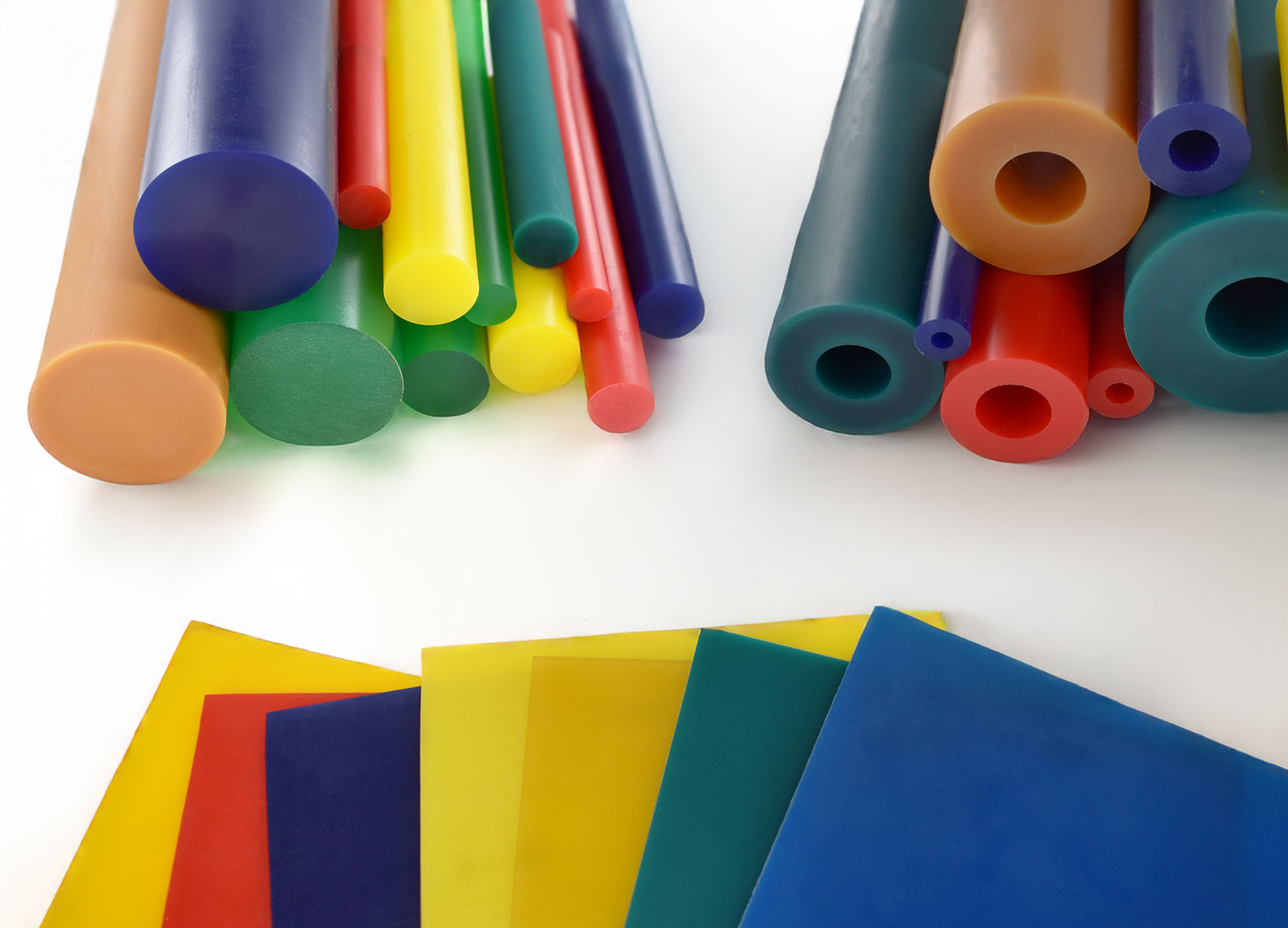
Polyurethane combines excellent abrasion resistance with high flexibility. It is frequently used for wheels, coatings, sheets, solid rods, hollow rods and custom-cut parts.
Other possible elastomers
Other elastomer families can also be used depending on the technical constraints of the application:
• EPDM: good resistance to weathering, UV, ozone and ageing.
• Neoprene / CR: good versatility, resistance to abrasion, ozone and weathering.
• Para rubber / NR: high elasticity, flexibility and good mechanical resistance.
• SBR: good balance between wear resistance, flexibility and controlled cost.
• CSM / Hypalon: suitable for outdoor, marine or chemically demanding environments.
• Butyl / IIR: valued for its gas impermeability and good ageing resistance.
Discover our range of elastomers
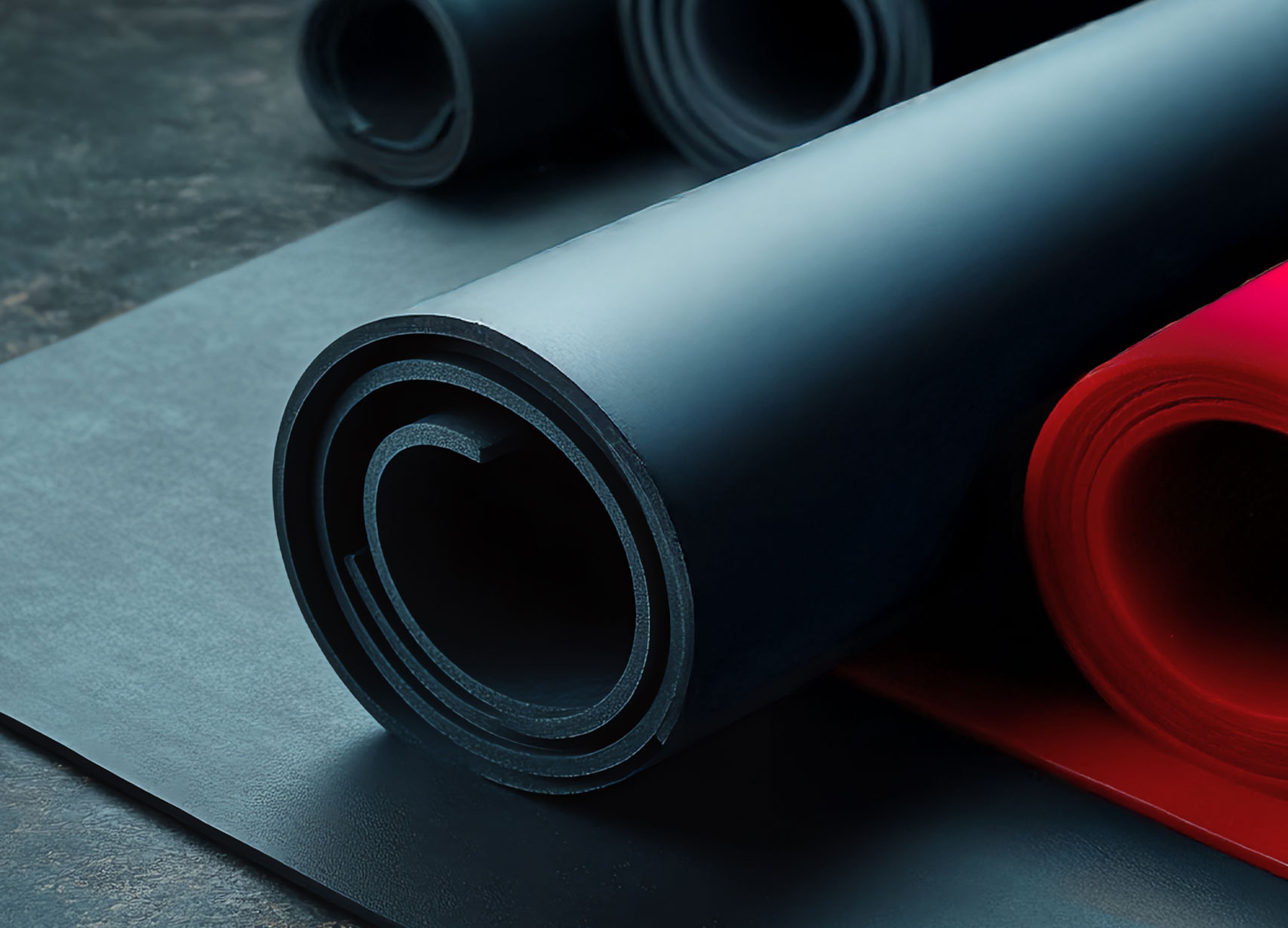
Solutions Elastomères offers several families of materials suitable for industrial requirements: polyurethanes, rubbers and silicones.
Fields of use Applications of elastomers
Thanks to their elasticity, mechanical resistance and ability to adapt to many constraints, elastomers are used in numerous industrial sectors. They can be used to provide sealing, damp vibrations, absorb shocks, protect parts or insulate certain equipment.




Custom technical parts Our expertise in elastomers
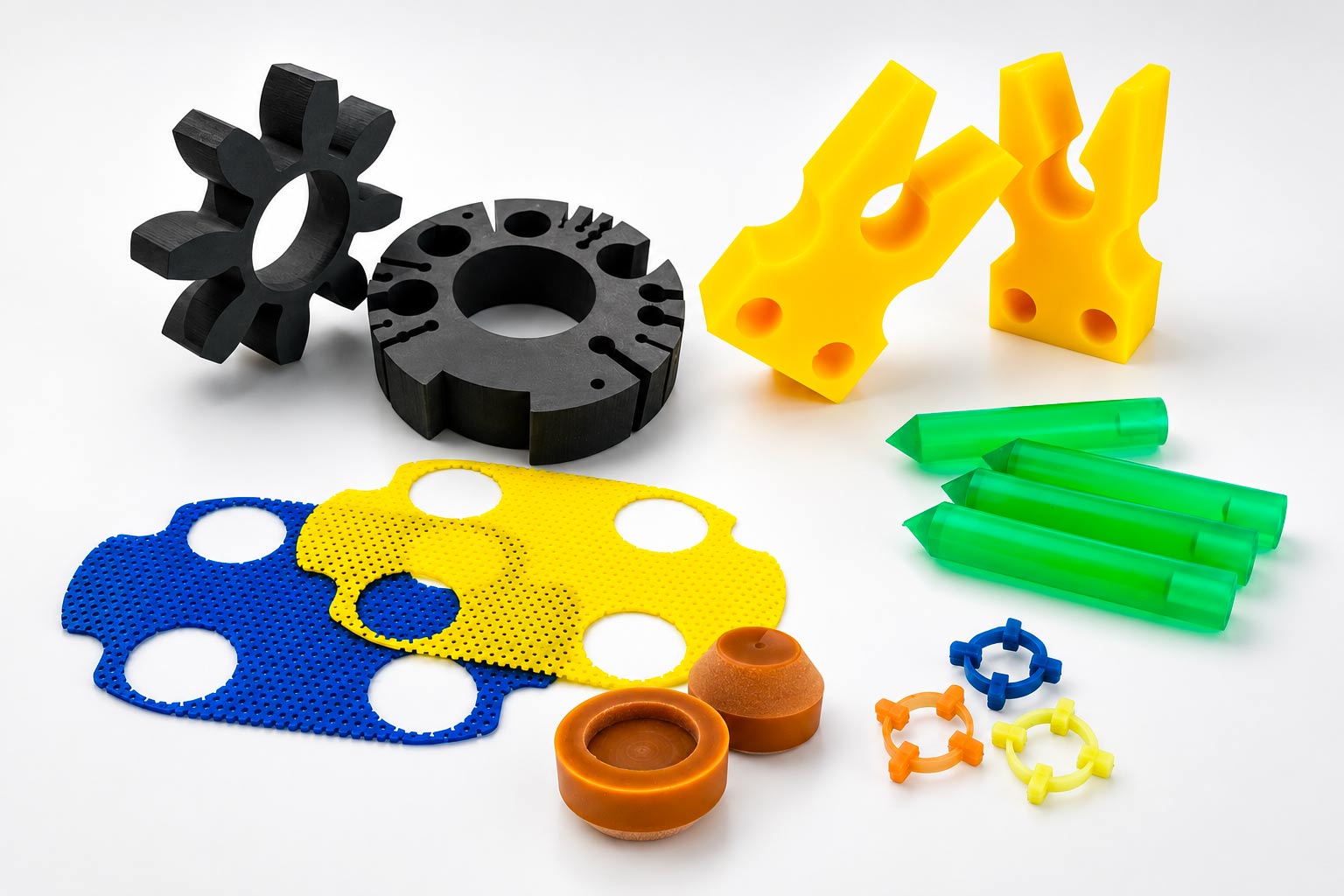
Solutions Elastomères supports professionals in choosing their elastomer materials and manufacturing custom technical parts.
Thanks to our expertise in cutting and machining flexible materials, we can offer solutions suited to many applications: gaskets, washers, strips, sheets, packing pieces, sealing parts, anti-vibration parts and custom-cut parts based on drawings.
Our team helps you identify the most suitable material according to your operating environment: temperature, oil, UV, abrasion, chemical contact, compression, vibration or mechanical stress.
Let’s work together Have a project? Let’s talk.
Do you need a seal, acoustic foam, an anti-vibration solution, a sealing material or a custom technical part?
Our team helps you find the most suitable solution for your application.